
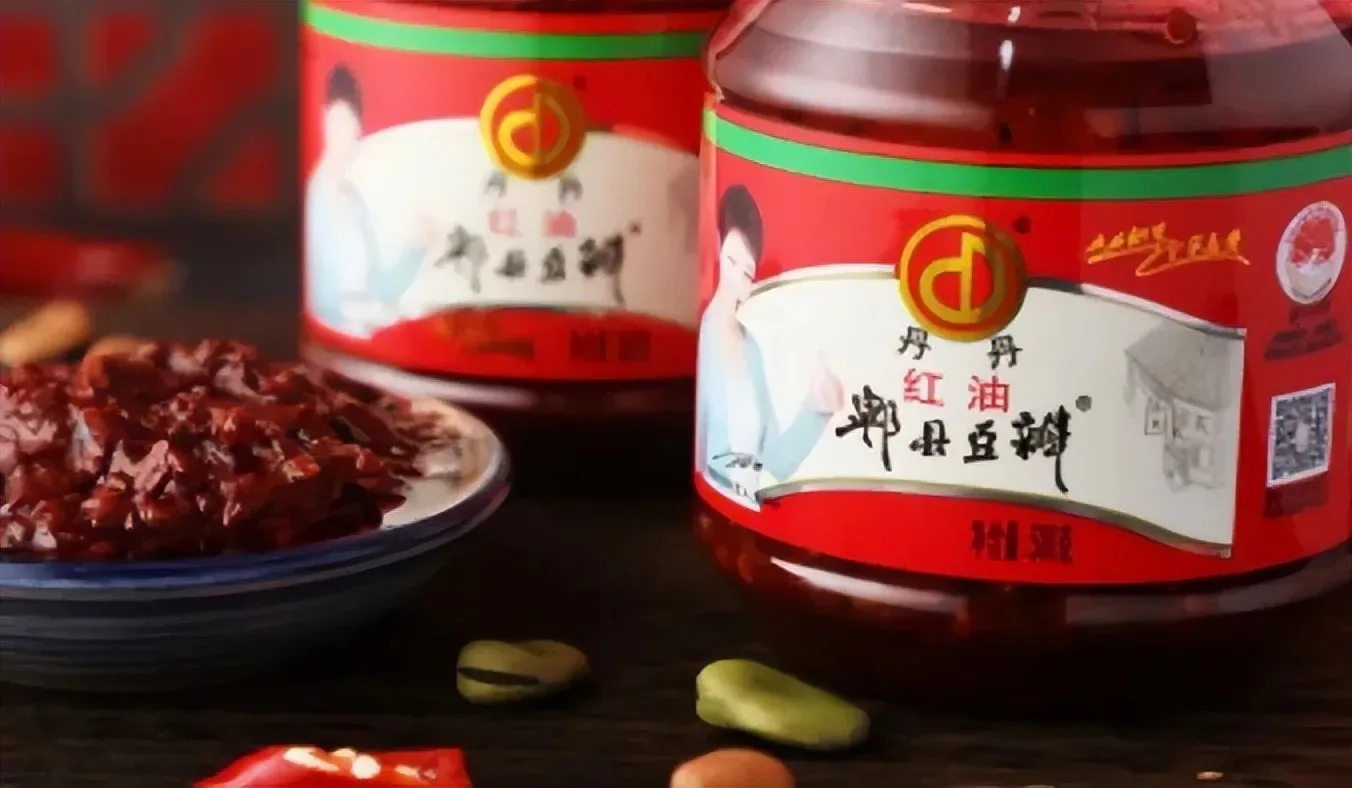
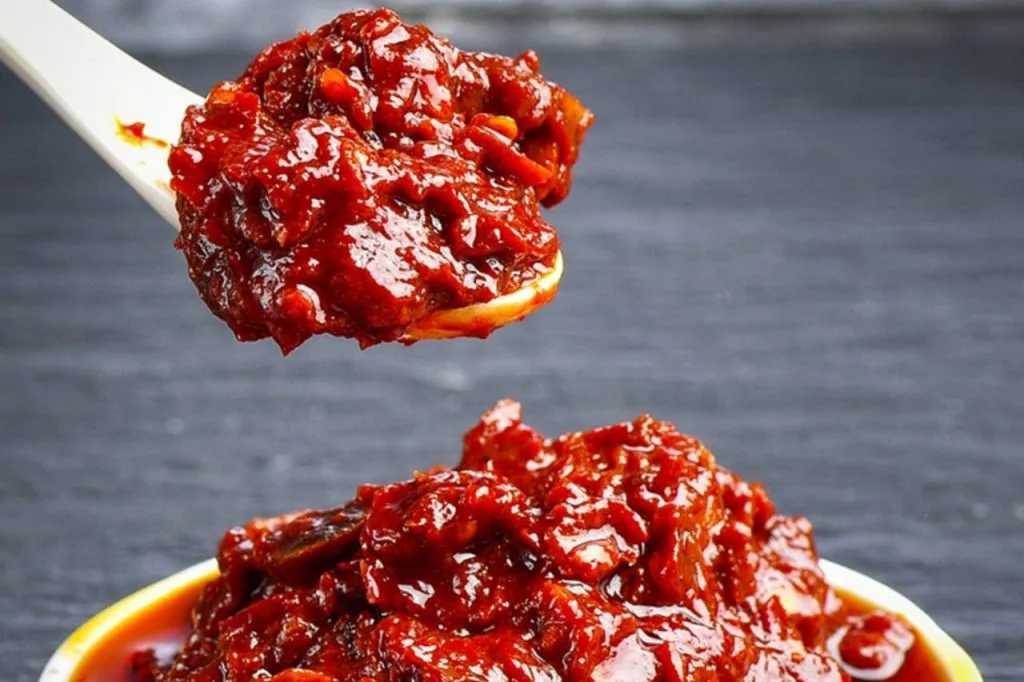
Doubanjiang (豆瓣酱), literally “bean paste,” isn’t called “the soul of Sichuan cooking” for nothing. It’s bright red to reddish-brown and deliberately chunky – not smooth like most bean sauces – and it tastes spicy, savory and salty, with deep umami from long fermentation. There are several versions, but the Sichuan one is by far the best known.
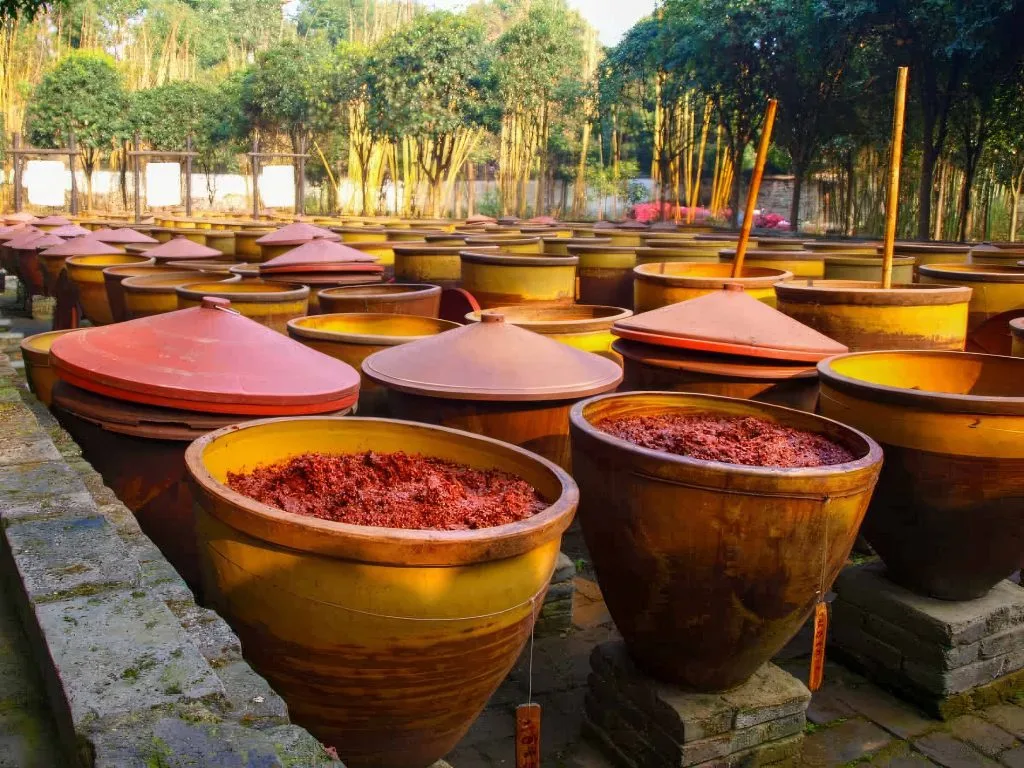
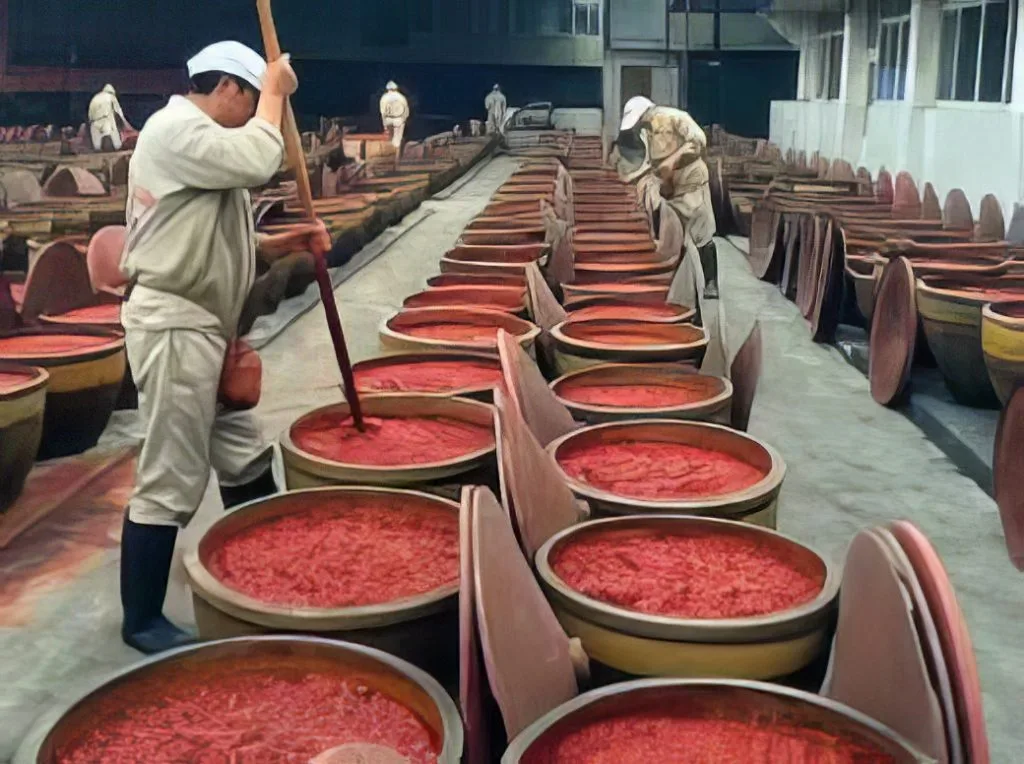
Sichuan chili bean paste is made from broad beans (fava beans) and chilies. Pixian douban (郫县豆瓣) is a particularly famous variety, named after Pixian county (now Pidu district of Chengdu) in Sichuan province. Its spicy, fermented flavor is closely tied to geography: Pixian lies on a flat, sunny plain with high humidity, a climate ideal for the microbial flora that drives fermentation and gives the paste its distinctive taste. Pixian doubanjiang traditionally ferments for a long time outdoors in the sun, and prices vary according to how many years it has aged. Sadly, as the city develops, the tradition is fading, and modern production lines are replacing traditional fermentation methods.
Doubanjiang is the foundation of many great Chinese dishes, such as Mapo Tofu, Twice-Cooked Pork Belly and Ants Climbing a Tree. But you don’t have to stick to Asian food – its heat can boost soups, marinades and sauces of all kinds.
Doubanjiang is quite salty, so keep that in mind when seasoning a dish or adding other salty ingredients such as soy sauce.
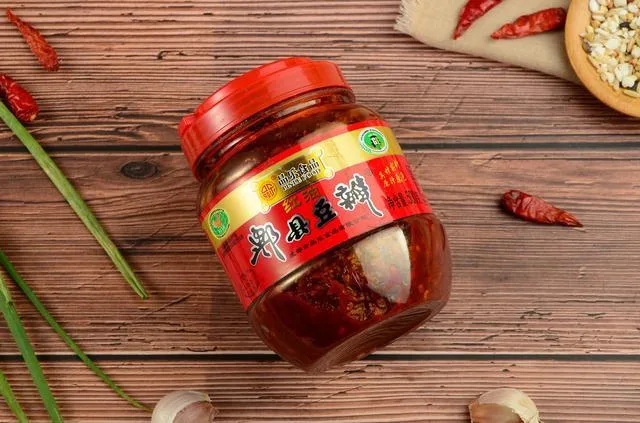
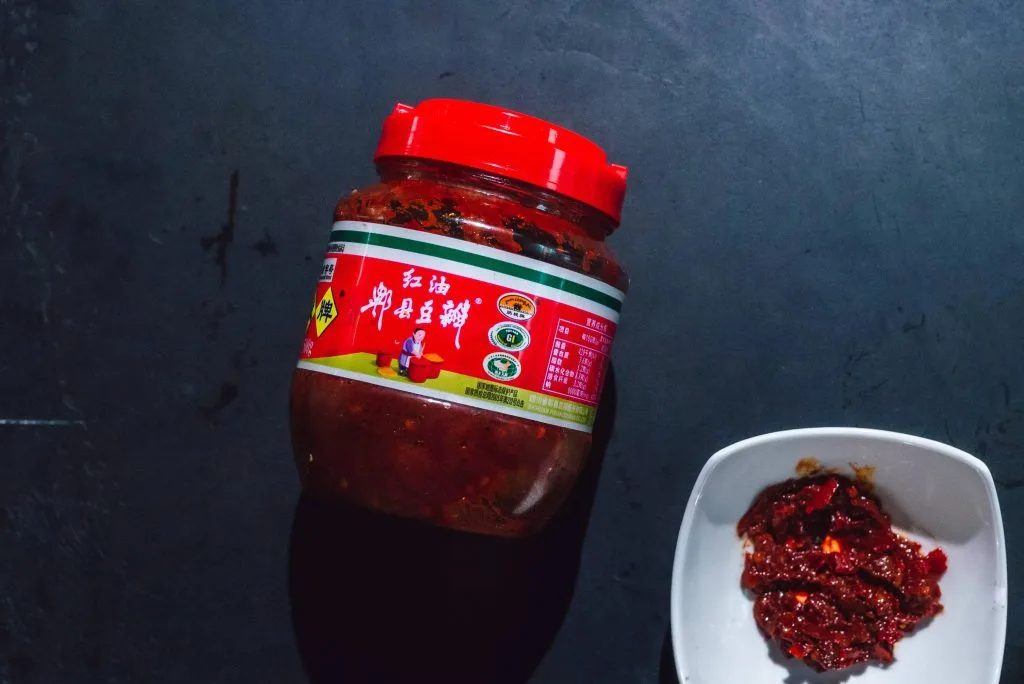
Which Doubanjiang to Buy
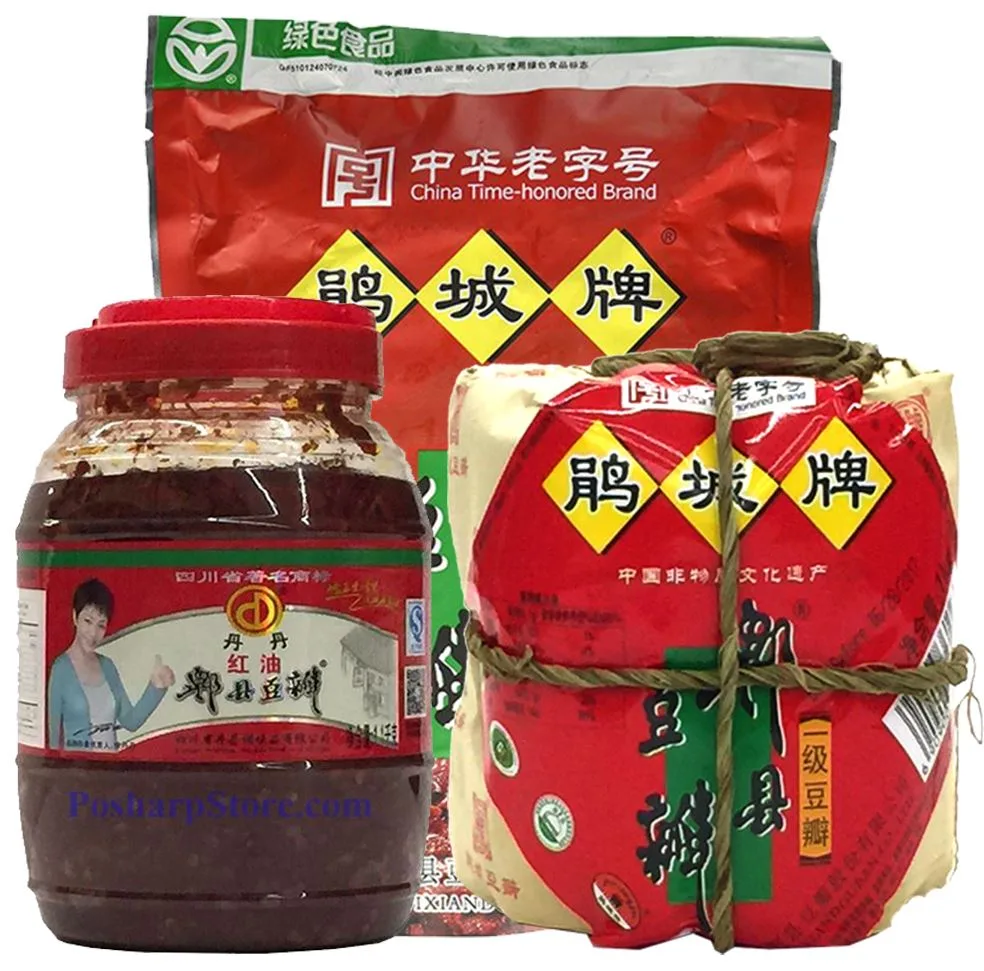
Look for paste labeled “Pixian” (郫县豆瓣酱) – it’s the benchmark. Brands like Lee Kum Kee (sold as “Toban Djan”) are best avoided here: doubanjiang isn’t their specialty or strength, as they focus mainly on Cantonese-style sauces and condiments.
Once opened, keep the paste in the fridge. In a sealed container it can last for months, as long as you always use a clean spoon to avoid contamination.
What to Use Instead
If you can’t find doubanjiang, you can use Indonesian sambal oelek or Korean gochujang chili paste instead. Neither tastes the same, but both will add heat and depth.