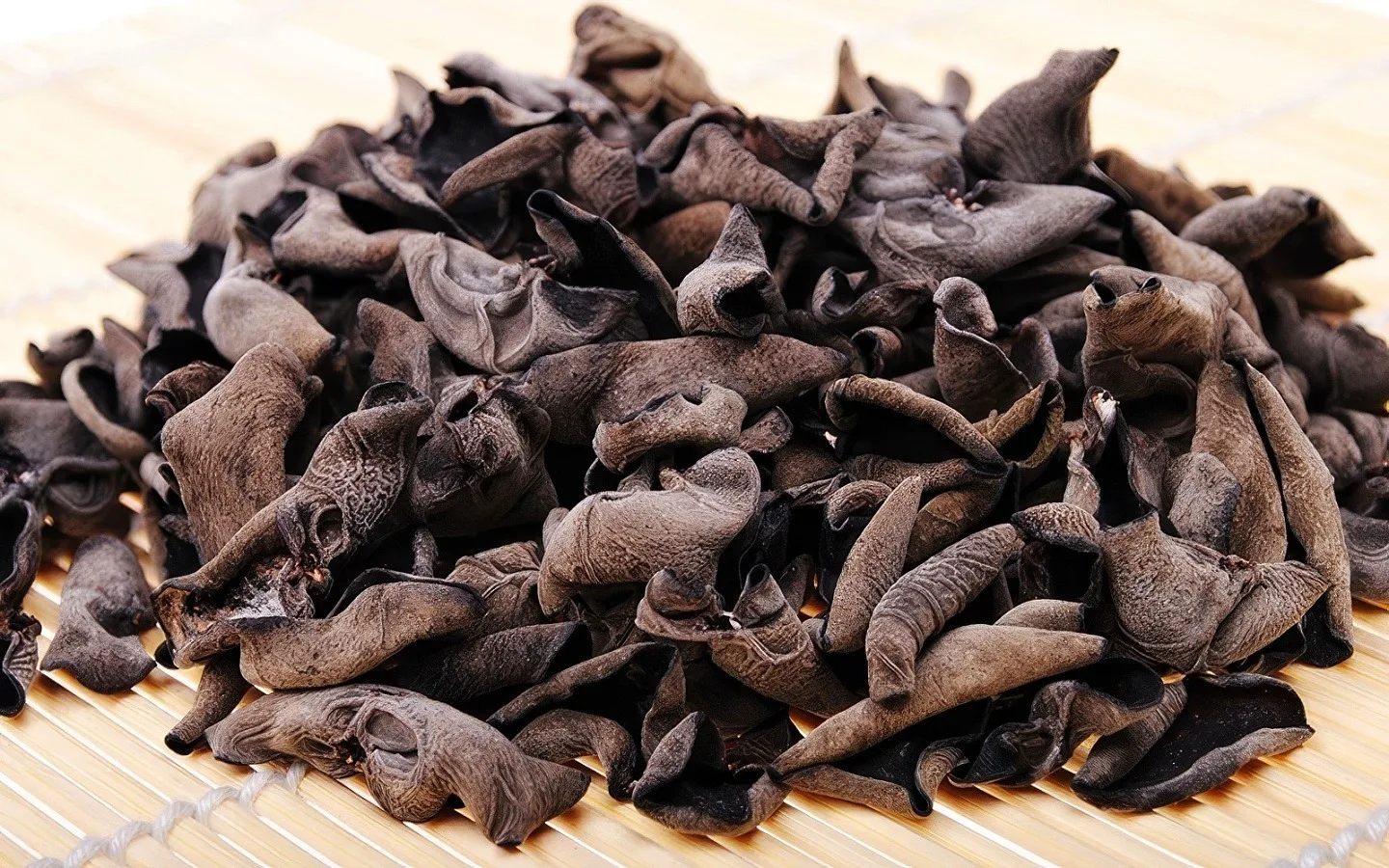
Wood ear mushrooms, known in China as 木耳 (mù’ěr – literally “wood ear”) and in the West often simply as black fungus, are among the most popular and prized mushrooms in traditional Chinese cooking and medicine. Fungi of the genus Auricularia, also called tree ears or jelly ears, are an important ingredient in Chinese food. They’re valued for their texture, their ability to absorb flavors and their health benefits. They have been used in Chinese cooking for centuries and remain hugely popular today. (Black fungus was already considered a delicacy at the imperial court during the Eastern Zhou period, more than two thousand years ago.)
Contents:
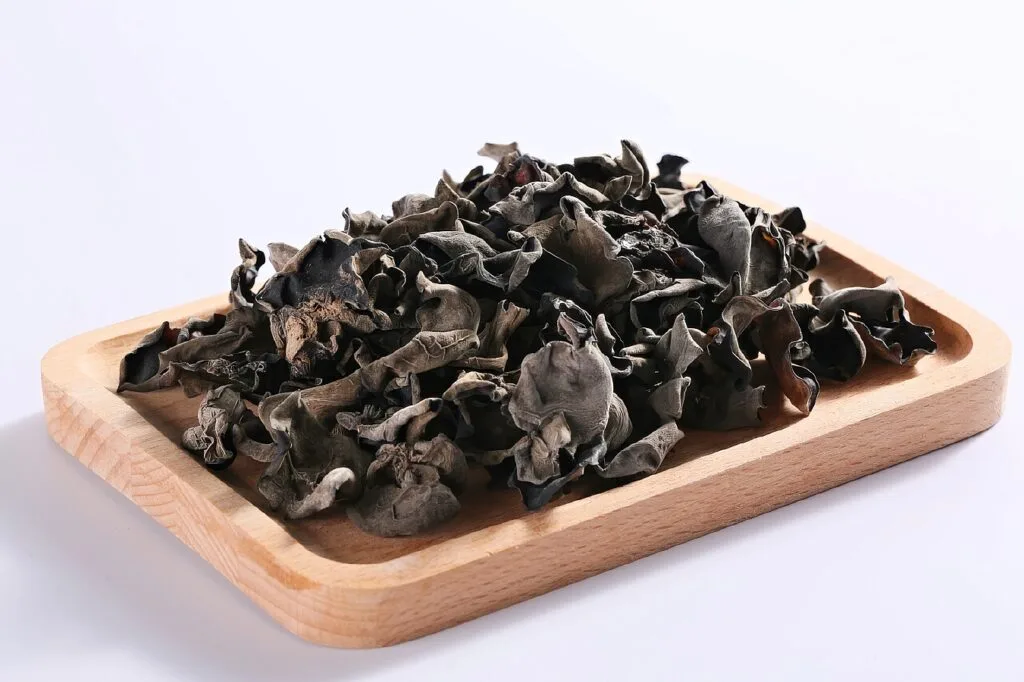
The genus Auricularia includes several species with similar but distinguishable characteristics. The ones you’re most likely to meet in the kitchen are Auricularia heimuer (the East Asian black wood ear), Auricularia cornea (formerly A. polytricha) and the European Auricularia auricula-judae. There are many other species as well, and the genus is still being actively researched, with species being renamed and reclassified.
China dominates the wood ear market. In 2019, it produced about 7.1 million metric tons of Auricularia, worth more than 36.5 billion yuan (roughly 5.3 billion US dollars at 2019 exchange rates).
Auricularia heimuer (Black Wood Ear, 黑木耳 hēi mù’ěr)
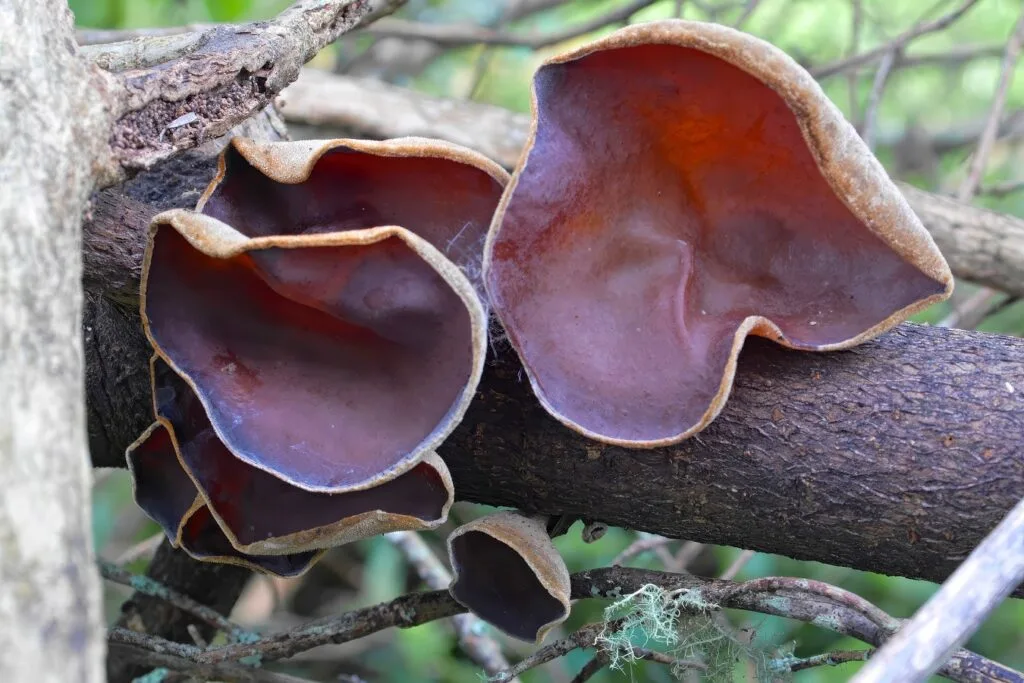
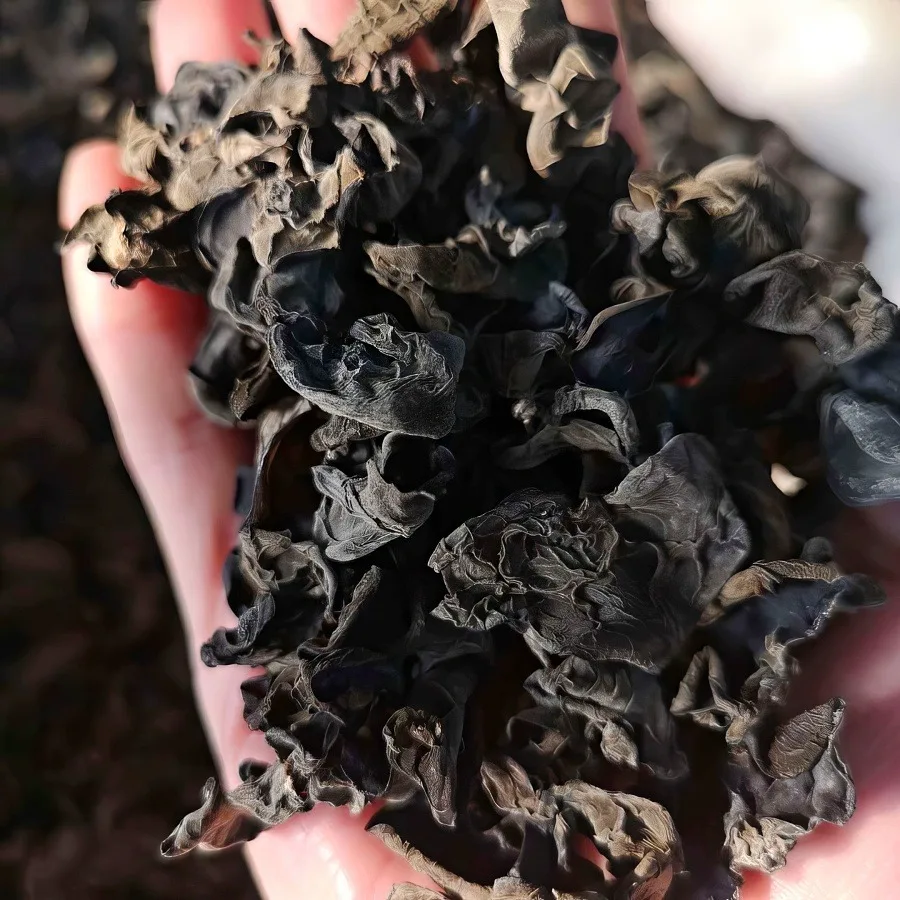
This is the classic Chinese black fungus and the one most commonly sold dried in Asian grocery stores. It’s thin, dark brown to black, smooth on top and delightfully crunchy even after cooking. It grows mainly in northeastern China and other parts of East Asia. For a long time it was considered the same species as the European jelly ear (A. auricula-judae), but it was formally described as a separate species, A. heimuer, in 2014.
Black wood ear absorbs flavors from other ingredients very well, which makes it extremely versatile. It’s used in soups, cold salads, sauces and stir-fries, and its crisp, springy bite is highly prized.
Auricularia cornea (Hairy Wood Ear, 毛木耳 máo mù’ěr)
Auricularia cornea (formerly A. polytricha) is thicker and often more brownish, with a pale, finely hairy underside. Its texture is chewier and firmer than black wood ear. It grows on dead or decaying wood in tropical and subtropical regions and is widely cultivated across Asia. You’ll often find it in soups, stir-fries and hot pot. In stores, both this species and black wood ear may be sold as “wood ear” or “cloud ear,” so it’s worth checking the package.
A big practical advantage of all wood ears is that they have no tough stems – just a small, firm attachment point that’s easy to trim off. That makes them quick and convenient to prepare, which restaurants and busy home cooks especially appreciate.
Auricularia auricula-judae (Jelly Ear)
The European jelly ear, traditionally called “Judas’s ear,” has a smooth, gelatinous surface, often with fine hairs on the underside. It grows mainly on dead or dying wood of broadleaf trees, especially elder, and is common in Europe. It’s edible and used in cooking and folk medicine, but it plays a much smaller role in Asian cooking than its East Asian relatives.
Auricularia fuscosuccinea
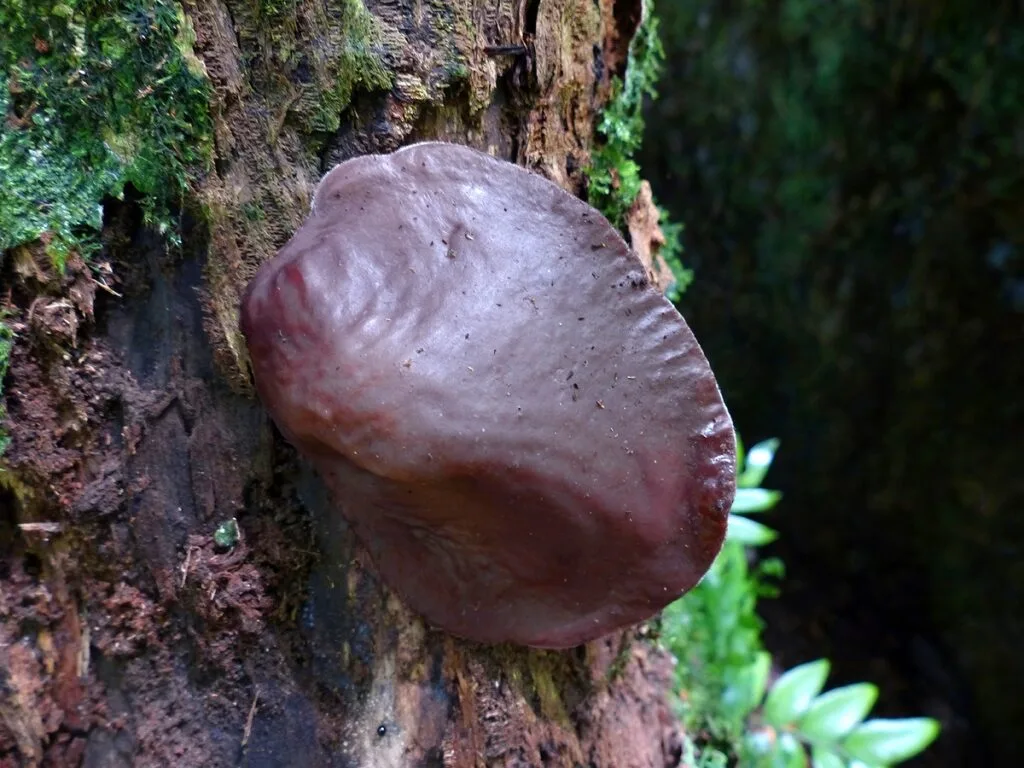
This species has a thicker, meatier body than the others. Its color is often more brown than black, with a glossy surface. It grows in tropical and subtropical regions, usually on dead wood of various tree species, and is used in some traditional cuisines.

Growing Wood Ear Mushrooms
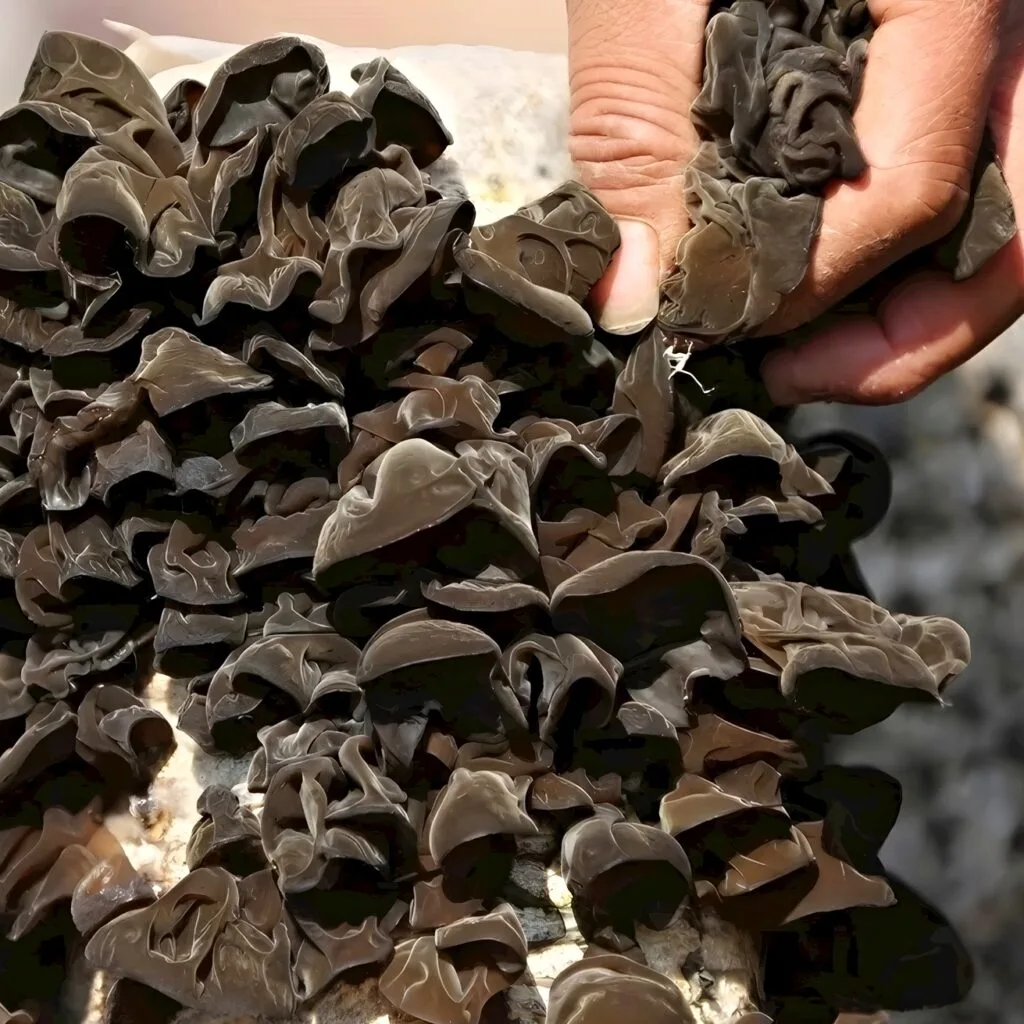
Wood ears are relatively easy to cultivate. They’re usually grown on wooden logs or in bags filled with sawdust and other organic material, which are inoculated with mushroom spawn. Cultivation needs a humid environment with good air circulation and a steady temperature. The mushrooms are harvested several weeks to a few months after inoculation.
Health Benefits of Wood Ear Mushrooms
Wood ears are a nutritious addition to your diet. They’re a good source of dietary fiber, with some protein, minerals (including iron, magnesium and potassium) and antioxidants, and they’re very low in calories and fat. In traditional Chinese medicine, black fungus is often used to “cleanse” the body and the blood.
Tip: Dried wood ears expand dramatically when soaked. Cover them with cold or lukewarm water for 30–60 minutes (or in hot water for about 15 minutes), then rinse well and trim the hard attachment point.