
Have you ever opened the menu at a Chinese restaurant and run into puzzling words like kung pao, chow mein, chow fan or goo lo yuk? You’re not alone – most people have no idea what these names mean or where they came from. Yet behind each of them is a story about language, history and how Chinese food made its way around the world.
Contents:
The Short Answer
Most of the odd-looking names on Western Chinese menus are older romanizations of Chinese words – spelled out by ear, often from Cantonese rather than Mandarin. Today the international standard is pinyin, but restaurant menus still carry older spellings that took root decades ago and became part of food culture.
How Chinese Dish Names Get Written in Latin Letters
Chinese is written in characters, for example 水煮肉, 宫保鸡丁 or 炒饭. To write Chinese words with the Latin alphabet, you need a system for spelling out pronunciation – a romanization. And that’s where the story of all those curious menu words begins.
What Is Pinyin?
Pinyin is the official romanization system for Standard Chinese (Mandarin) and the international standard for spelling Chinese names and pronunciation. It was developed in the 1950s, and today you’ll find it on maps, in dictionaries and on modern menus.
Examples in pinyin:
- 宫保鸡丁 → Gōngbǎo jīdīng
- 炒饭 → chǎofàn
- 水煮肉 → shuǐ zhǔ ròu
Why Didn’t Restaurants Use Pinyin?
Many Chinese restaurants in the West were opened long before pinyin spread globally – and many of their founders spoke Cantonese, not Mandarin. Older systems were also in use, most notably Wade–Giles, which dominated English-language writing about China for about a century.
The result? Many restaurants simply wrote names the way they sounded – so customers could read and pronounce them easily and order without knowing a word of Chinese. The same thing happened all over the world: Czech Chinese restaurants, for instance, have their own phonetic spellings such as kung-pao, čao-fan or šuej-ču-žou, written to fit Czech pronunciation.
What Do the Best-Known Menu Names Mean?
Kung Pao – the Spicy Classic
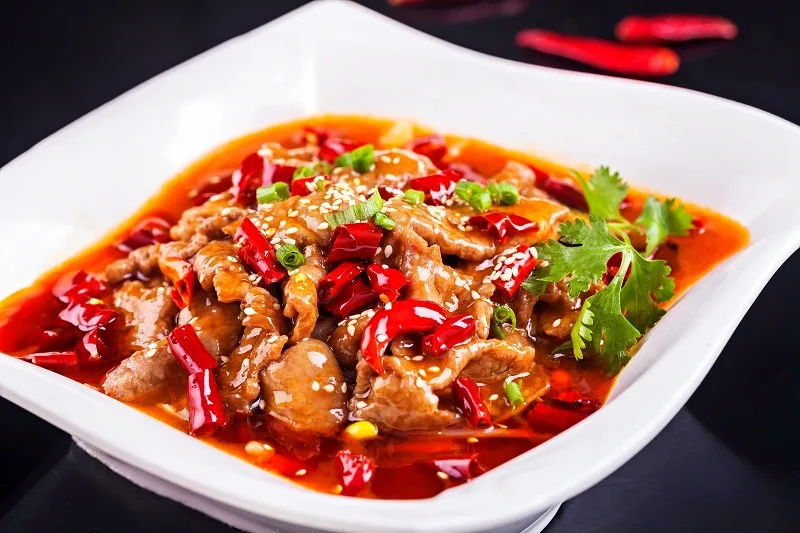
Kung pao is the Wade–Giles-style spelling of 宫保鸡丁 (Gōngbǎo jīdīng) – the classic Sichuan dish of chicken, peanuts and dried chilies. The name refers to the honorary title “Gōngbǎo” (宫保, Palace Guardian) held by the Qing-dynasty official Dīng Bǎozhēn, who is credited with the dish.
Shuǐ Zhǔ Ròu – Boiled Meat That Is Anything but Boring
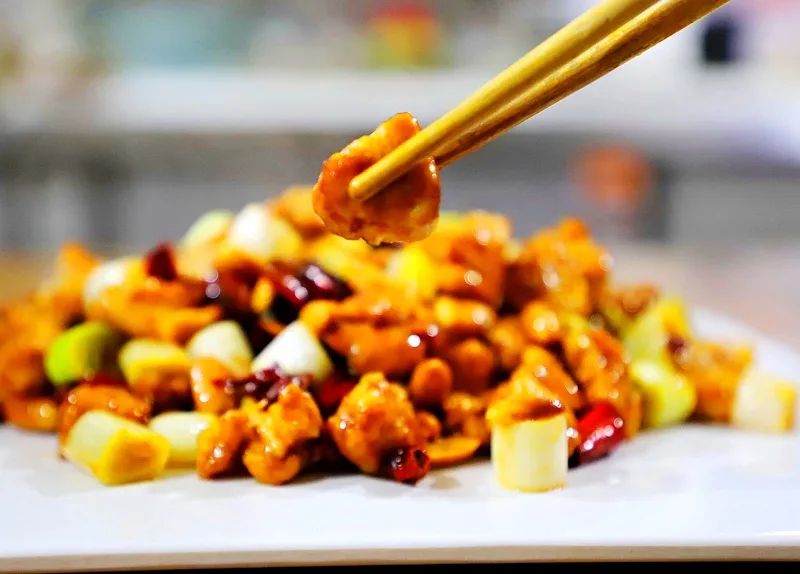
The Chinese name 水煮肉 (shuǐ zhǔ ròu) literally means “water-boiled meat” – which may sound bland, but in reality it’s an intensely spiced Sichuan dish swimming in aromatic oil full of chilies and Sichuan peppercorns. On Western menus you’ll often find it as “Sichuan boiled beef” or “fish/beef in hot chili oil.”
Chow Fan – Fried Rice
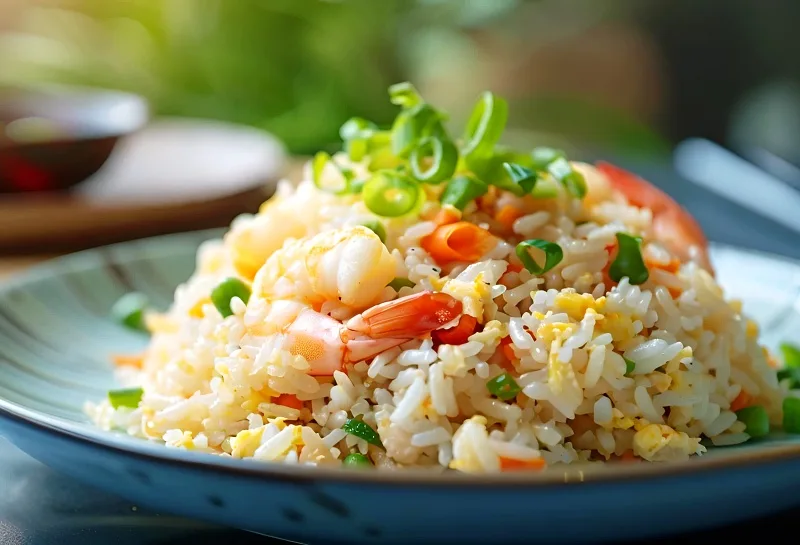
炒饭 (chǎofàn) literally means “fried rice” and is one of the most widespread Chinese dishes of all. “Chow fan” comes from the Cantonese pronunciation. Don’t confuse it with chow fun (炒粉), which means stir-fried wide rice noodles.
Chow Mein – Fried Noodles
炒面 (chǎomiàn) means “fried noodles.” The English “chow mein” comes from the Cantonese pronunciation, not from Mandarin – a perfect example of how southern Chinese immigrants shaped the vocabulary of Chinese food abroad.
Goo Lo Yuk – the Sweet and Sour Mystery
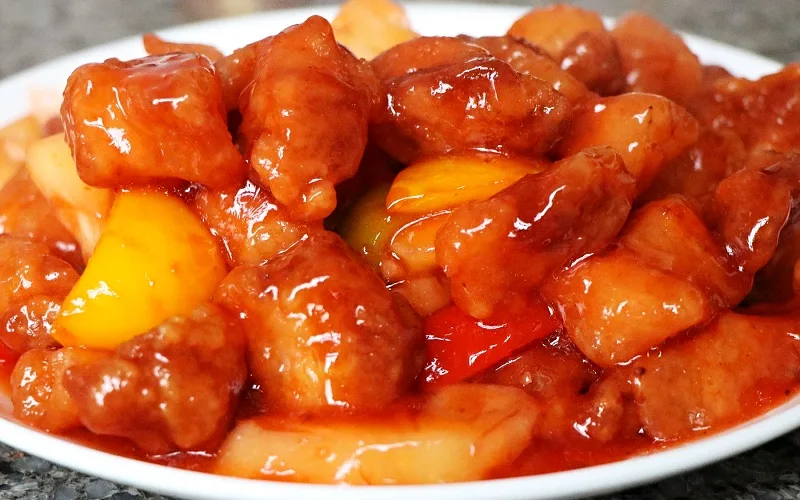
This one corresponds to 咕噜肉 (gūlūròu), the much-loved Cantonese sweet and sour pork. Its Cantonese origin explains why the menu spelling looks so different from what you’d expect from standard Mandarin.
Why Do Menu Names Differ from Modern Chinese? (3 Main Reasons)
1) Restaurants Used Different Romanizations
Besides pinyin, there are several other transcription traditions – older English systems like Wade–Giles, local phonetic spellings in other languages – and in practice they were mixed for a long time. Each restaurant simply chose its own way.
2) Dialects and Regional Pronunciation
Pinyin records Standard Mandarin, but many names that became established abroad historically come from southern China – typically Cantonese. “Chow mein,” “chop suey,” “char siu” and “dim sum” all follow Cantonese pronunciation, not Mandarin.
3) Making It Easy for Guests to Read
Simplified spellings often came about just so guests could pronounce the name without trouble – and so it looked like a “real word” in the local language. It’s a pragmatic linguistic compromise that has worked for decades.
Are These Names Wrong?
Not at all. They’re established names and a piece of the history of Chinese restaurants abroad. They carry traces of a time when Chinese cooking was just finding its footing in new countries and had to reach customers without Google Translate or pronunciation videos on YouTube.
These days, though, more modern restaurants increasingly use pinyin – because it’s standardized and understood internationally.
FAQ
What does “kung pao” mean?
In pinyin it’s Gōngbǎo jīdīng, written 宫保鸡丁 – the classic Sichuan dish of chicken, peanuts and chilies, named after an official’s title.
What is “chow fan”?
In pinyin chǎofàn, written 炒饭 – literally “fried rice.”
What is “shui zhu rou”?
水煮肉 (shuǐ zhǔ ròu) literally means “water-boiled meat” – a fiery Sichuan dish of tender meat slices in chili oil.
Why is pinyin used?
Because pinyin is the official romanization of Standard Chinese and the international standard – understood anywhere in the world.
One Last Fun Fact
Many dishes in Western Chinese restaurants may differ from the versions you’d find in China, but the names often really do come from real Chinese dishes – they were just “rewritten” over the years. That’s why legendary names like kung pao, chow mein or chow fan still live on alongside pinyin. They’re words with a story – and that story is worth knowing.