
You’ll find kung pao chicken on the menu of just about every Chinese restaurant. But every restaurant has its own version, sometimes with a completely different flavor, and it’s hard to say which one is best – in the end, it comes down to your own taste buds. Westernized recipes often use bell peppers instead of dried chilies, leave out Sichuan pepper and borrow Cantonese ingredients and techniques, such as hoisin sauce.
Contents:
Kung pao chicken (Gōng Bǎo Jī Dīng, roughly “the palace guardian’s diced chicken”) comes from Sichuan cooking. It’s named after Ding Baozhen, a high-ranking official of the Qing dynasty who lived about 150 years ago. While he was governor of Sichuan, he often served this dish to his guests, adding dried chilies because the people of Sichuan love fiery flavors. He was later given the honorary title Tàizǐ Shàobǎo, also known as Gōngbǎo – “kung pao.”
You can make traditional kung pao chicken with the recipe below. It’s full of flavor but not overly sweet, spicy or sour, and it comes with a pleasant tingle on the lips from Sichuan pepper – the famous málà (numbing and spicy) sensation.
The true Sichuan version uses only chicken thighs, but you can use breast if you prefer.
Original vs. Takeout: What’s the Difference?
The kung pao you know from Western Chinese takeout is often a different dish from the Sichuan original. It isn’t necessarily worse – it has simply adapted to local tastes and available ingredients. Here’s an overview of the main differences, so you know exactly what you’re cooking.
| Original (Sichuan) | Western takeout version | |
|---|---|---|
| Heat | dried chilies | often just bell pepper or sweet chili sauce |
| Sichuan pepper | essential – creates the málà flavor | usually left out |
| Meat | diced chicken thighs | usually breast, sometimes sliced |
| Nuts | roasted peanuts | peanuts or cashews, sometimes none |
| Vegetables | scallions only | bell pepper, onion, carrot, zucchini, celery |
| Sauce | light, savory and slightly tangy | thicker and sweeter, often with hoisin |
The recipe below is the original version. For a milder variation, leave out the Sichuan pepper and use fewer chilies – everything else stays the same, and the dish is still excellent.
How to Make Kung Pao Chicken Step by Step
Marinating the Chicken
Mix the chicken with cornstarch, Shaoxing rice wine and light soy sauce and let it marinate for 20 minutes. The salt in the soy sauce tenderizes the chicken, while the cornstarch forms a protective layer so the meat isn’t in direct contact with the heat and stays juicy. Use just enough marinade to coat the chicken without leaving a puddle in the bowl. If you’re using a starch other than cornstarch, such as potato starch, use a little more to get the right texture.
The Sauce
Mix all the sauce ingredients well in a medium bowl and set aside. Adjust the sauce to your taste – some people like it sweeter, others more sour.
The Peanuts
Heat a teaspoon of oil in a wok over medium heat and add a cup of raw peanuts. Stir constantly (or they’ll burn) for about 3 minutes. When they turn golden, take them out and set aside. Fried in a small amount of oil and cooled completely, they’ll be extra crunchy. Feel free to experiment and try cashews instead – they’re delicious.
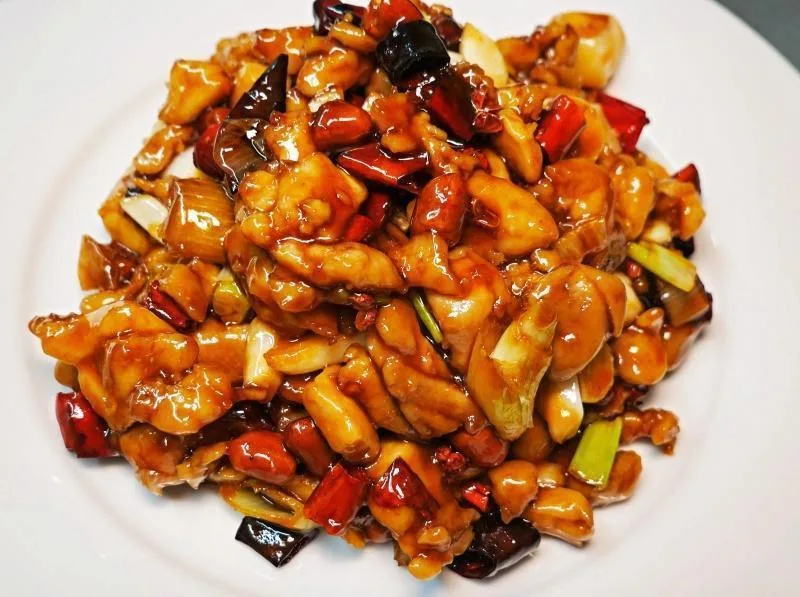
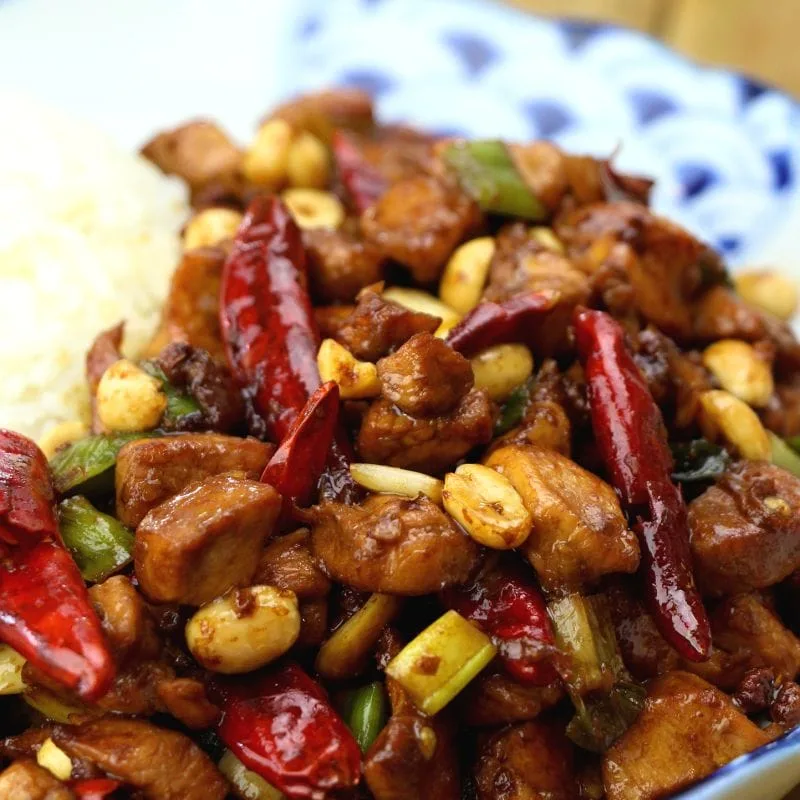
Have all your ingredients prepped and laid out next to the stove. The dish comes together in just a few minutes, and there’s no time to hesitate or dig through the cupboard once you start.
Frequently Asked Questions
What can I use instead of Sichuan pepper?
Nothing, really – Sichuan pepper has a unique numbing effect that no other spice can imitate. If you don’t have it, leave it out entirely; the dish will still taste good, it’ll just be missing that characteristic tingle. Black pepper or chili won’t replace it.
What’s the best meat to use?
Chicken thighs. They stay juicy even at the high heat of a wok, while breast dries out easily. If you do use breast, cut it into larger cubes and stir-fry it for a shorter time.
Can I make kung pao chicken without the heat?
Yes. Dried chilies mostly perfume the oil – the heat is released mainly when you break them open or leave the seeds in. Add them whole and don’t let them burn, and the dish will be fragrant but mild.
Why does my chicken stick to the wok?
Usually because the wok isn’t hot enough, or because you added the oil to a cold wok. Heat the empty wok until it just starts to smoke, then add the oil, swirl it around and only then add the food.
What should I serve with kung pao chicken?
Traditionally, steamed jasmine rice, which balances the heat of the sauce. It also goes well with Chinese fried noodles.
More Chinese Chicken Recipes
If you enjoyed kung pao chicken, try these other classics – from fiery Sichuan dishes to gentle Cantonese ones:
- Strange Flavor Chicken – a cold appetizer where five flavors meet at once
- Fragrant and Crispy Chicken – double-fried with five-spice
- Three Cups Chicken – sesame oil, soy sauce and rice wine in one pot
- Black Pepper Chicken – a Cantonese classic without chili heat
- Saliva Chicken – cold chicken in a spicy red chili oil sauce
Kung Pao Chicken (Gōng Bǎo Jī Dīng 宫保鸡丁)
Ingredients
Marinade
- 400 g boneless chicken thighs about 14 oz, diced
- 1 tbsp Shaoxing rice wine
- 1 tbsp light soy sauce
- 2 tsp cornstarch
Sauce
- ½ tbsp dark soy sauce
- 2 tbsp light soy sauce
- 2–4 tbsp Chinkiang black vinegar
- 3 tbsp stock or water
- 1–2 tbsp sugar
Stir-fry
- 1 tbsp Sichuan peppercorns lightly toasted, then ground
- 6–12 small dried red chilies Sichuan facing heaven chilies are ideal
- 6 scallions white parts only, cut into ½-inch pieces
- 1–2 tbsp ginger finely minced
- 1–2 tbsp garlic finely minced
- ¾ cup raw peanuts about 110 g
- 4 tbsp neutral oil
- 3 tsp cornstarch mixed with a little water
Instructions
Marinate the chicken
- In a bowl, mix the chicken with the cornstarch, Shaoxing wine and light soy sauce. Marinate for 20 minutes. The salt in the soy sauce tenderizes the chicken, and the cornstarch forms a protective coating that keeps it juicy. Use only enough marinade to coat the chicken – there shouldn’t be a puddle in the bowl. If you use potato starch instead of cornstarch, use a little more.
Sauce
- In a medium bowl, mix all the sauce ingredients well and set aside. Adjust to taste – some like it sweeter, some more sour.
Peanuts
- Heat 1 teaspoon of the oil in a wok over medium heat and add the raw peanuts. Stir constantly for about 3 minutes so they don’t burn. When they turn golden, remove and set aside. Fried in a little oil and cooled completely, they’ll be extra crunchy. Cashews are a delicious alternative.
Stir-fry
- Heat 2 tablespoons oil in the wok over high heat. Lower the heat and add the dried chilies, ground Sichuan pepper, garlic, ginger and scallion whites. Stir for a minute or two until fragrant.
- Add the chicken and turn the heat up to maximum. Stir-fry briefly, then pour in the sauce. Slowly add the cornstarch slurry until the sauce thickens, and stir-fry for about another minute. Finally, add the peanuts, toss everything together and serve with rice.