
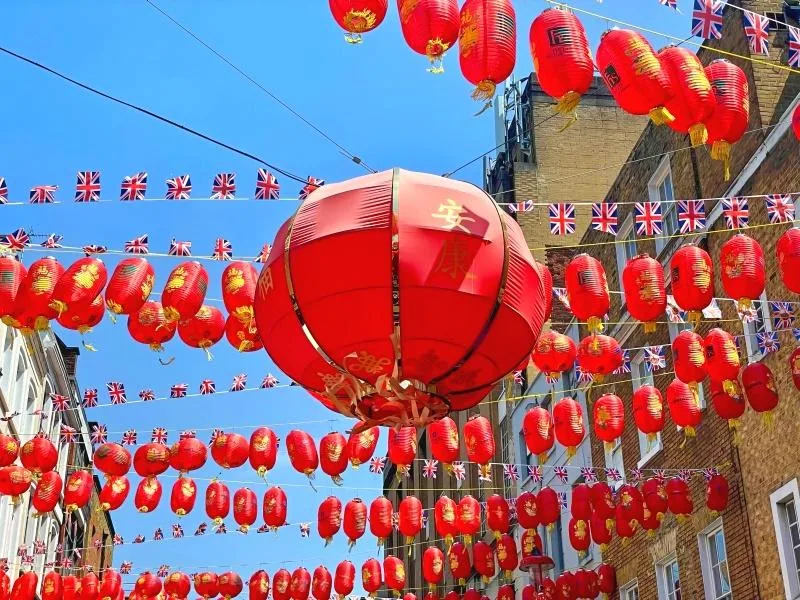
When we picture London, most of us think of historic landmarks, royal palaces or busy streets. But in the heart of the British capital, in Soho, there’s a hidden treasure that offers a different view of the city. Today’s Chinatown (伦敦唐人街) dates back to the 1950s – but London’s original Chinatown was in the East End, and its story begins in the 18th century. That’s when the first Chinese immigrants arrived and settled in Limehouse, where a growing Chinese community gradually built up, with restaurants and shops serving sailors.
Contents:
The History of London’s Chinatown
The first Chinese immigrants to Britain were employed by the British East India Company. They arrived at the East London docks in the 1780s aboard merchant ships carrying tea, porcelain and silk. The ships moored in the area known as Limehouse – a thriving industrial district that was already the most cosmopolitan part of the most cosmopolitan city in the country.
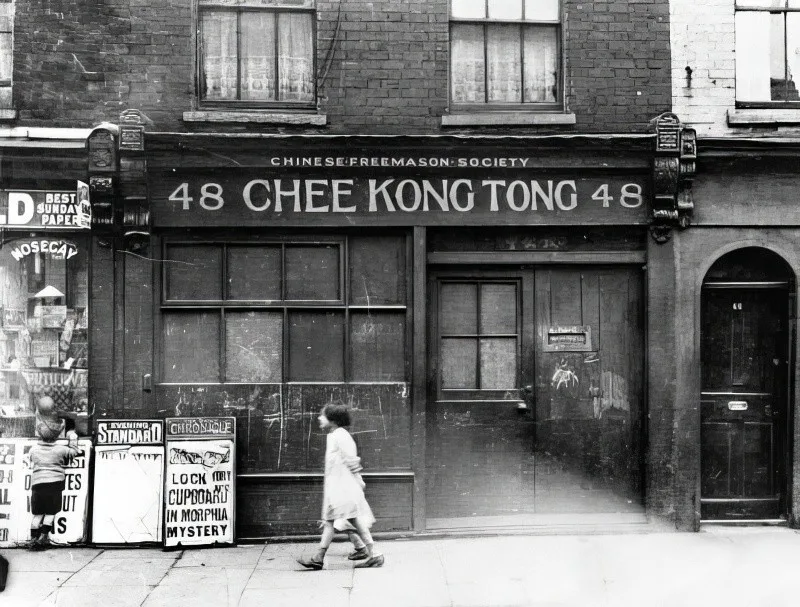
Chinese seamen often found themselves with no hope of getting home, exposed to freezing winters, poverty, racism and loneliness. Many had signed on to British merchant ships or smuggled themselves aboard in Macau or Canton. The pay was miserable, disease was rife on board, and simply being on the ship broke an imperial Chinese decree that banned emigration.
Worse still, British law strictly limited the employment of Chinese crew on any return voyage from London, generally requiring ships to hire British and colonial sailors instead. So when these men arrived in Limehouse at the end of the 18th century, they were effectively trapped.
Most of them didn’t want or intend to stay in Britain – they had families back in China. Many scraped by in the hope of earning enough for the passage home as paying passengers. But with no work in London, no English and no connections, many ended up destitute. The growing number of penniless Chinese men begging in the streets of Limehouse caused such public outrage that the East India Company had to provide housing, converting a disused barracks known as King David’s Fort into lodgings for Asian sailors.
Chinatown in Limehouse
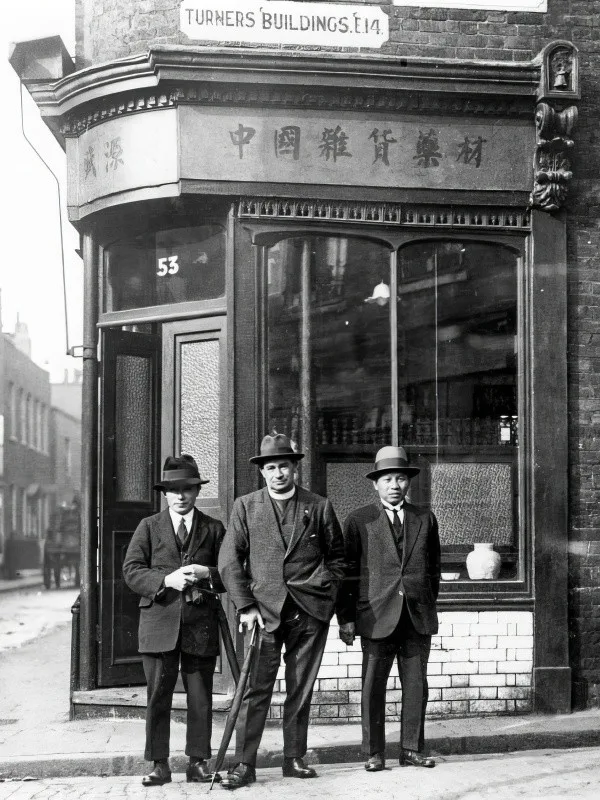
These modest boarding houses were often run by Englishwomen who spoke Cantonese or Shanghainese, with nicknames like Canton Kitty or Chinese Emma. Some of them offered gambling and opium rooms alongside lodging.
The Chinese quarter became famous – the travel agency Thomas Cook even ran bus tours there.
Before the turn of the 20th century, London’s Chinese population was estimated at only around 100. The 1911 census recorded 247 Chinese people in the capital, rising to 337 by 1921. Those census figures are misleading, though, because they missed many men who were sailors working long stints at sea.
The 20th Century
In the early 20th century, the old Chinatown became the subject of lurid newspaper stories, sensational popular fiction and even Hollywood films. The media portrayed it as an exotic, depraved slum full of brothels, gambling dens and opium dens.
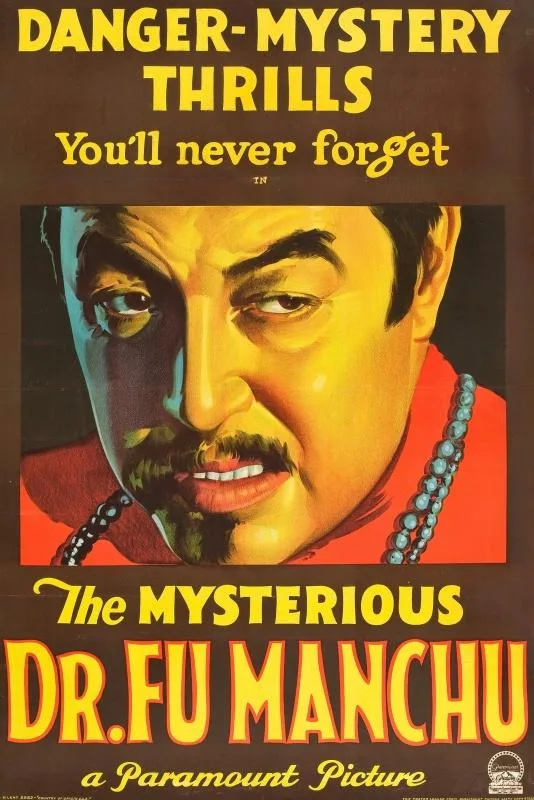
The image of Chinese people as malicious and cunning, mixed up in gambling, drugs and other crimes, was popularized by Sax Rohmer’s Fu Manchu novels, the first of which appeared in 1913. In these bestsellers, Fu Manchu is a criminal mastermind plotting to take over the world, using weapons such as poisonous snakes and fungi. Other books with similar villains followed, such as Agatha Christie’s The Big Four. Even sober evidence of a peaceful, law-abiding community did little to change the colorful portrayals of Chinatown.
The Decline of Limehouse Chinatown
The Limehouse Chinatown began to fade in the 1930s as shipping in the London docks declined. During the Second World War, German bombing raids devastated the area, and the last ruins of its houses were cleared in the 1950s.
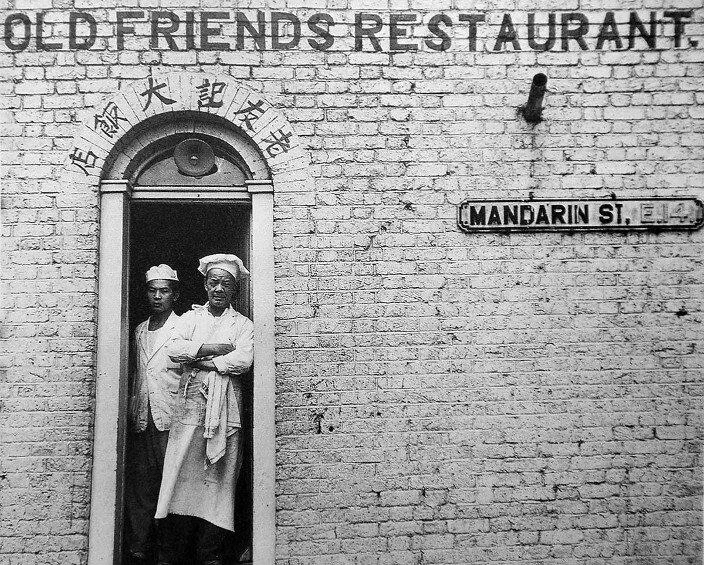
Although Limehouse Chinatown lasted for around a century and a half, most people living there today know nothing of this part of its history. The nearby Limehouse Basin, where Chinese sailors once looked for work or a way home, is now a marina for luxury yachts. Few traces of the old Chinatown remain – mostly street names: Canton Street to the north of Pennyfields, and Ming Street and Pekin Street to the south. Head north to Salter Street, though, and you’ll find a striking memorial to the legacy of these pioneering Chinese immigrants: the circular “Dragon’s Gate” sculpture, created by artist Peter Dunn in 1996 in memory of London’s original Chinatown and its residents.
Chinatown Today
The part of London where today’s Chinatown stands took shape after the Great Fire of London in 1666. As the city rebuilt, Londoners turned their attention to a disused military training ground. The landowner, Charles Gerard, granted permission to build houses there, and Gerrard Street was completed in the 1680s, followed later by a market and slaughterhouses. That’s how Soho came to be.
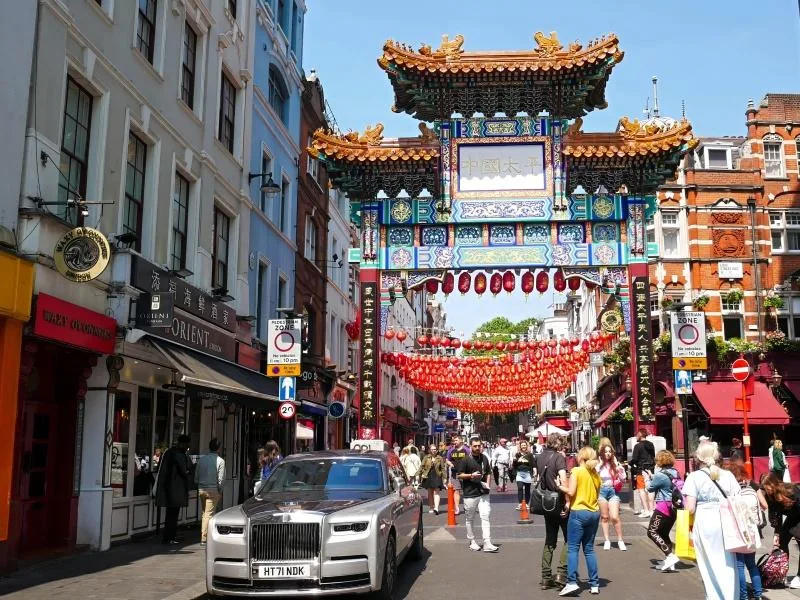
After the Second World War, London’s Chinese community struggled to make a living. When immigrants arrived in Soho in the 1950s, the area already had a reputation for great nightlife and cheap commercial rents. Luckily for the newcomers, British soldiers returning from the Far East had fallen in love with Chinese food. Chinese restaurants and shops began to open, and their success drew more Chinese entrepreneurs from the East End looking to make their fortune – and so today’s Chinatown was born.
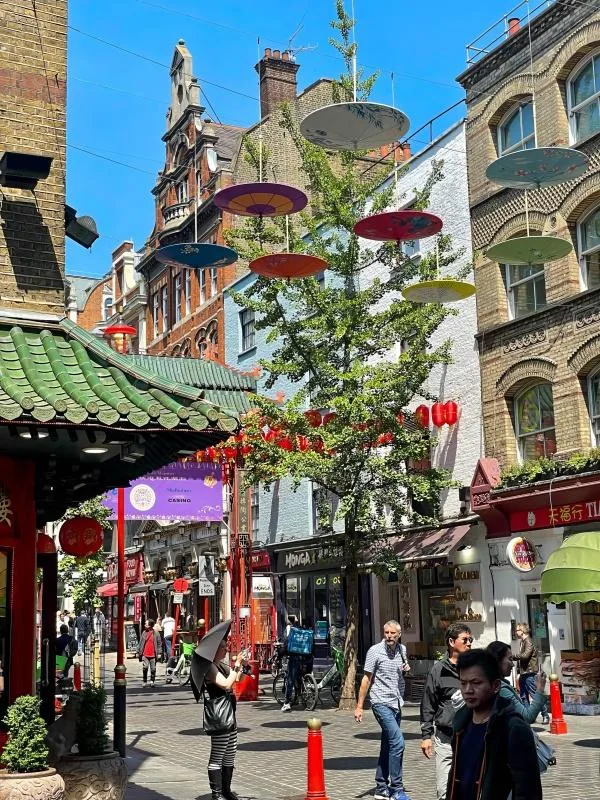
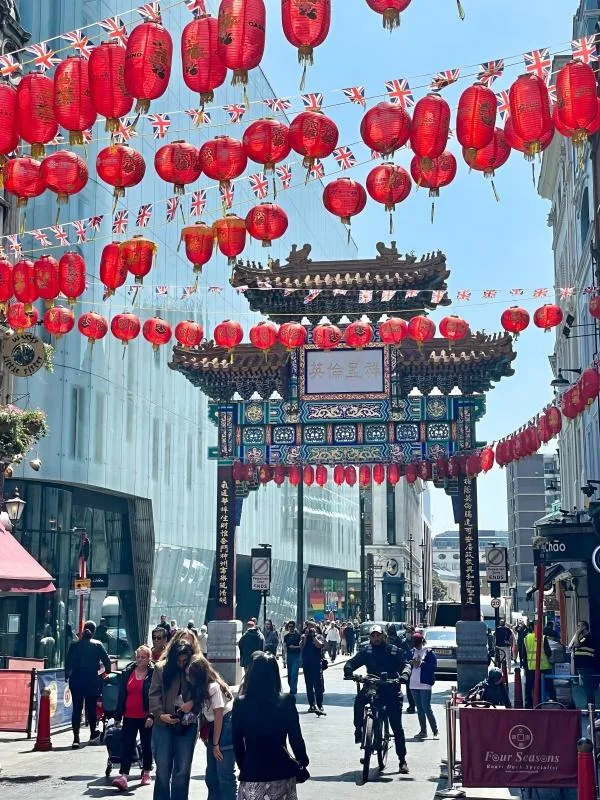
By the late 1960s, Chinatown had become the true center of London’s Chinese community, which grew to tens of thousands of people as more and more workers arrived from the then British territory of Hong Kong.
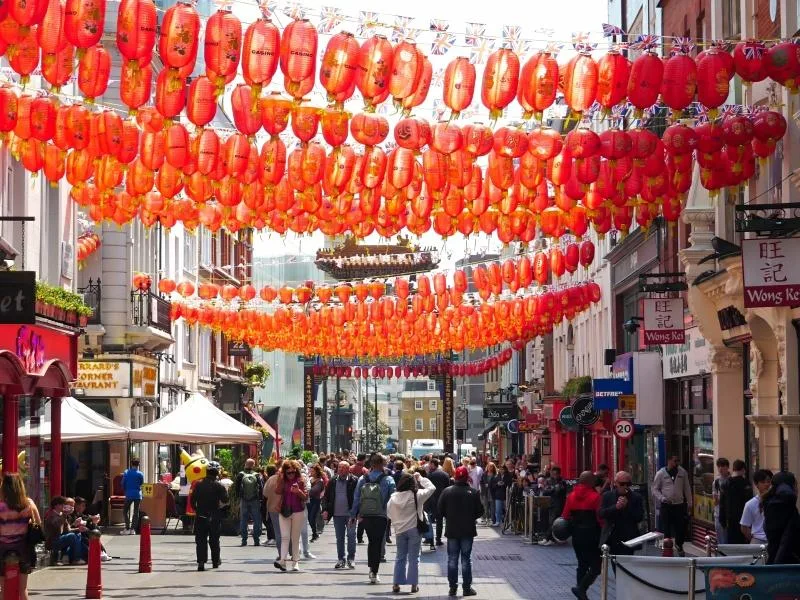
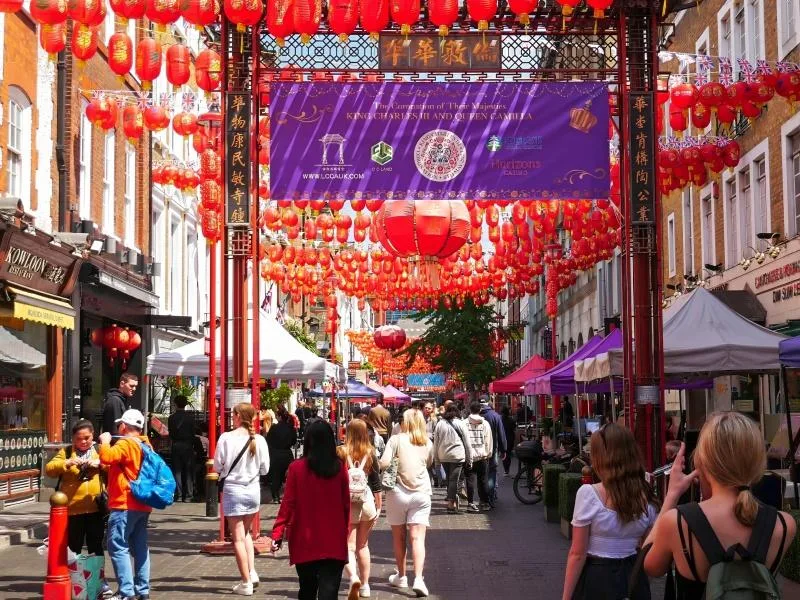
In the 1980s, the area was transformed into the Chinatown we know today. Chinese gates, street decorations, red lanterns, dragons and Chinese signage gave it its distinctive look. On Gerrard Street you can see two stone lions donated by the People’s Republic of China. Ornamental paifang gates mark several entrances to Chinatown, and parts of Gerrard Street, Newport Place and Macclesfield Street were pedestrianized.
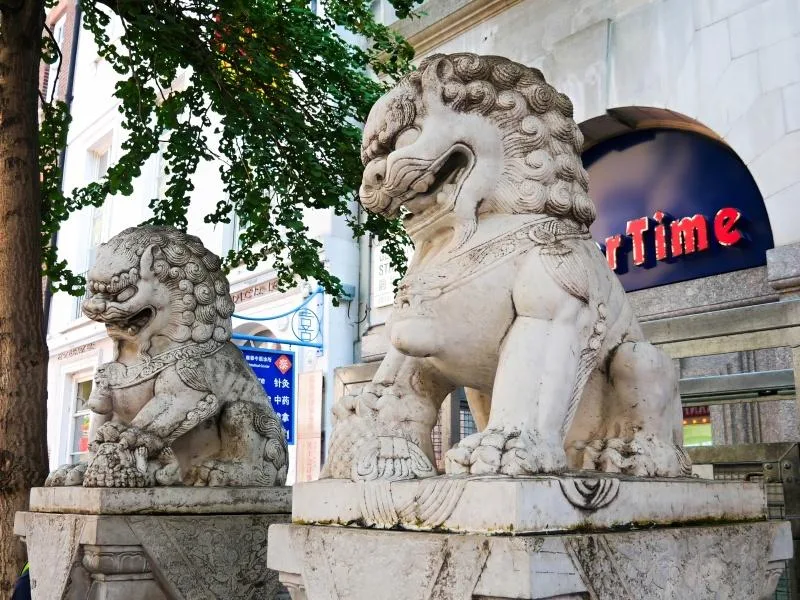
In 2016, a new gate was opened on Wardour Street. It was made by craftsmen in China and assembled in London in the style of the Qing dynasty.
Today, Chinatown draws millions of visitors every year. It’s especially busy during Chinese New Year, which falls between late January and mid-February, depending on the Chinese lunar calendar.
What Chinatown Has to Offer
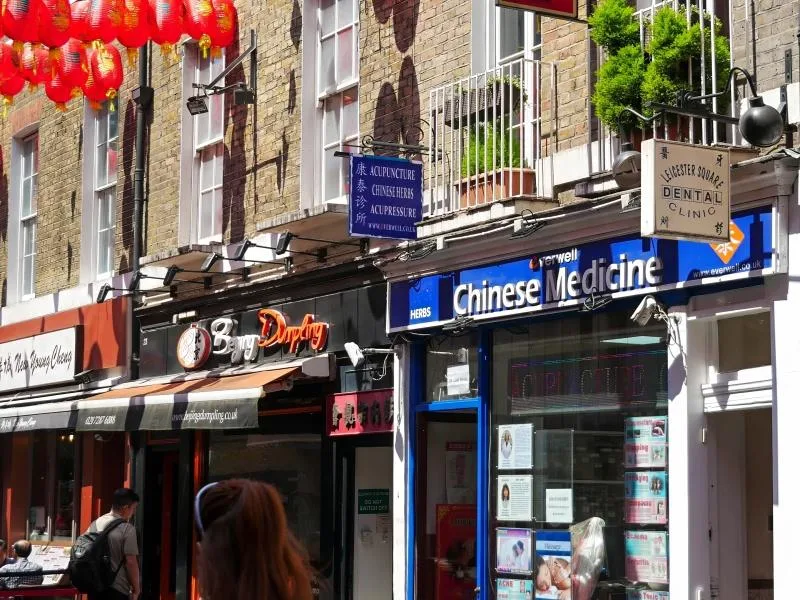
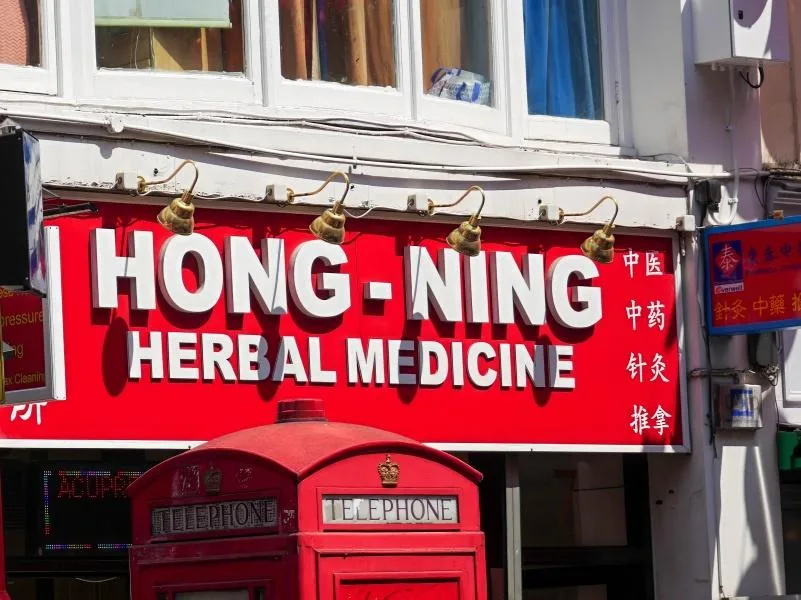
Besides strolling around and taking in the sights, most visitors come to Chinatown for the food. You can enjoy not only classic Chinese dishes but also specialties from different regions of China, Taiwan and Korea. There are more than 80 Asian restaurants, cafés and bars, along with Chinese supermarkets, bakeries, souvenir shops and even practitioners of traditional Chinese medicine. Charles Gerard would be proud.
Chinatown isn’t just a place for great Chinese food – it’s a living cultural hub and an important symbol of multicultural London. It’s where people from all over the world come together to celebrate and share the richness of Chinese culture, and one of the most vibrant places in the city to explore.