
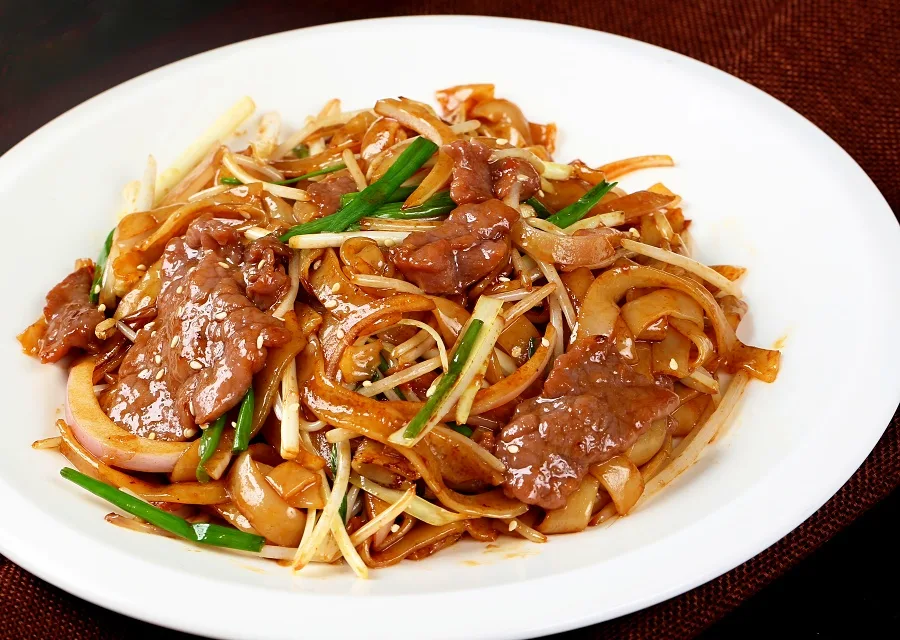
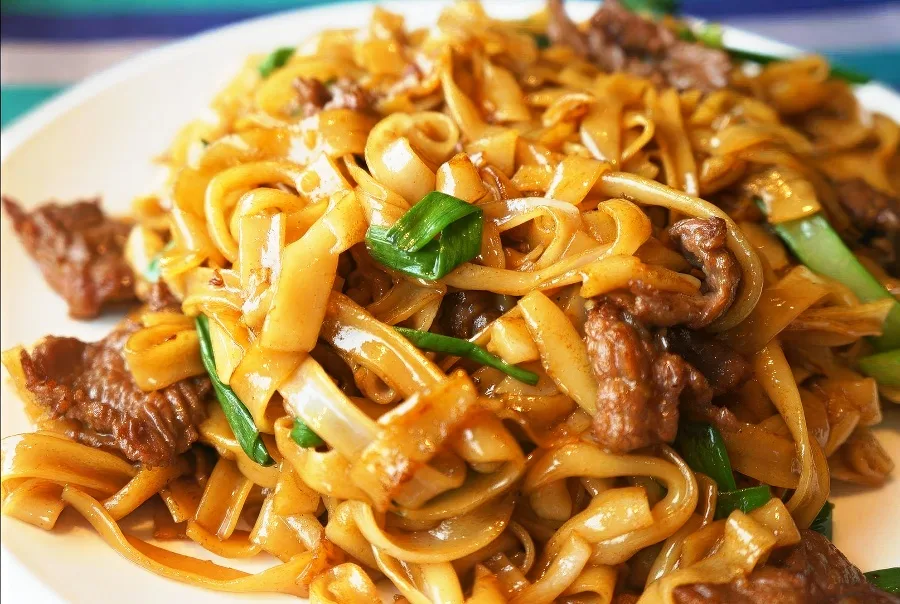
Beef chow fun – stir-fried rice noodles with beef, known in Chinese as Gān Chǎo Niú Hé (干炒牛河) – is a classic of Cantonese cooking. In Hong Kong, mastering this dish is considered a test of a chef’s skill, and one taste makes it clear why. It brings together silky wide rice noodles (hé fěn 河粉) and juicy slices of beef.
Contents:
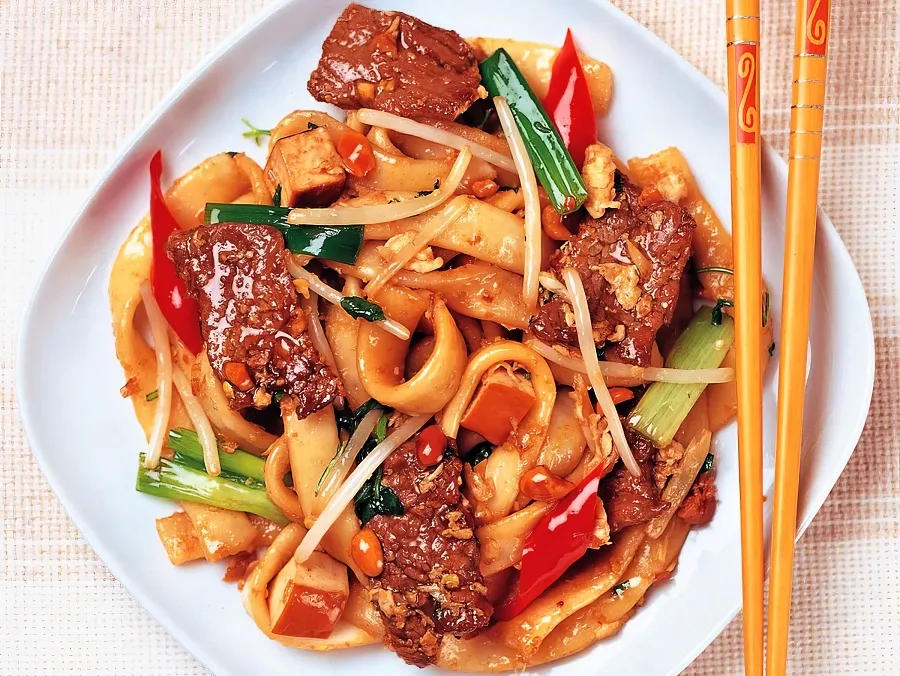
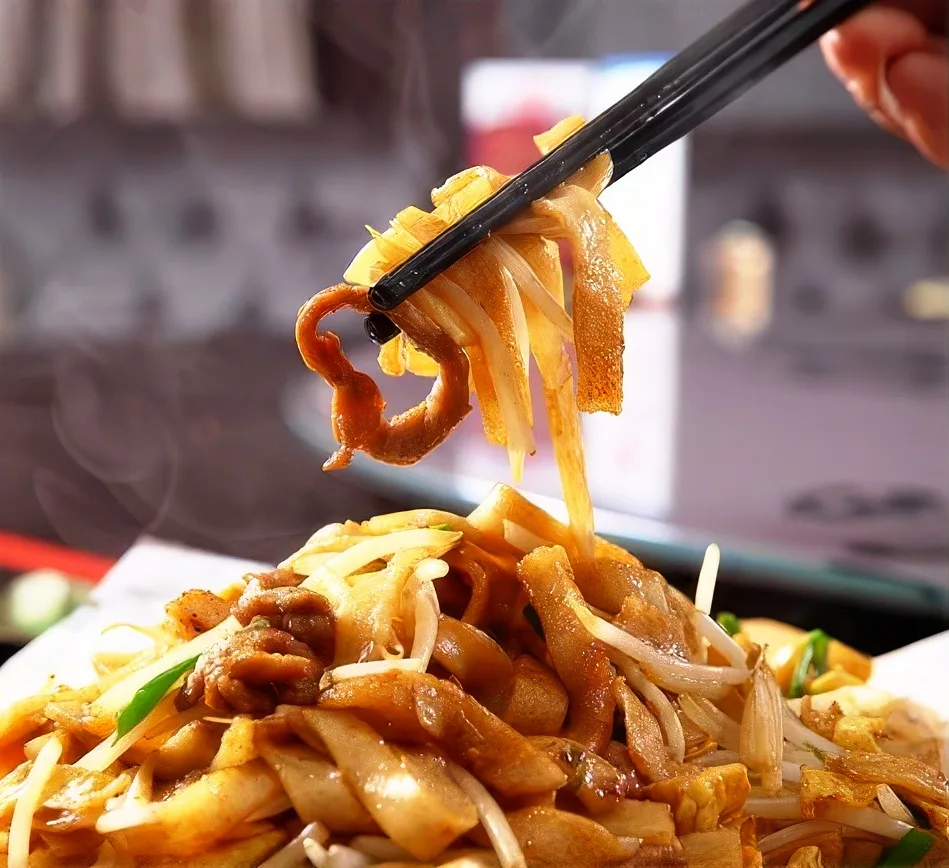
Beef chow fun comes from Guangdong province, specifically from Guangzhou (Canton), the heart of Cantonese cuisine. It’s a fixture of dim sum restaurants and is often served as a main dish in teahouses (茶楼, chá lóu). Its history goes back to the early 20th century, when rice noodles known as ho fun (河粉) became popular thanks to the wide availability of rice.
What Does Gān Chǎo Niú Hé Mean?
The name describes the cooking technique: “Gān” means “dry,” “Chǎo” means “stir-fried,” “Niú” means “beef” and “Hé” refers to rice noodles. “Dry-frying” here means stir-frying the ingredients quickly over high heat with very little sauce and a minimum of oil, which preserves their natural flavor. It takes real wok skill to sear the noodles perfectly and give them the lightly smoky flavor known as wok hei (镬气), the “breath of the wok.”
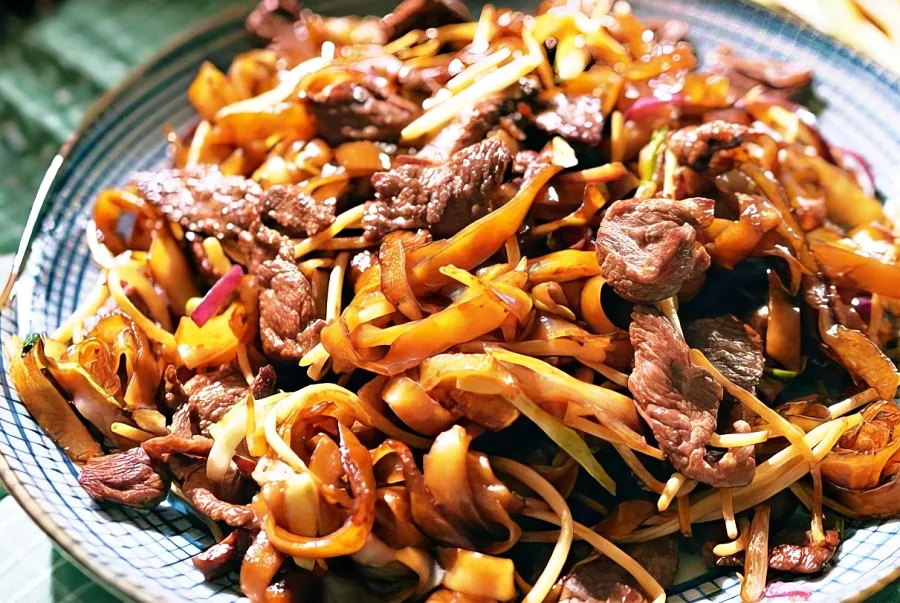
In Cantonese restaurants around the world, beef chow fun is seen as a benchmark of a chef’s ability. Getting it right takes not only precise control of the wok’s heat but also the skill to keep the delicate noodles separate so they don’t clump or break – no easy task.
Rice Noodles: A Cornerstone of Cantonese Cooking
Rice noodles have their roots in China, where rice has been cultivated for more than 6,000 years. They are commonly traced back as far as the Han dynasty (206 BC – AD 220), when rice became a dietary staple and was eaten in many forms, including noodles.
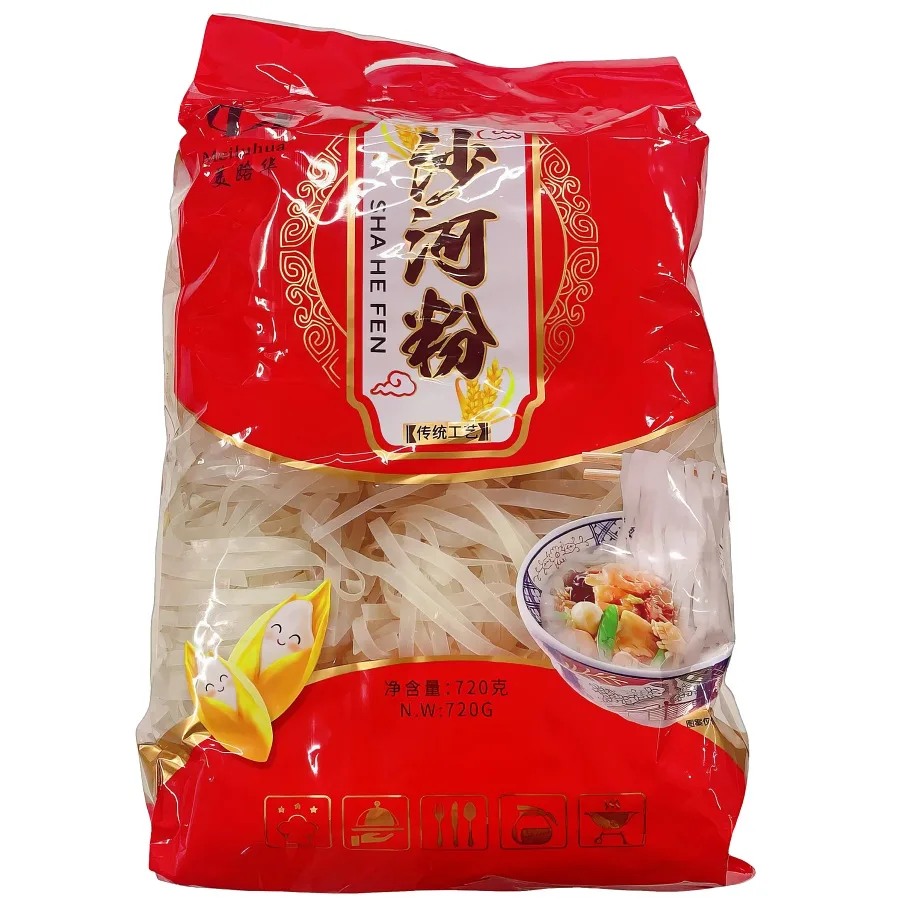
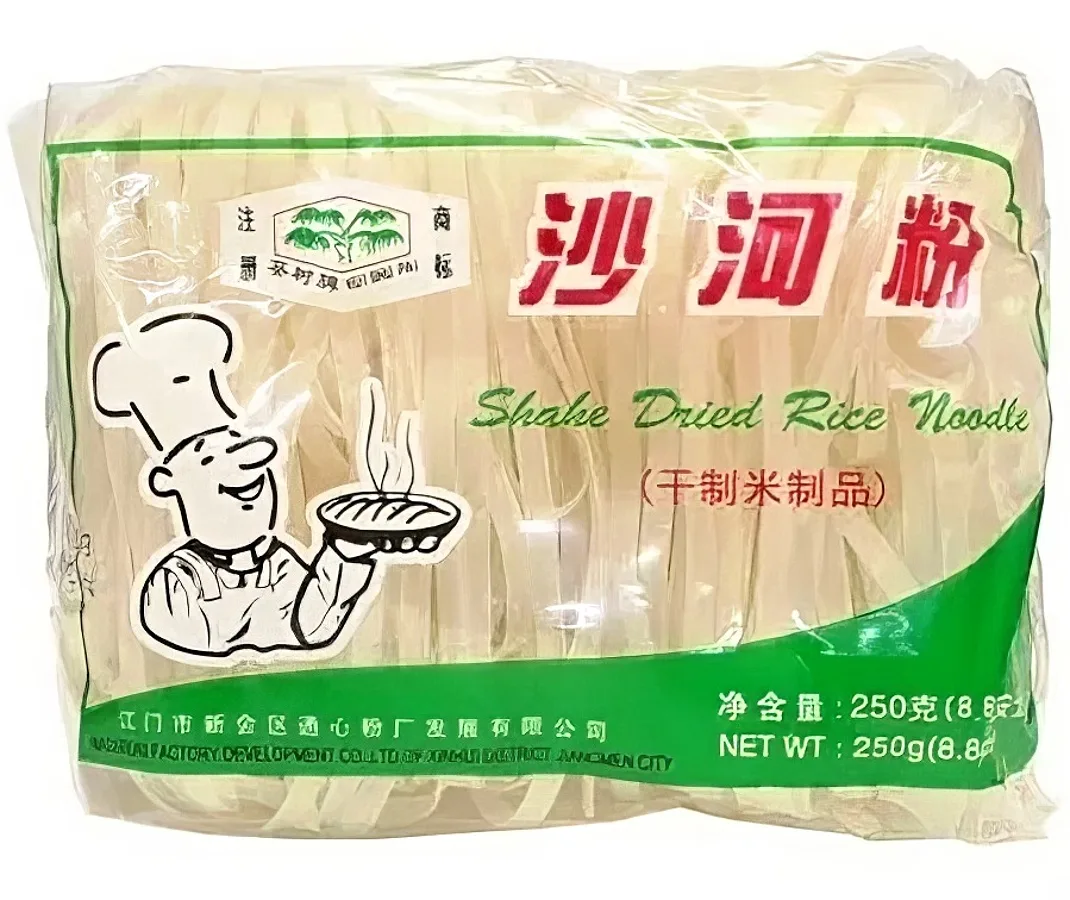
The flat, wide rice noodles called hé fěn (河粉), or shahe fen (沙河粉), are a symbol of Cantonese cooking. Their history goes back centuries to the town of Shahe (沙河) in Guangzhou, where they began as a simple but nourishing food for local people. The area was famous for these flat, silky noodles as early as the Ming dynasty (1368–1644). The name hé fěn literally means “river noodles.” They were originally made by hand and, because their ingredients – rice and water – were readily available, they quickly spread throughout southern China.
Besides shahe fen and he fen, which come from Mandarin, there are Cantonese-based names such as ho fun, hor fun and sar hor fun. In Southeast Asia, these noodles are also often called kway teow (粿條), which literally means “rice strips.”
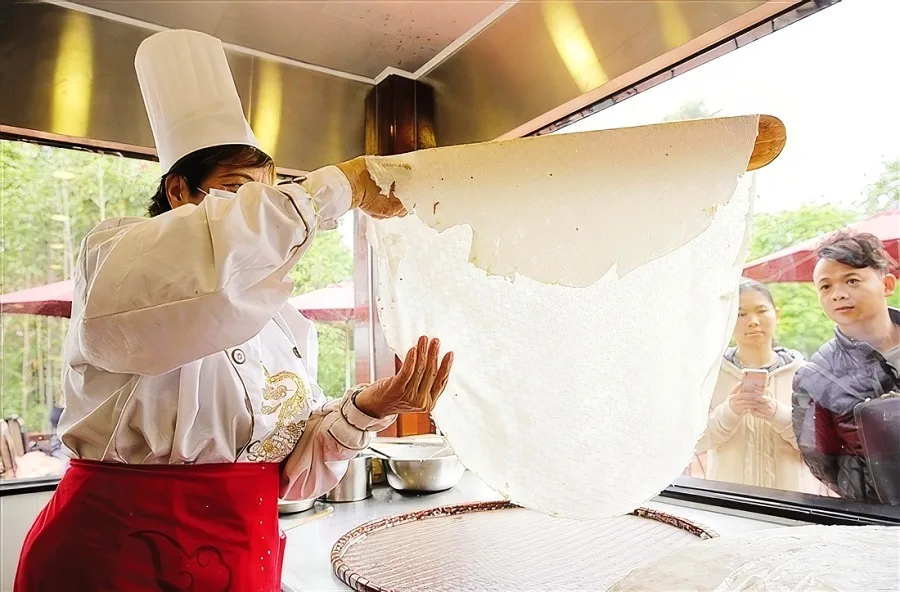
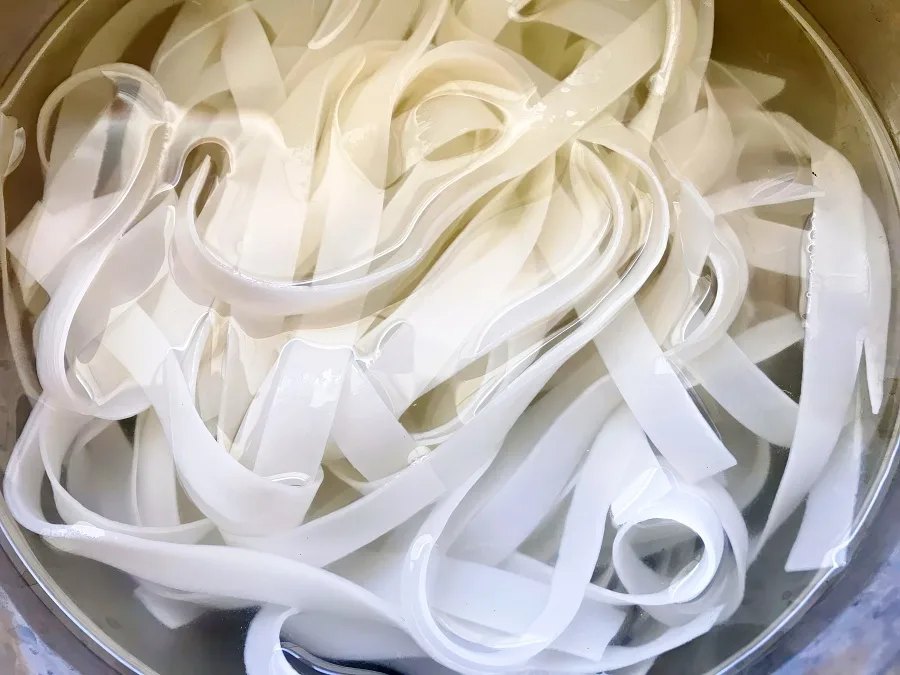
Shahe fen noodles are white, wide and somewhat slippery, with an elastic, slightly chewy texture. They’re usually sold fresh, either in strips or in sheets that you cut to the width you want. When fresh noodles aren’t available, dried ones are used. They’re similar to Vietnamese bánh phở noodles, which derive from the Chinese version. In the West, look for fresh “ho fun” or “chow fun” noodles in the refrigerated section of Asian grocery stores.
The Story Behind Beef Chow Fun
According to legend, the dish was born during the Japanese occupation of China in 1938. A cook named Xu Bin (许彬) ran a family food stall in Guangzhou. One night he ran out of the starch needed to make the traditional saucy fried noodles. When an officer arrived demanding food, Xu Bin improvised and stir-fried the noodles without sauce – “dry.” The new method was a hit and became the basis of today’s Gān Chǎo Niú Hé.
Regional Variations and Adaptations
Thanks to the Chinese diaspora, beef chow fun has spread to restaurants all over the world. It goes by different names, from “Beef Chow Fun” in North America to the related “Char Kway Teow” in Malaysia and Singapore. As Asian food has grown in popularity in the West, it has become a regular on many Chinese restaurant menus. Some chefs adapt the recipe to local ingredients and tastes – using meat other than beef, adding different vegetables or adjusting the seasoning. Western versions are often sweeter, sometimes with teriyaki-style sauces or ingredients like bell peppers and broccoli that aren’t common in the original. The traditional version remains a favorite among lovers of Cantonese food.
Making these noodles at home may be a bit of a challenge, but you’ll be rewarded with flavor no takeout can match. The key is heat: the wok has to be ripping hot, otherwise the noodles won’t pick up that smoky wok hei – which is exactly what sets them apart from every other fried noodle. On a home stove, cook in small batches so the wok stays as hot as possible.
Beef Chow Fun (Gān Chǎo Niú Hé 干炒牛河)
Ingredients
- 200 g beef about 7 oz, flank steak or sirloin
- 200 g wide rice noodles (hé fěn) about 7 oz, fresh or dried
- 2 tbsp light soy sauce
- 1 tbsp dark soy sauce
- 1 tsp sugar
- 2 tbsp neutral oil
- 2 cloves garlic chopped
- ½ onion sliced
- 50 g mung bean sprouts about 1 cup
- 2 scallions cut into 4 cm (1½-inch) pieces
- 1 tsp cornstarch
- 1 tbsp water for the marinade
- pinch of salt and white pepper
Instructions
- Slice the beef against the grain into 3 mm (⅛-inch) thick slices and place in a small bowl.
- Mix the beef with 1 teaspoon of the light soy sauce, the cornstarch, salt, white pepper and 1 tablespoon of water (or stock). Let it rest for 20–30 minutes.
- If using dried noodles, soak them in warm water according to the package directions. Fresh noodles just need to be gently separated.
- Heat the wok over high heat, add 1 tablespoon of oil and quickly sear the beef until browned. Remove from the wok.
- Add another tablespoon of oil to the wok and fry the garlic and onion, then add the noodles, the remaining light soy sauce, the dark soy sauce and the sugar. Toss quickly.
- Return the beef to the wok and add the bean sprouts and scallions. Toss and stir-fry until everything is well combined.
- Serve immediately.