
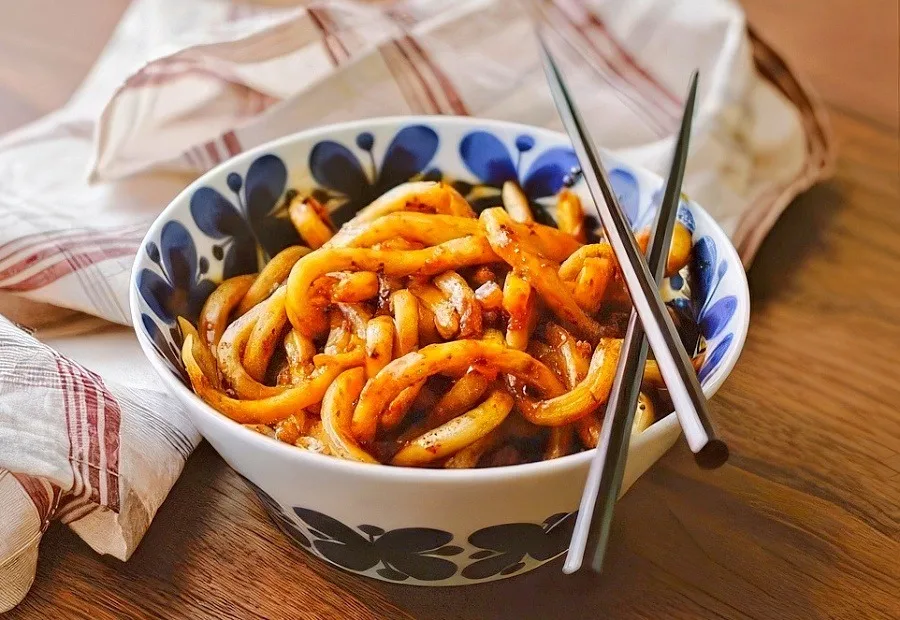
Sweet water noodles, Tián Shuǐ Miàn (甜水面), are one of the lesser-known but truly fascinating dishes of Sichuan, the province in southwestern China. Sichuan is famous worldwide for its spicy, aromatic and deeply layered food – a place where cooking becomes an art form, and cooks combine local ingredients and distinctive techniques with a rich cultural tradition. Sweet water noodles capture both the simplicity and the complexity of Sichuan cooking.
Contents:
Origins and History of Tian Shui Mian
Tian Shui Mian is a classic Chengdu snack (成都小吃), served at small noodle shops and street stalls in the Sichuan capital. The dish grew out of home cooking in the region and gradually spread across the province and beyond.
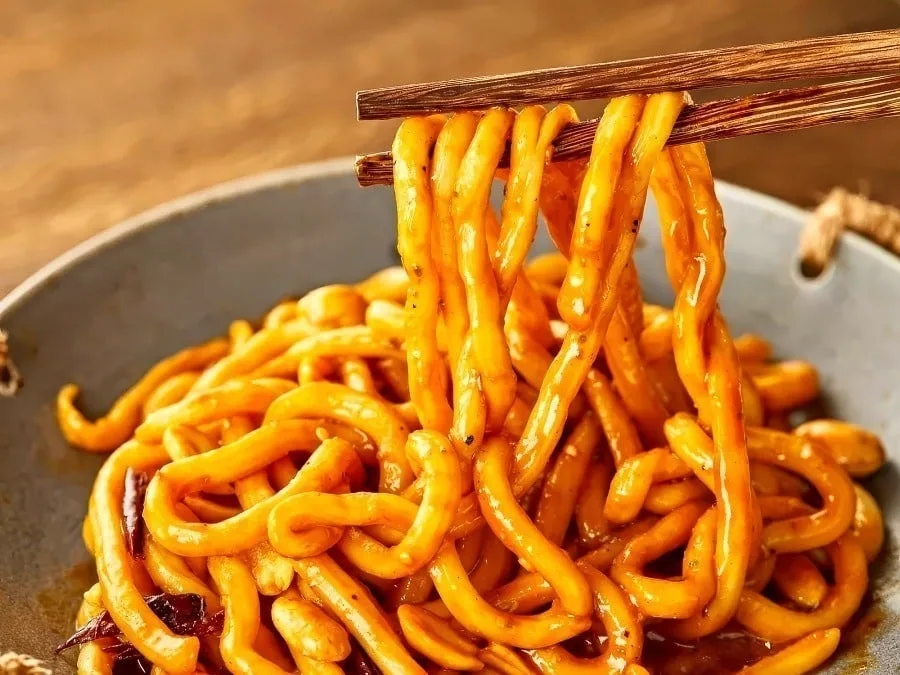
The dish is often said to date back to the Ming dynasty (1368–1644), when new noodle-making techniques were developing in Chinese cooking. Many noodle dishes focus on complex flavors and rich sauces; sweet water noodles stand out for their simplicity and their contrast of flavors. The name “sweet water noodles” comes from the sweet taste of the sauce, a sweetened soy sauce cooked with dark sugar and spices. The name can be misleading, though: alongside the sweetness, the dish is also spicy and savory – very typical of Sichuan cooking.
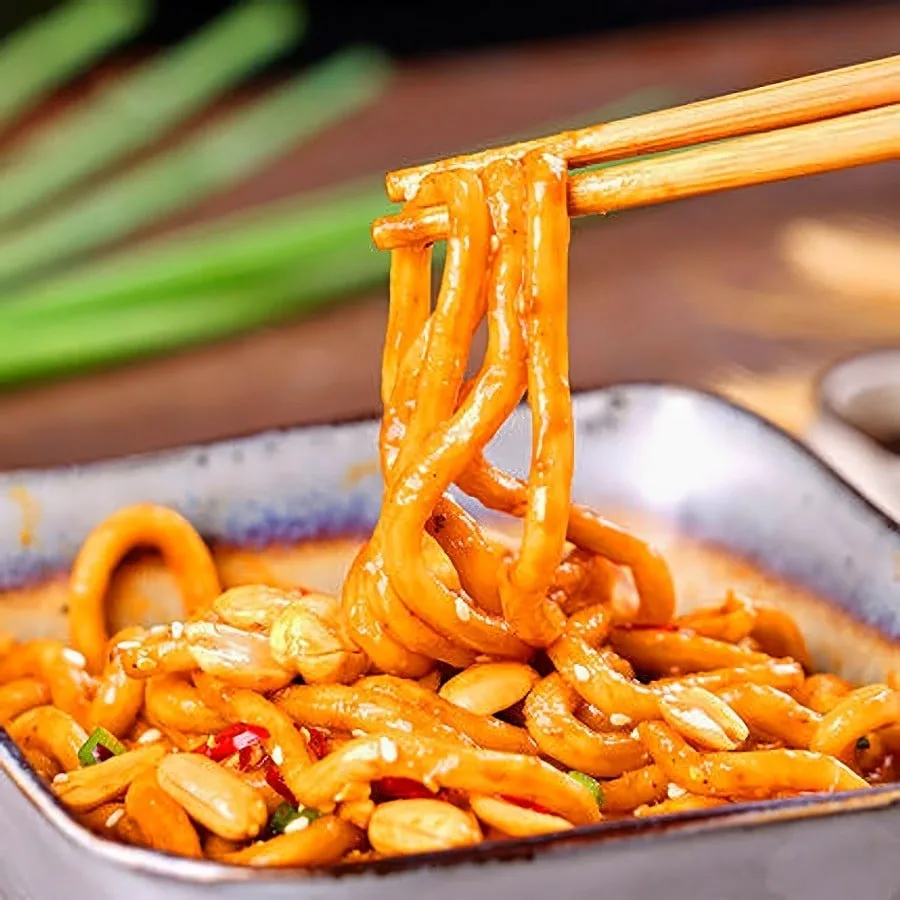
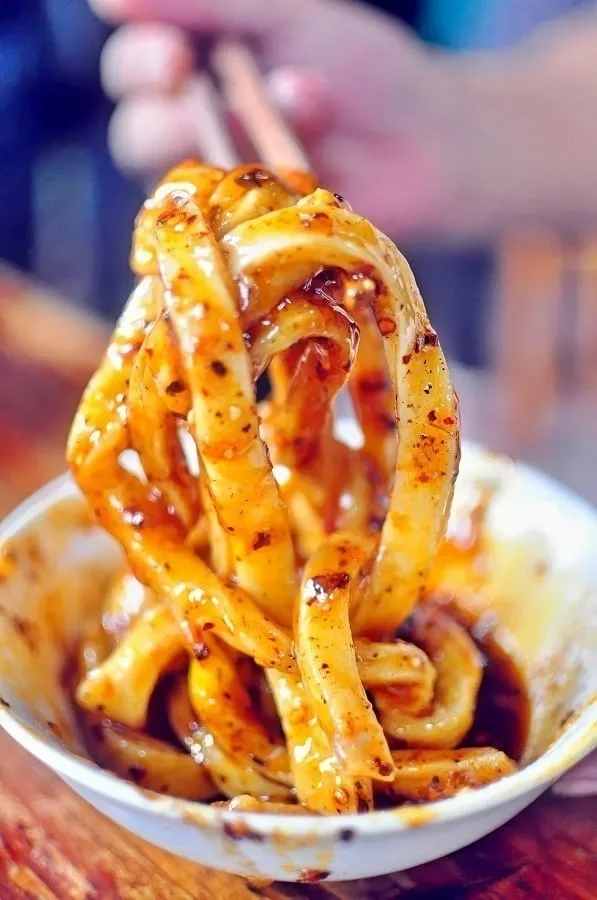
Over the years, sweet water noodles became a favorite everywhere from country kitchens to city restaurants, where making them turned into real craftsmanship. Although the recipe varies a little by region and by cook, the essentials stay the same: thick, hand-rolled or hand-pulled noodles dressed in a rich, thick sauce with a balance of sweet and savory.
The Techniques and Secrets of Tian Shui Mian
Making Tian Shui Mian isn’t just about choosing good ingredients; it also takes a few specific techniques that lift the dish to another level. The noodles are often made by hand, which takes skill and patience. The process involves several steps: kneading the dough, resting and kneading it again, rolling it out and cutting it. The goal is noodles that are firm yet springy, so they have the right bite once cooked.
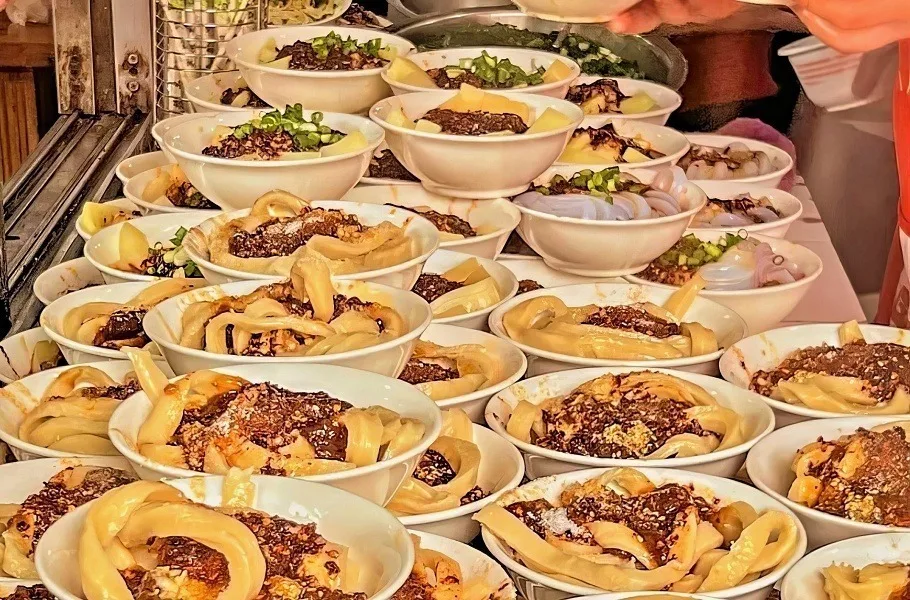
The sauce is the other key element. It’s traditionally built on sweetened soy sauce made with dark cane sugar, plus chili oil, garlic and sesame paste. These are combined in just the right proportions to create a balanced mix of flavors. Many cooks also add Sichuan pepper, which gives the dish the characteristic “mala” effect (麻辣) – that combination of heat and numbing tingle typical of so many dishes from the region.
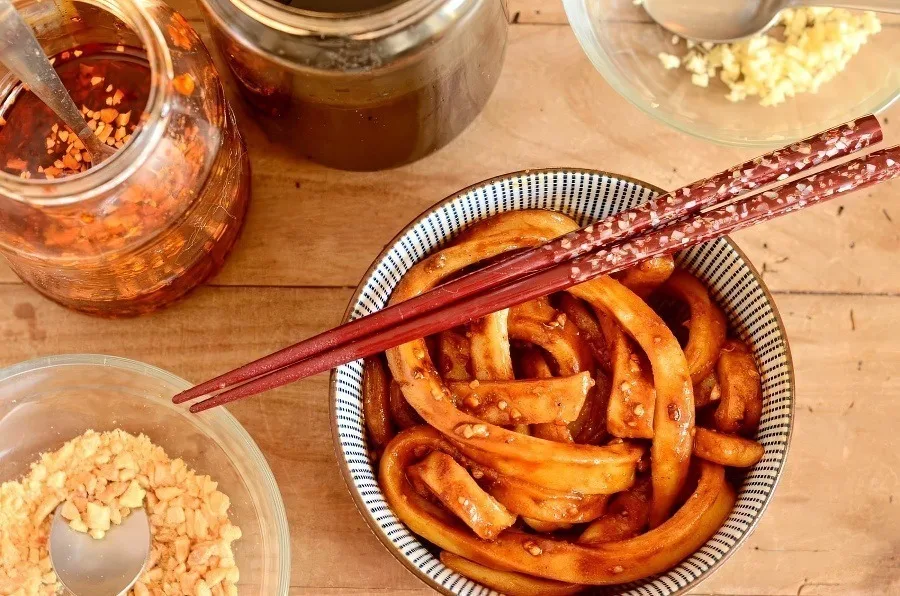
The sauce goes onto the noodles just before serving. That way the noodles stay firm and don’t soak up too much sauce, keeping their texture. The dish is usually finished with fresh herbs such as cilantro and a sprinkle of sesame seeds.
Sichuan Sweet Water Noodles (Tián Shuǐ Miàn 甜水面)
Ingredients
Noodles
- 300 g all-purpose flour about 2⅓ cups
- 140 ml water about ½ cup + 1 tbsp
- pinch of salt
Sauce
- 2 tbsp homemade Sichuan sweet soy sauce see the linked recipe in the article
- 1 tsp garlic finely chopped
- 1 tbsp Chinese sesame paste
- ½ tsp sugar
- 2 tsp chili oil
- 2 tsp crushed peanuts and sesame seeds
- 2 tsp freshly ground Sichuan pepper use less for a milder tingle
Instructions
- Mix the salt into the flour, then add the water. The dough may feel a little stiff at first. Knead firmly until almost smooth. Wrap in plastic and let rest for 15 minutes. Knead again for 2–3 minutes, wrap well and rest another 15 minutes. If you have time, kneading more during this process makes the noodles chewier – over a 1-hour rest you can knead 2–4 times.
- Knead the dough for another 30 seconds, then roll it out into a large rectangle about 4–6 mm (¼ inch) thick. Cut into wide strips about 6–8 mm (¼–⅓ inch) wide. Stretch the noodles slightly.
- Bring a large pot of water to a boil and salt it. Add the noodles and cook for about 3 minutes (5 minutes for thicker noodles) until done. Don’t overcook them!
- Transfer the noodles to a serving bowl and add the sweet soy sauce, sugar, garlic, chili oil and sesame paste, then the ground Sichuan pepper, crushed peanuts and sesame seeds. Toss well.
- Garnish with cilantro or scallions, if you like. Serve hot.