
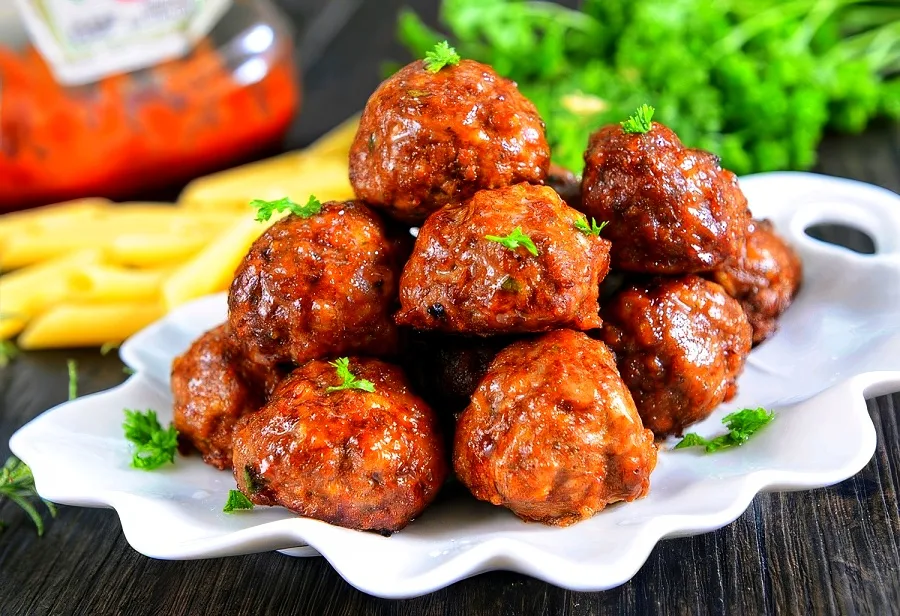
Sweet and sour meatballs are one of the most beloved dishes in Chinese cooking. The dish is an icon of Shandong province, but its popularity has long crossed regional borders – it’s a favorite all over China and abroad. The combination of a sweet and tangy sauce with crisp, juicy meatballs creates a balance of flavors that appeals to all ages.
Contents:
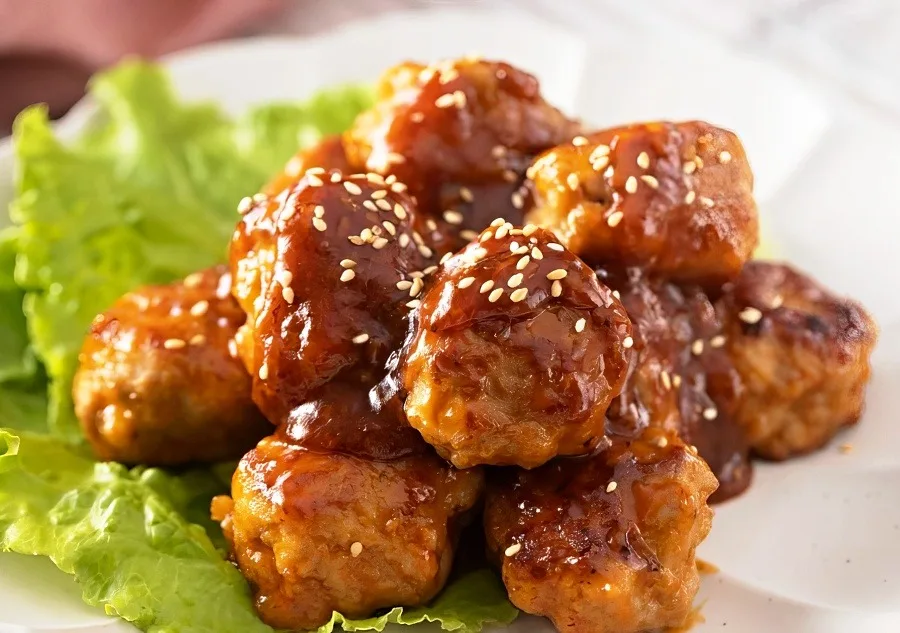
History and Origins
Sweet and sour meatballs come from the culinary tradition of Shandong (山东), one of China’s oldest culinary centers. Shandong cuisine is known for its precision, refinement and its use of frying and braising. The sweet-and-sour flavor combination was already popular in Shandong during the Ming dynasty (1368–1644), when the nobility favored dishes that hit sweet, sour and salty notes all at once.
During the Qing dynasty (1644–1912), the dish made its way into the imperial kitchen, where court chefs refined the recipe further. They added more sophisticated ingredients such as wood ear mushrooms and bamboo shoots, which gave the dish another dimension of flavor and texture.
Meatballs themselves carry deep symbolism in China. Their round shape represents wholeness and unity, which is why dishes like this are often served at celebrations such as weddings, Chinese New Year and birthdays.
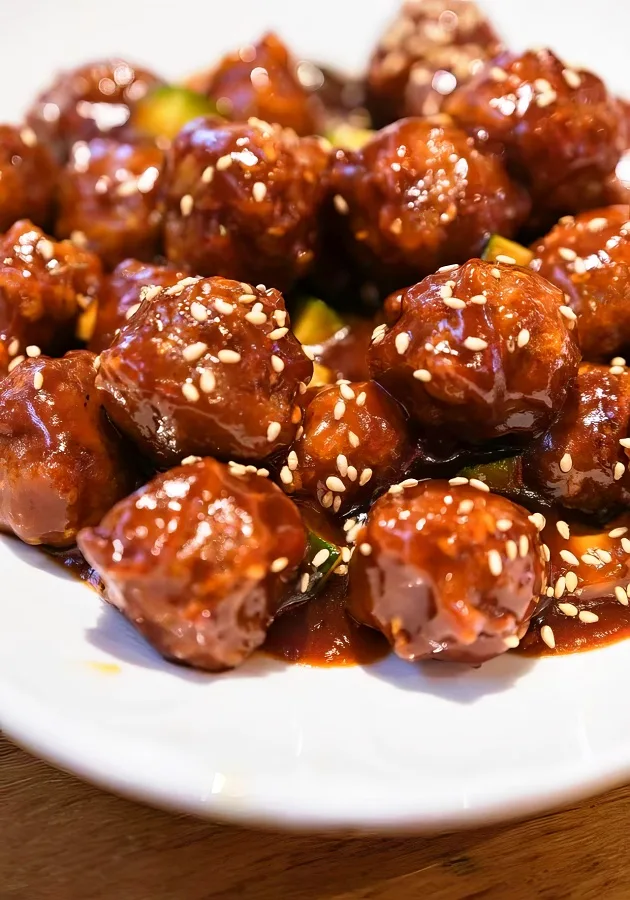
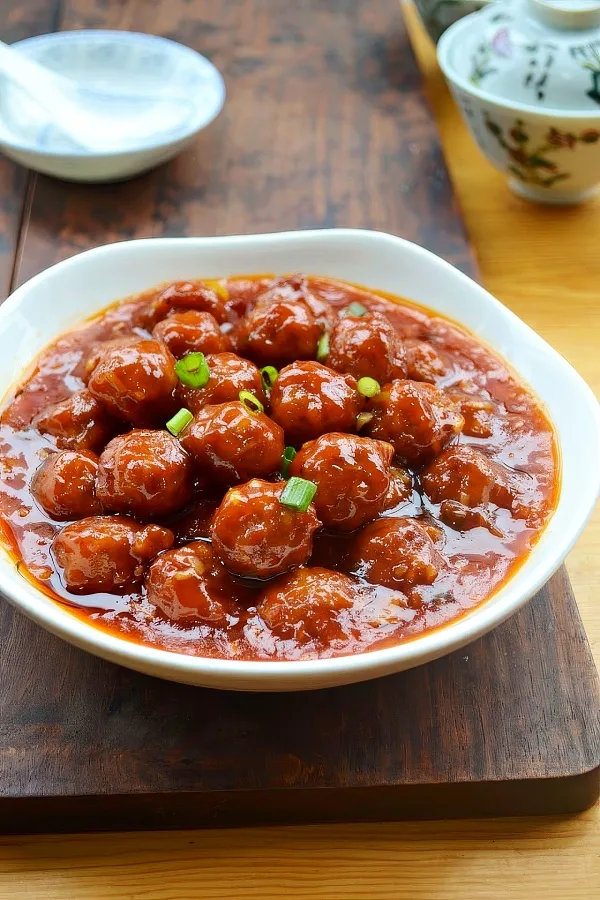
Technique: The Art of the Perfectly Fried Meatball
Making perfect sweet and sour meatballs comes down to mastering a few techniques:
Preparing the Meat
Traditionally, pork with about 30% fat is chopped by hand into a fine paste. Hand-chopping gives the meat a specific texture that a regular grinder can’t quite match. Many modern recipes, however, use ground pork, which makes the dish much easier.
Seasoning the Meat
Aromatics such as ginger, garlic, soy sauce, sugar and a drop of sesame oil are added to the meat. Starch (cornstarch or potato starch) is also important – it helps the meatballs hold together.
Frying
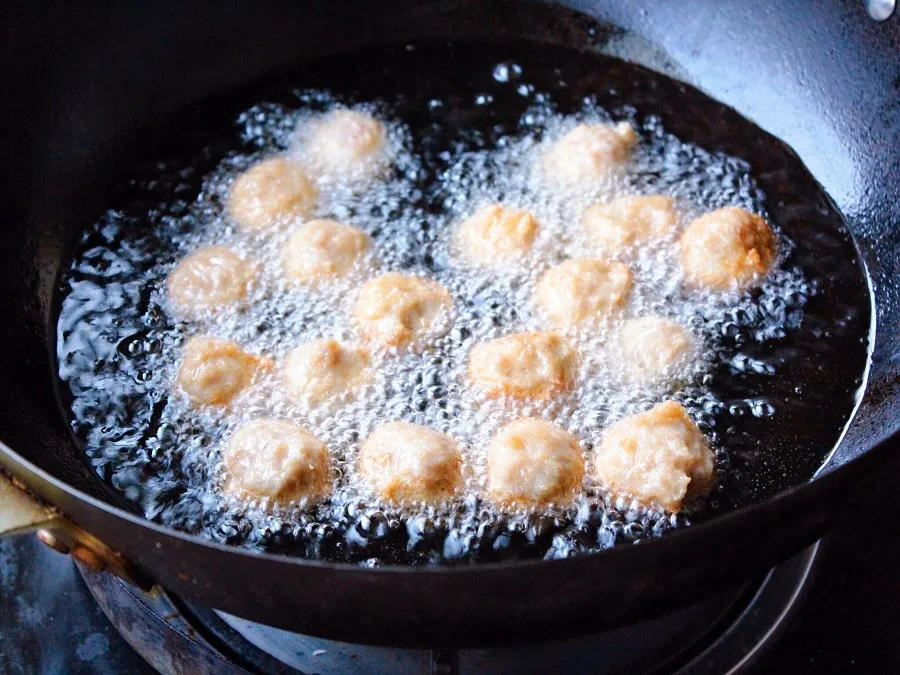
Double-frying is a key technique in Chinese cooking that guarantees the perfect texture.
First fry (初炸)
- The oil is heated to a lower temperature, around 160 °C (320 °F)
- The meatballs fry for 3–4 minutes
- The goal is to cook the meat through
- The surface turns light golden
- After the first fry, the meatballs are removed and briefly rested
Second fry (复炸)
- The oil is heated higher, to about 180–190 °C (355–375 °F)
- The meatballs fry for a shorter time, about 1–2 minutes
- A crisp outer crust forms
- The color deepens to a rich golden brown
Double-frying ensures even cooking, creates contrasting textures (a crisp outside and a juicy inside), keeps the surface from burning and reduces the amount of oil the food absorbs. The same technique is used in other Chinese dishes, such as Cantonese sweet and sour pork and many crispy fried chicken dishes.
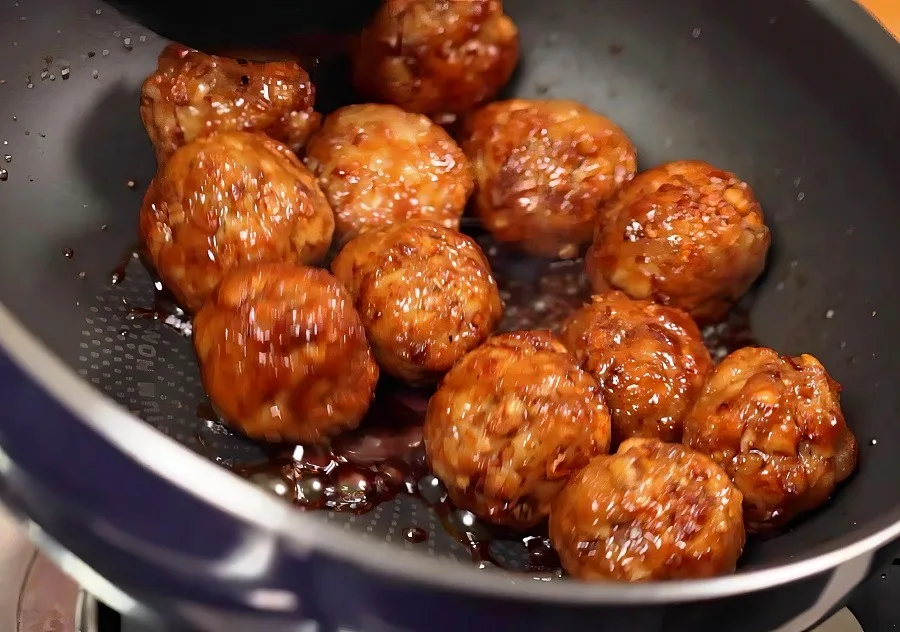
Making the Sweet and Sour Sauce
The sweet and sour sauce is a mixture of sugar, vinegar, soy sauce and a little ketchup or tomato paste. It’s considered the soul of the dish. It needs just the right thickness to coat every meatball without being too heavy or too runny.
A Word About Ketchup
Ketchup isn’t a common ingredient in traditional Chinese cooking. Sweet and sour dishes are traditionally made with a combination of vinegar, sugar and sometimes tomato paste or fresh tomatoes. In modern versions, though, ketchup is often used as a shortcut, especially in city households and restaurants focused on quick cooking.
Surprisingly, ketchup itself has partly Asian roots. The word is usually traced to the Hokkien “kê-tsiap,” a fermented fish sauce from Southeast Asia. The British brought the idea back to Europe, where it gradually turned into the sweet tomato sauce we know today. In the 19th and 20th centuries, as China opened up more to the world, Western ingredients and techniques gained some influence on Chinese cooking – and ketchup arrived as an easy-to-find ingredient.
Serving Tips
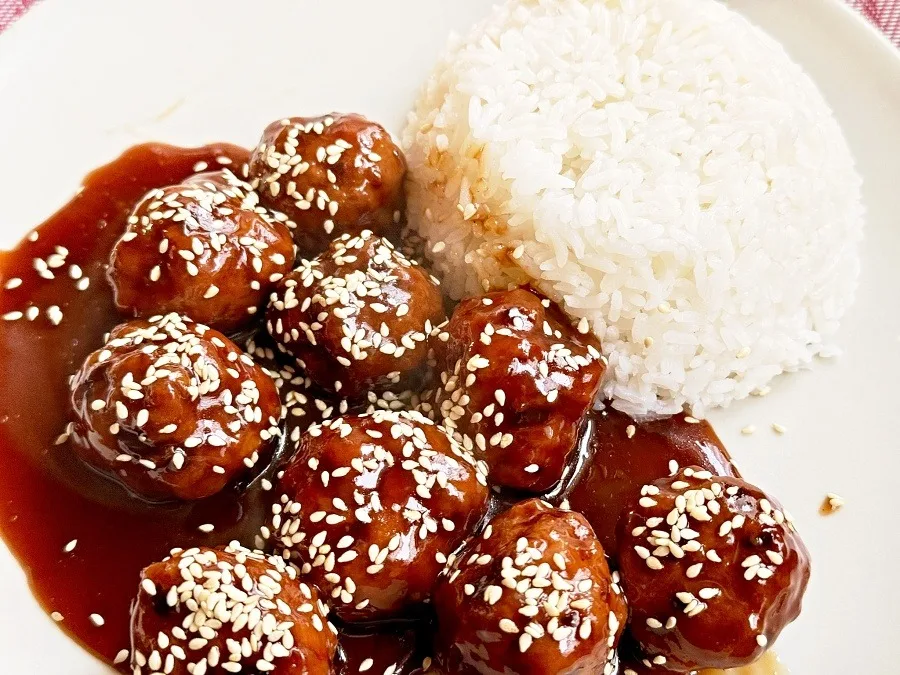
Sweet and sour meatballs (糖醋丸子) are usually served as a main dish with a bowl of steamed rice. They’re often garnished with sesame seeds or chopped peanuts. They can also be part of a larger meal with other dishes such as stir-fried vegetables or soup. They shine especially alongside light sides that let the sweet and sour sauce stand out.
This traditional dish is a perfect example of the complexity of Chinese cooking, where precise technique meets a well-balanced harmony of flavors.
Sweet and Sour Meatballs (Táng Cù Wán Zi 糖醋丸子)
Ingredients
Meatballs
- 400 g ground pork about 14 oz, ideally with ~30% fat
- 1 egg
- 1 tbsp light soy sauce
- 2 tsp ginger finely chopped
- 2 cloves garlic finely chopped
- 1 tsp toasted sesame oil
- 2 tbsp cornstarch plus extra for coating
- ½ tsp ground white pepper
- 1 tsp salt
- neutral oil for deep-frying
Sauce
- 2 tbsp Chinese black vinegar Chinkiang vinegar, or balsamic vinegar
- 3 tbsp sugar
- 3 tbsp ketchup
- 1 tbsp light soy sauce
- ½ cup water 120 ml
- 1 tbsp cornstarch mixed with a little cold water
Instructions
- In a bowl, combine all the meatball ingredients. Mix thoroughly with your hands until the mixture firms up and becomes sticky.
- Shape the mixture into balls 3–4 cm (about 1¼–1½ inches) in diameter. The surface should be smooth, without cracks. Before frying, coat them in a thin layer of cornstarch.
- First fry: heat the oil to 160 °C (320 °F) and fry the meatballs for 3–4 minutes until light golden. Remove and let them rest.
- Second fry: heat the oil to 180 °C (355 °F) and fry the meatballs for another 2 minutes until deep golden. This double fry gives them a crisp outside and a juicy inside.
- In a pan, melt the sugar into a light caramel, then add the water, vinegar, soy sauce and ketchup. Bring to a boil, add the cornstarch slurry and stir until the sauce thickens.
- Toss the meatballs in the sauce and serve with jasmine rice or Chinese noodles. Garnish with sesame seeds or chopped peanuts if you like.