
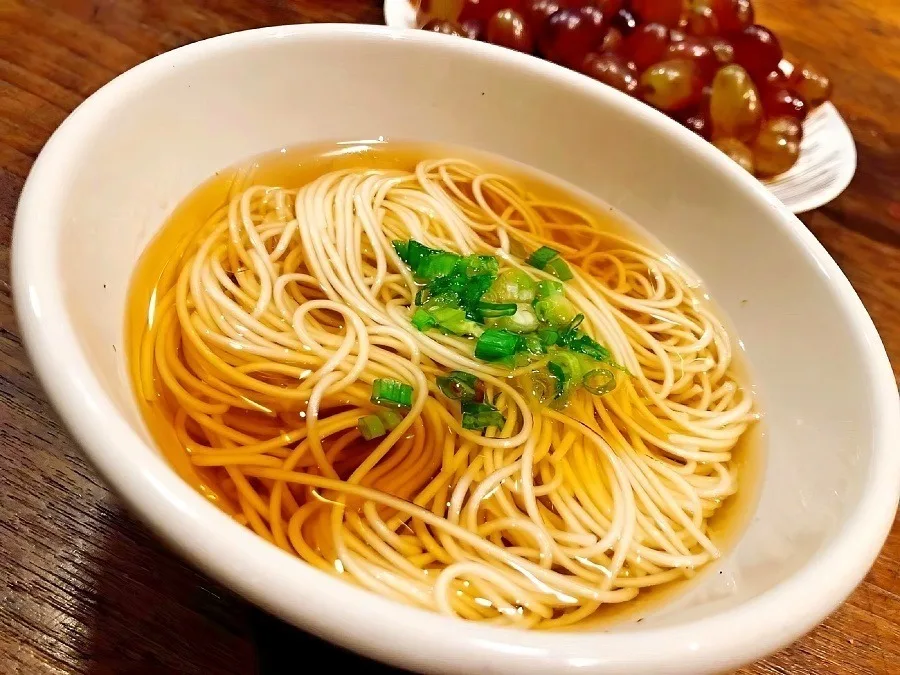
When people think of Chinese food, many immediately picture lavish dishes full of exotic flavors, bright colors and varied textures. But Chinese cooking also has plenty of dishes that look modest at first glance, whose real value lies in simplicity and tradition. One of them is Yángchūn Miàn (阳春面), often called “plain noodles” or “spring noodles.” It’s ideal for anyone looking for a quick, simple meal with the clean flavors of Shanghai cooking.
Contents:
The Origins of Yang Chun Noodles
Yángchūn Miàn comes from the Jiangnan region of eastern China, especially the area around Shanghai. The name “Yángchūn” is often interpreted as “sunny spring” or “bright spring,” which may hint both at the season and at the dish’s fresh, simple character. According to a popular explanation, the name is also a bit of old Shanghai wordplay: the tenth lunar month was known as “little yangchun” (小阳春), so “yangchun noodles” became shorthand for a cheap bowl of noodles that cost ten coins. That’s why the dish is sometimes jokingly called “ten-cent noodles.”
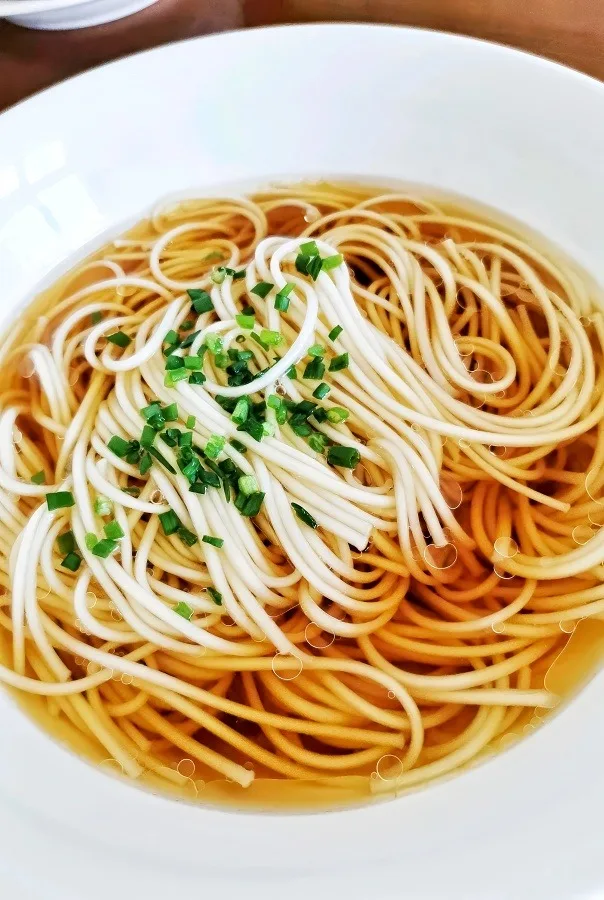
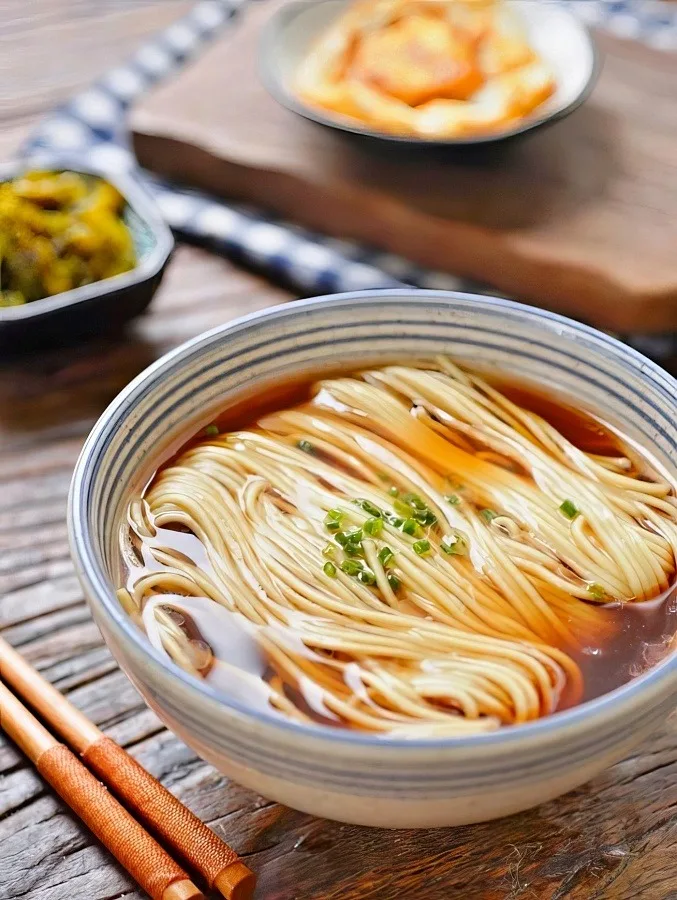
Noodles themselves carry deep meaning in Chinese culture. They symbolize longevity and prosperity, not just because of their shape but because people often eat them on important holidays and celebrations. Yang chun noodles stand apart, though – they aren’t tied to any particular holiday, but to everyday life. They’re the noodles people reach for when they need something quick and simple, yet nourishing and satisfying.
Preparation and Ingredients
Yang Chun Mian is a showcase of simplicity in Chinese cooking. The basic recipe uses thin wheat noodles, cooked in boiling water and then served in a hot chicken or pork broth. The bowl is usually seasoned with a little soy sauce for flavor, lard, a few drops of sesame oil for aroma and chopped scallions as a garnish.
These noodles don’t require any complicated techniques or special ingredients, which makes them an ideal everyday meal. Their simplicity also makes them very versatile: people often add toppings such as eggs, vegetables or pieces of meat, tailoring the dish to their taste and appetite.
Cultural Significance
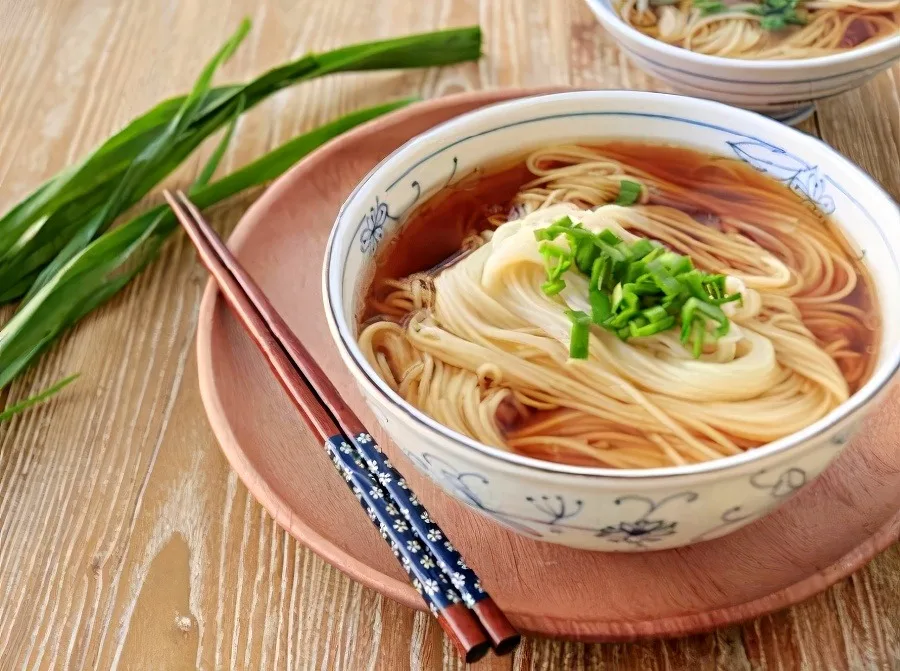
Yang chun noodles are more than just food; they symbolize modesty and purity. In Chinese culture, the dish often represents a return to one’s roots and an appreciation of the simple things in life. In books and films, there’s often a scene where the main character sits down to a bowl of noodles after a hard day – a moment of calm and comfort.
The dish also reflects the Chinese philosophy of “less is more.” Simple as it is, it delivers a deep, satisfying flavor that comes from good ingredients and careful cooking.
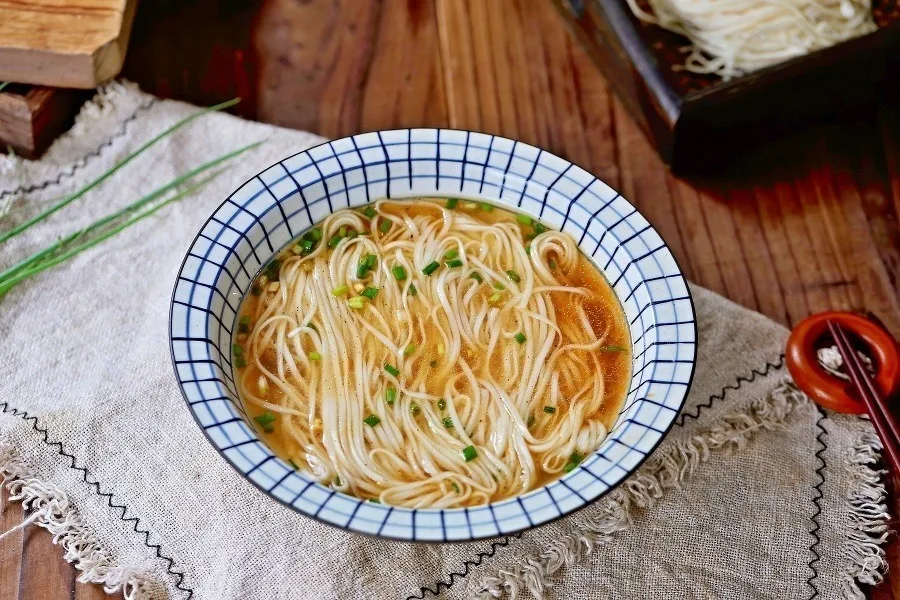
Yang Chun Mian remains a favorite in China and among Chinese communities around the world. Its long history and its simplicity, which takes nothing away from its flavor, have won the hearts of people of all ages. Whether as a quick breakfast, an easy lunch or a light dinner, Yang Chun Mian is always a reminder that great beauty often hides in simplicity.
Yang Chun Noodles (Yángchūn Miàn 阳春面)
Ingredients
- 220 g thin wheat noodles about 8 oz, fresh or dried
- 6 cups unsalted broth about 1.4 l; chicken, beef or vegetable
- 2 tbsp light soy sauce
- 2 tsp dark soy sauce
- 2 tbsp lard or 2 tsp toasted sesame oil
- 1 tsp sugar
- 2 scallions finely chopped
- pinch of ground white pepper
- salt to taste
Instructions
- Cook the noodles according to the package directions.
- While the noodles cook, bring the broth to a boil in another pot.
- Divide the lard, light soy sauce, dark soy sauce, sugar and white pepper between the serving bowls.
- Pour the hot broth into the bowls. Stir well and season with salt if needed.
- As soon as the noodles are cooked, drain them, add them to the bowls of broth and sprinkle with the chopped scallions.
- Serve immediately.