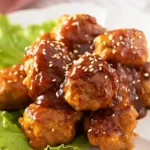
Sweet and Sour Meatballs (Táng Cù Wán Zi 糖醋丸子)
Sweet and sour meatballs are one of the most popular dishes in Chinese cooking – precise technique meets a perfect balance of flavors: a crisp crust, a juicy center and a glossy sauce.
Servings: 2
Ingredients
Meatballs
- 400 g ground pork about 14 oz, ideally with ~30% fat
- 1 egg
- 1 tbsp light soy sauce
- 2 tsp ginger finely chopped
- 2 cloves garlic finely chopped
- 1 tsp toasted sesame oil
- 2 tbsp cornstarch plus extra for coating
- ½ tsp ground white pepper
- 1 tsp salt
- neutral oil for deep-frying
Sauce
- 2 tbsp Chinese black vinegar Chinkiang vinegar, or balsamic vinegar
- 3 tbsp sugar
- 3 tbsp ketchup
- 1 tbsp light soy sauce
- ½ cup water 120 ml
- 1 tbsp cornstarch mixed with a little cold water
Instructions
- In a bowl, combine all the meatball ingredients. Mix thoroughly with your hands until the mixture firms up and becomes sticky.
- Shape the mixture into balls 3–4 cm (about 1¼–1½ inches) in diameter. The surface should be smooth, without cracks. Before frying, coat them in a thin layer of cornstarch.
- First fry: heat the oil to 160 °C (320 °F) and fry the meatballs for 3–4 minutes until light golden. Remove and let them rest.
- Second fry: heat the oil to 180 °C (355 °F) and fry the meatballs for another 2 minutes until deep golden. This double fry gives them a crisp outside and a juicy inside.
- In a pan, melt the sugar into a light caramel, then add the water, vinegar, soy sauce and ketchup. Bring to a boil, add the cornstarch slurry and stir until the sauce thickens.
- Toss the meatballs in the sauce and serve with jasmine rice or Chinese noodles. Garnish with sesame seeds or chopped peanuts if you like.
Notes
Chinese black vinegar (Chinkiang) gives the sauce a distinctive earthy depth. If you don't have it, use balsamic vinegar, which has a similar caramel-like depth. Look for Chinkiang vinegar at Asian grocery stores or online.
If the sauce is too sweet or too sour, adjust it with a little water, sugar or vinegar as needed.
Pork is traditional, but feel free to experiment with other meats.
No thermometer? The oil is around 160 °C when a wooden chopstick dipped in it produces steady small bubbles, and around 180 °C when the bubbles are vigorous.