
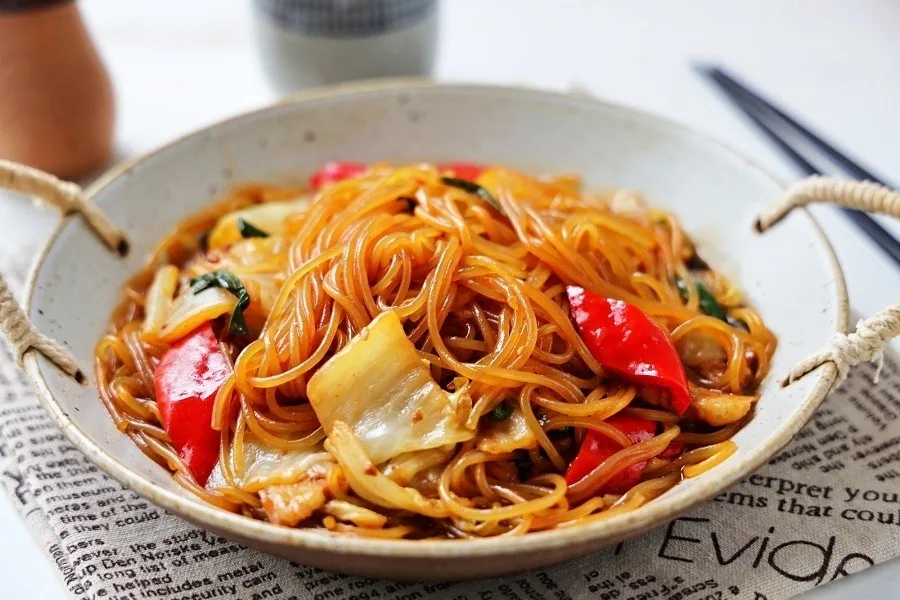
Glass noodles with napa cabbage, known as Bái Cài Dùn Fěn Tiáo (白菜炖粉条), are a classic Chinese dish with bold flavor and real substance.
Contents:
What Are Glass Noodles?
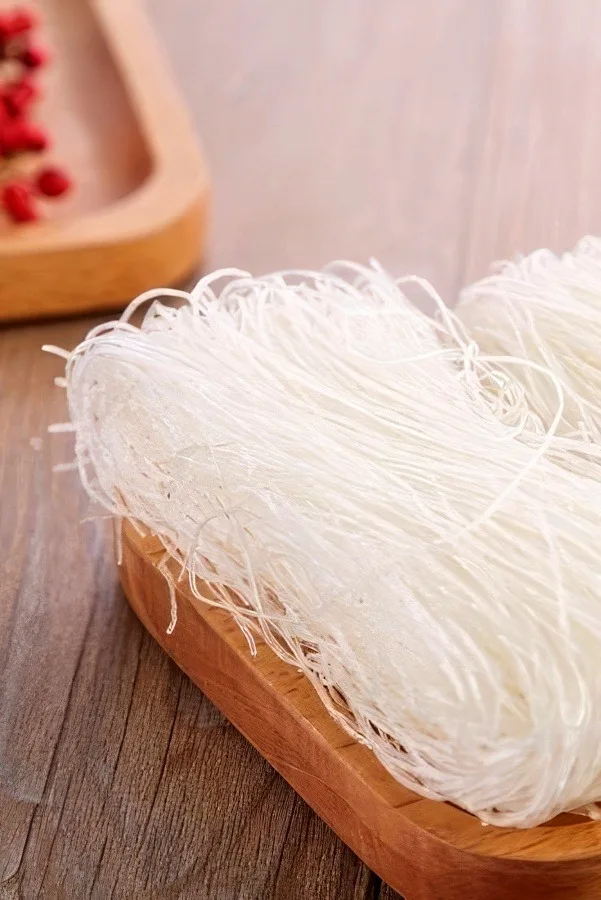
Glass noodles, also called cellophane noodles, get their name from their translucent look and their springy, slippery texture once cooked. Unlike regular wheat or egg noodles, they’re made from sweet potato or mung bean starch, so they’re naturally gluten-free. They come in many shapes and sizes.
Types
- Thick glass noodles: This type is common in northern and western China (and popular in Korean cooking too). In Chinese they’re called Fěn Tiáo (粉条), meaning “starch strips.” They can be round or flat and are made from sweet potato or potato starch.
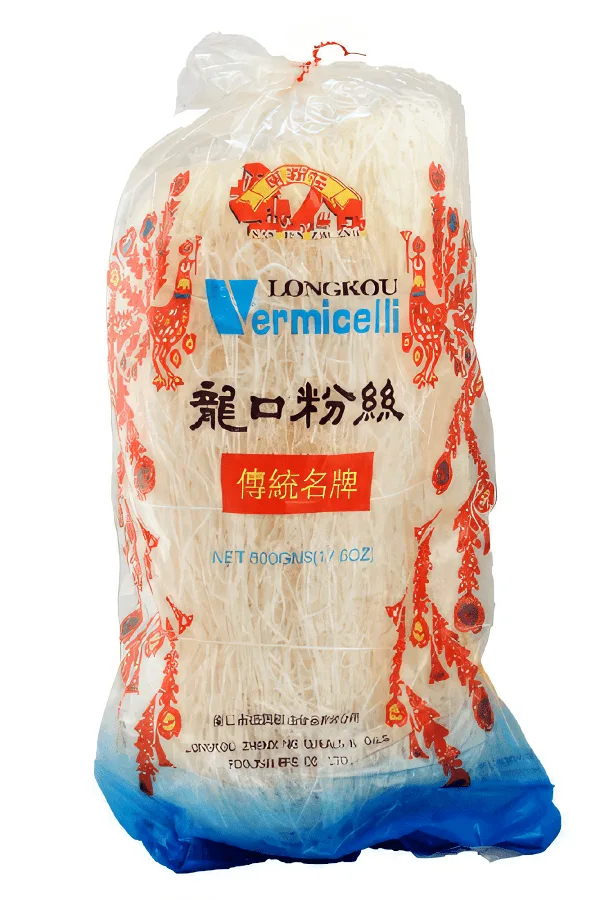
- Thin glass noodles: This type is known as bean threads or mung bean vermicelli. In Chinese they’re called Fěn Sī (粉丝), meaning “starch threads.” The main ingredient is mung beans.
How to Soften Glass Noodles
There are two ways to soften glass noodles: in hot water or in room-temperature or cold water.
- Soaking in hot water: This works best for thick glass noodles. Soak them in hot water until they plump up and turn springy. Five to ten minutes should be enough to make them soft but still bouncy.
- Soaking in room-temperature water: This takes longer and is better for thin glass noodles. It’s a gentler method that softens them without making them mushy.
Ingredients
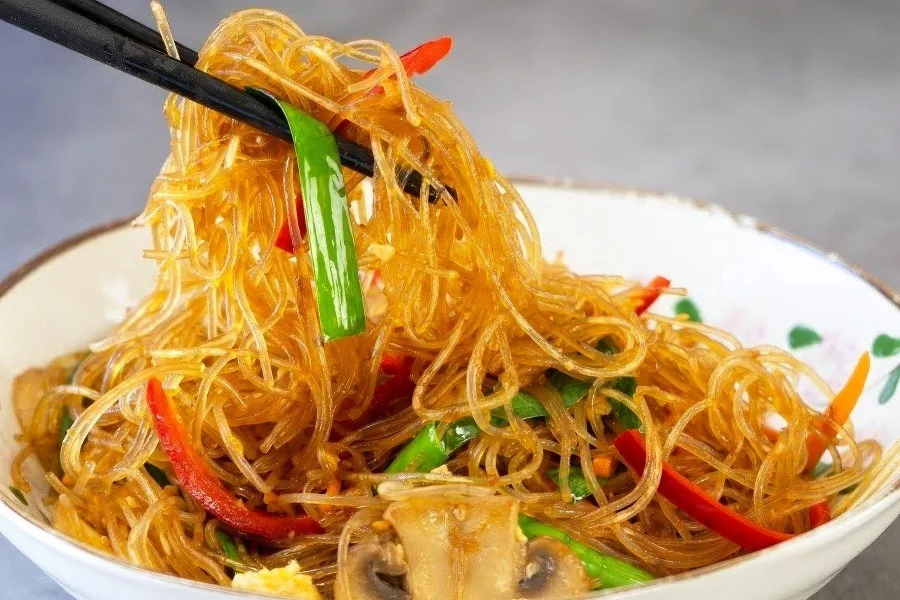
This recipe doesn’t need many ingredients. Besides glass noodles and napa cabbage, you only need a handful of pantry staples. The recipe below uses thin mung bean noodles, but thick sweet potato noodles work just as well – in Sichuan cooking, sweet potato noodles are the more popular choice.
Preparation
Soaking the noodles:
Thick noodles: Put them in a bowl of hot water and let them soak for five minutes. For flat noodles, extend the soaking time to 10–15 minutes. Once the noodles are springy, rinse them under cold running water and drain well.
Thin noodles (vermicelli): Soak in room-temperature water until soft – usually 5–15 minutes, depending on the brand. Drain well.
Preparing the cabbage: Wash it well and pat dry. Tear the leafy part into small pieces and cut the firm white part into strips.
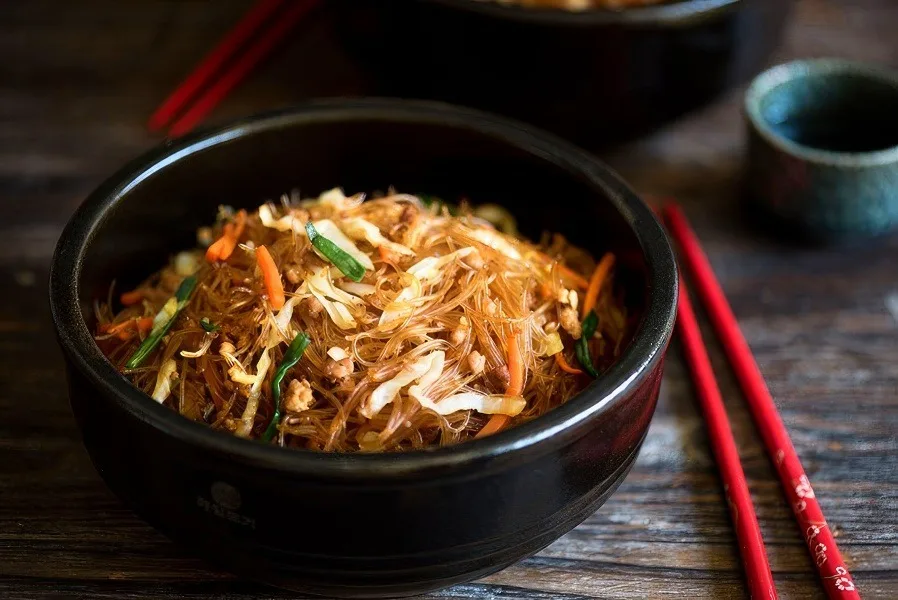
How to Serve Glass Noodles with Cabbage
Glass noodles with cabbage are usually served as a side dish, but you can also turn them into a main course. Fry an egg or some pork (lightly seasoned with salt) and add it to the noodles at the end. Shiitake mushrooms are also a delicious addition.
Frequently Asked Questions
How long do you soak glass noodles?
It depends on the type. Soak thick glass noodles (Fěn Tiáo) in hot water for 5–10 minutes, flat ones for 10–15 minutes. Thin mung bean noodles (Fěn Sī) need about 5–15 minutes in room-temperature water, depending on the brand. Don’t leave them too long – over-soaked noodles fall apart.
What’s the difference between thick and thin glass noodles?
Thick glass noodles (粉条, Fěn Tiáo) are made from sweet potato or potato starch – they’re firmer and hold their shape better through longer cooking or braising. Thin noodles (粉丝, Fěn Sī) are made from mung beans; they’re more delicate and great in soups and salads. Both work in this cabbage dish.
Are glass noodles gluten-free?
Yes – glass noodles are made from starch (sweet potato, mung bean), not wheat, so they’re naturally gluten-free. Always check the package, though, since some manufacturers process noodles in facilities that also handle gluten. If you need the whole dish to be gluten-free, use tamari or a certified gluten-free soy sauce and oyster sauce.
Where can I buy glass noodles?
At any Asian grocery store – look for “glass noodles,” “cellophane noodles,” “bean thread noodles,” “mung bean vermicelli” or “sweet potato noodles.” Many large supermarkets now carry them in the international aisle, and they’re easy to find online.
Can I make glass noodles with cabbage ahead of time?
They taste best fresh, but leftovers keep in the fridge for 1–2 days. Add a spoonful of water when reheating – the noodles tend to absorb any remaining liquid and can firm up once cold.
Glass Noodles with Napa Cabbage (Bái Cài Dùn Fěn Tiáo 白菜炖粉条)
Ingredients
- 1 bundle mung bean glass noodles
- ½ head napa cabbage 350–400 g (12–14 oz)
- pinch of salt
- 1½ tbsp neutral oil
- 1 tsp whole Sichuan peppercorns
- 2-4 dried red chilies
- 2 scallions chopped, white and green parts separated
- 3 cloves garlic chopped
- 2½ tbsp light soy sauce
- 1 tbsp oyster sauce
- ½ tsp sugar
- ½ cup water about 120 ml
Instructions
- Soak the noodles in room-temperature water for about 10–15 minutes, until soft. Don’t soak them too long or they’ll turn mushy. Drain and set aside.
- Tear the leafy part of the napa cabbage into pieces and cut the firm white part into strips.
- Put the oil and whole Sichuan peppercorns into a cold pan. Heat gently until the oil bubbles vigorously around the peppercorns and they smell fragrant. Remove the peppercorns with a slotted spatula, leaving the oil in the pan.
- Turn the heat up to medium-high. Add the dried chilies, garlic and the white parts of the scallions (save the green parts for garnish). Fry until the garlic just starts to turn golden at the edges.
- Add the white parts of the cabbage and stir-fry for about 30 seconds. Add the soy sauce, oyster sauce, sugar and water. Stir so the seasoning is evenly distributed, then add the leafy parts of the cabbage and the noodles.
- Stir and cook until the noodles have absorbed the sauce and the cabbage is tender, about 4 minutes. Season with a pinch of salt if needed.
- Sprinkle with the remaining scallion greens and serve warm.