
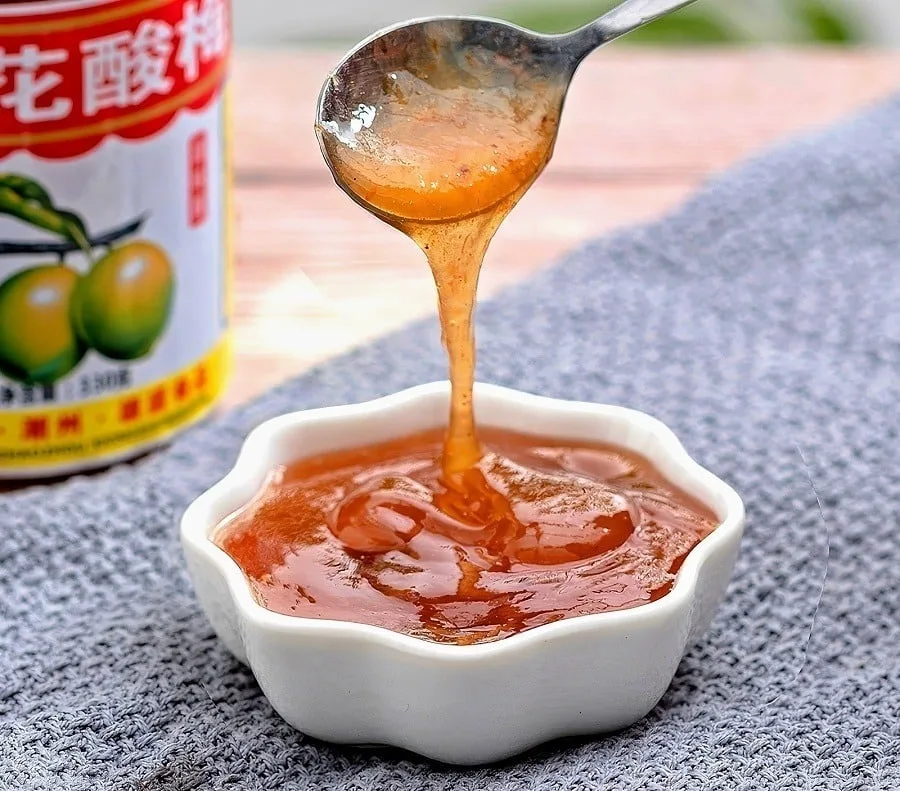
Plum sauce (in Chinese “Méi Zǐ Jiàng,” 梅子酱) is one of the best-known and best-loved sauces in Chinese cooking. Made from plums, sugar, vinegar, ginger and often other spices, this sweet and sour sauce has a bold flavor that pairs perfectly with everything from fried spring rolls to roast meats. Its history goes back a long way and reflects the rich tradition of Chinese culinary art.
Contents:
Origins and History of Plum Sauce
Plum sauce has its roots in southern China, where plum trees thrived in the mild climate. Strictly speaking, the Chinese “plum” (梅, méi) is Prunus mume – a tart fruit closer to an apricot than to the European plum. In the West, plum sauce is usually made with ordinary plums, which work very well. Méi fruit is valued in Chinese culture not only as food but also as a remedy: traditional Chinese medicine associated it with good digestion and healthy qi (vital energy). As early as the Tang dynasty (618–907), plums were used to make simple sauces and condiments.
Chinese plum sauce also began as a way to preserve fruit: plums preserved with sugar and vinegar would keep for months. This method became the basis for the modern versions of the sauce we know today.
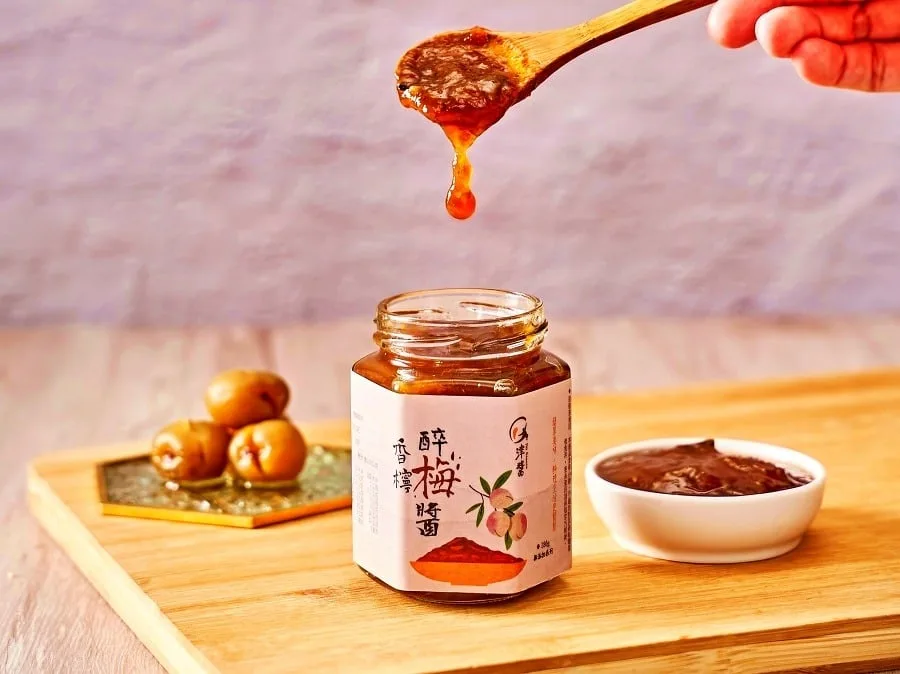
During the Song (960–1279) and Ming (1368–1644) dynasties, plum sauce grew more popular as trade expanded and recipes spread between regions. It was often served with roast duck, pork and fish. Plum sauce also spread beyond China – to Korea, Japan and later to Europe and North America, where it won fans with its balanced flavor.
Plum Blossom and Its Cultural Meaning
The plum carries symbolic meaning in Chinese culture. Plum blossom is one of the “Four Gentlemen” (四君子, sì jūnzǐ), a traditional motif in Chinese painting and poetry. The concept is deeply rooted in Chinese culture, where nature often serves as a metaphor for human virtues and ideals. The Four Gentlemen are four plants that symbolize moral values: plum blossom, orchid, bamboo and chrysanthemum.

Plum blossom (梅, méi) blooms in late winter, when nature is resting and other plants are dormant. It’s a symbol of hope that arrives in hard times, and it’s often linked with scholarship and inner strength, because the plum tree survives cold and harsh conditions.
Orchid (兰, lán) is a beloved symbol of nobility and beauty. It’s associated with learning and cultural refinement because it is modest yet graceful, and it’s prized for its delicate fragrance and elegant look.
Bamboo (竹, zhú) stays green all year and bends in the wind without breaking. It represents a person who adapts but never loses their character. In Chinese art, it stands for integrity and wisdom.
Chrysanthemum (菊, jú) blooms in autumn, when other flowers fade. It represents calm and composure, as well as defiance in the face of adversity. Scholars loved it as a symbol of a quiet, simple life in seclusion.
How Plum Sauce Is Used in Chinese Cooking
Today plum sauce is a staple of Chinese cooking, used widely both at home and in restaurants. It’s known for its versatility and is used in several ways:
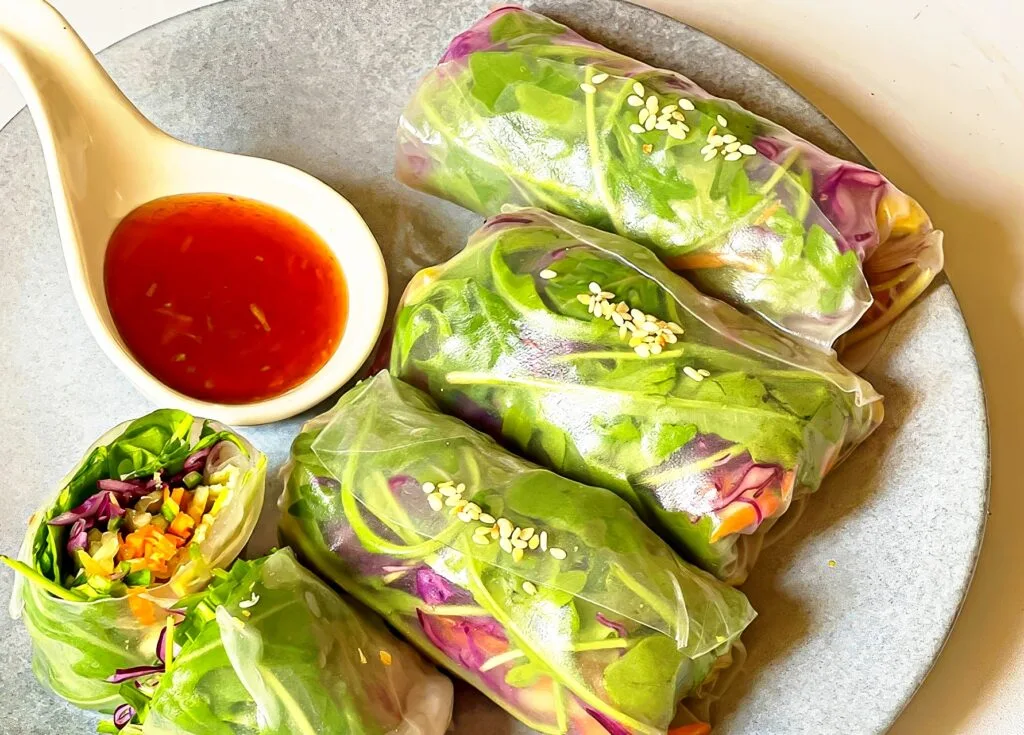
As a dip: It’s traditionally served with Cantonese roast duck, spring rolls and fried wontons. Its sweet-sour flavor balances the saltiness and richness of the food. (Peking duck, by contrast, is classically served with sweet bean sauce or hoisin.)
As a glaze: It’s brushed onto meats such as pork ribs or grilled chicken, giving them a glossy surface and sweet-and-sour depth.
As a marinade: The sauce makes an ideal base for marinating meat, because its sugars caramelize during cooking and create a tasty crust.
In stir-fries: It’s added to stir-fried meat and vegetables to give them a bold sweet-and-sour note.
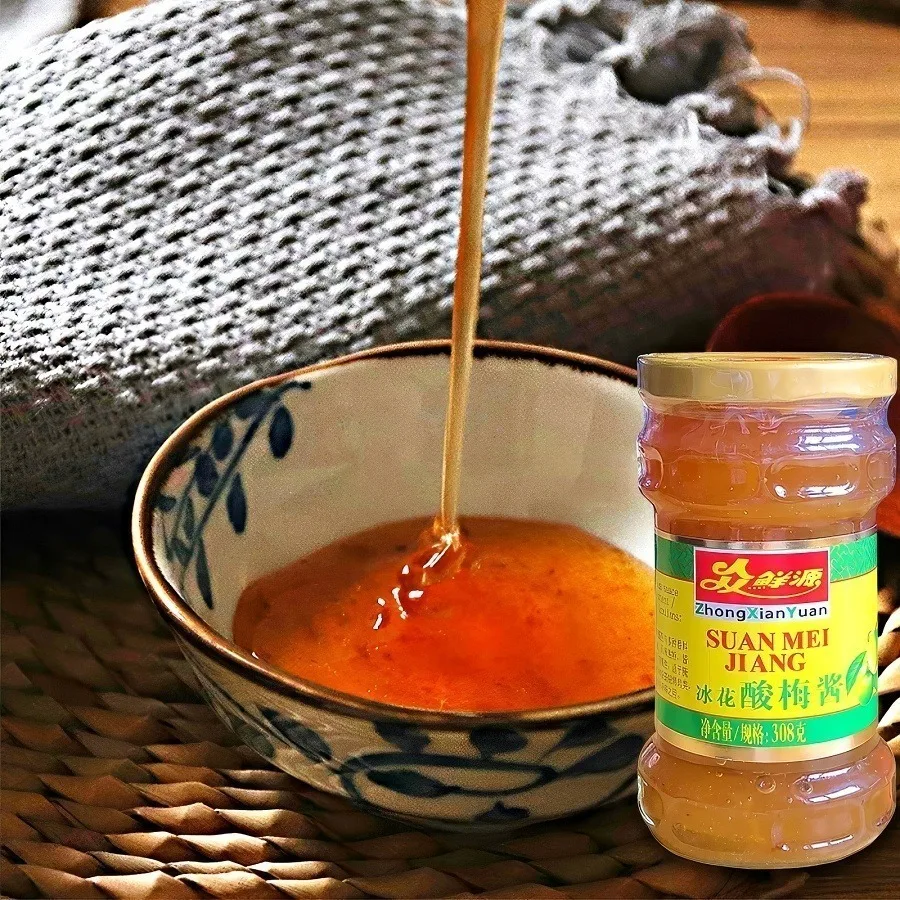
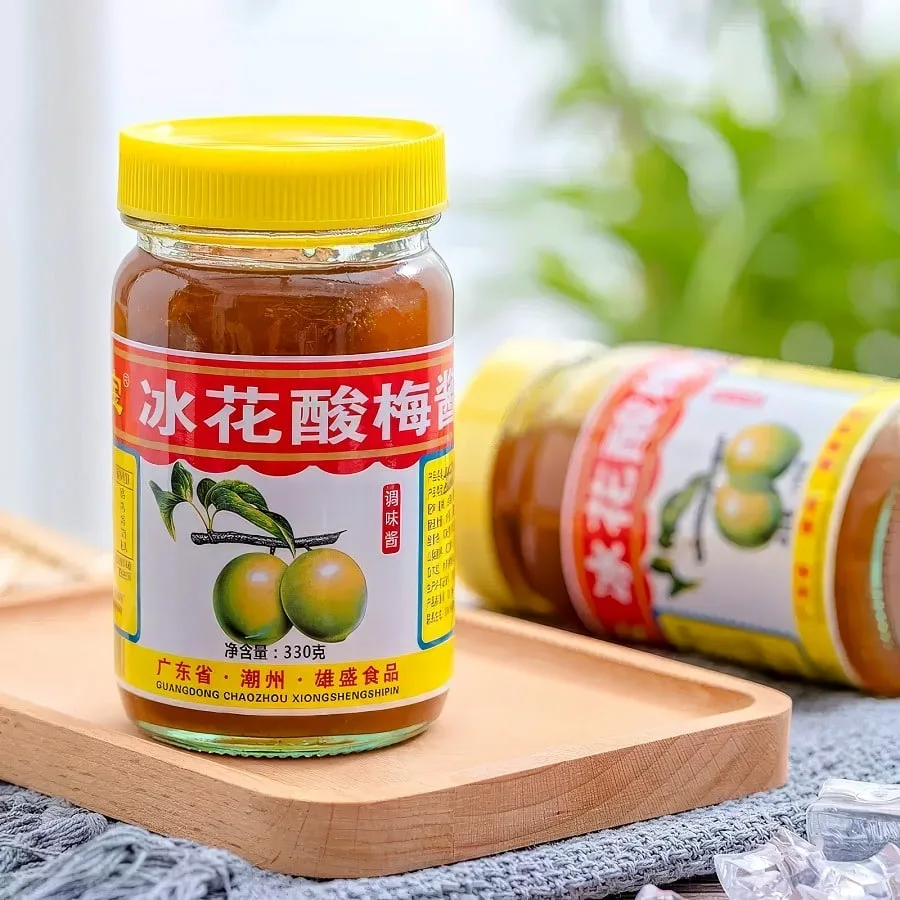
Thanks to its popularity, plum sauce comes in many varieties – from traditional homemade versions to store-bought bottles – and may include extra ingredients such as garlic, chili or soy sauce. You’ll find bottled plum sauce at Asian grocery stores and in the international aisle of most supermarkets.
How Plum Sauce Is Traditionally Made
Plum sauce was originally made by hand. Today it’s produced commercially and is easy to find around the world. Still, many cooks, especially in China, prefer to make it at home, which lets them adjust the flavor to their own taste.
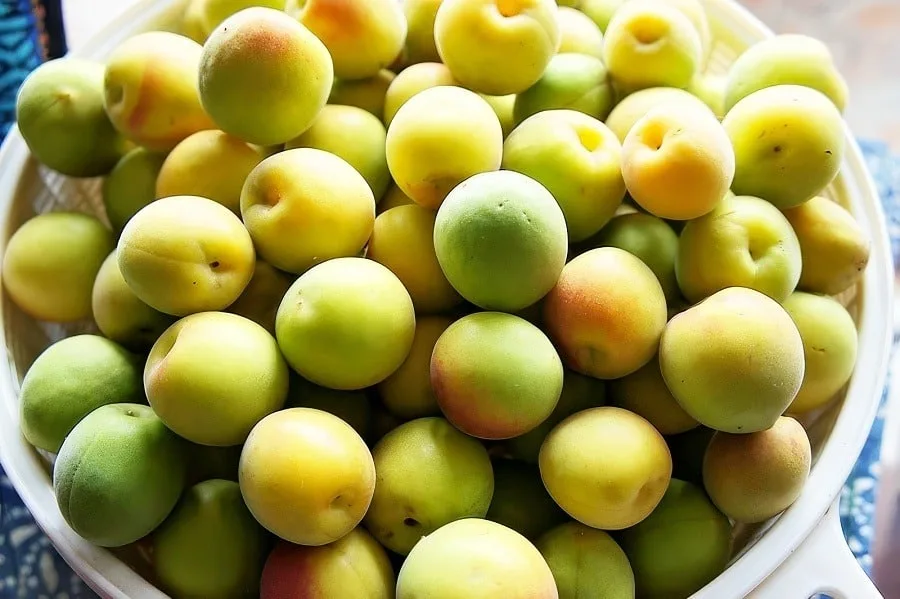
Chinese plum sauce is traditionally made with fresh, ripe fruit, especially yellow or ripened green varieties, which give the sauce its classic sweet-sour flavor and ideal texture. Before cooking, the fruit is washed and stemmed, and sometimes blanched to make the skins easier to remove. It’s then simmered with sugar and other ingredients until it reaches the desired thickness. At home, tart plums give the closest result.
Dried or preserved plums aren’t typical in traditional plum sauce recipes and give a different flavor and texture. A sauce made from them is called Wū Méi Zǐ Jiàng (乌梅子酱), where “乌梅” (wū méi) refers to smoked, dried mume fruit known as “black plums.”
Chinese Plum Sauce (Méi Zǐ Jiàng 梅子酱)
Ingredients
- 500 g ripe plums about 1.1 lb, pitted
- 100 g sugar about ½ cup; cane sugar is best
- 120 ml rice vinegar ½ cup
- 1 tbsp light soy sauce
- 2 tbsp fresh ginger grated
- 1 clove garlic finely chopped
- pinch of salt
- water as needed
Instructions
- Cut the plums into small pieces and put them in a pot. Add the sugar, vinegar, ginger, garlic and soy sauce.
- Add a splash of water so the mixture doesn’t scorch, and simmer over low heat for about 20–30 minutes, until the plums are soft and starting to fall apart.
- Blend the mixture with an immersion blender or push it through a sieve until smooth.
- Return the sauce to the stove and cook, stirring constantly, for another 5–10 minutes until it thickens.
- Let it cool, then store in a sterilized jar in the fridge for up to 3 weeks.
Notes
- For a more aromatic sauce, add a star anise pod or a piece of cinnamon stick while it simmers, and remove it before blending.
- No fresh plums? Frozen or canned plums work too – reduce the sugar if they’re packed in syrup.
- Thin the sauce with water if it’s too thick, or simmer it longer to thicken it.
- Tart plums give the best result. Very sweet dessert plums may need a little extra vinegar.