
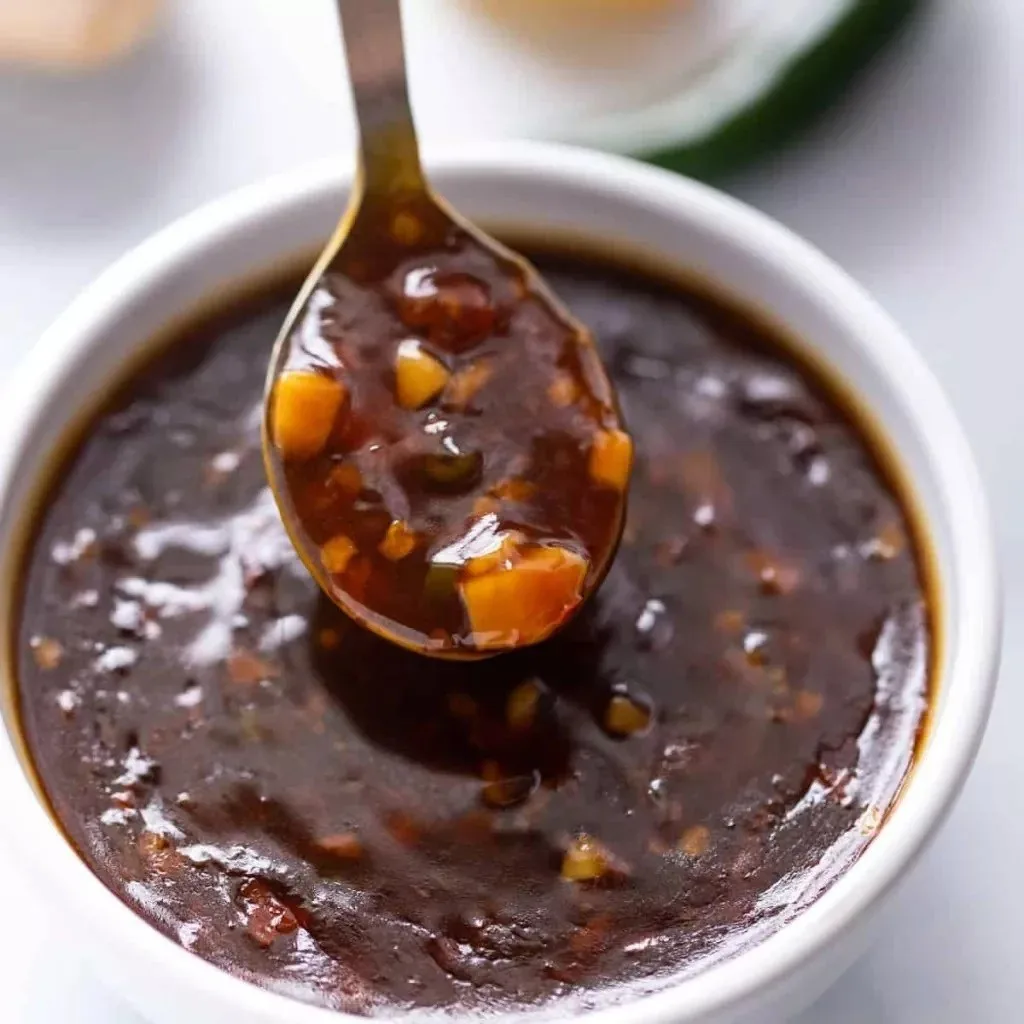
Chinese brown sauce is a basic worth knowing. Salty, slightly caramelized, with deep umami – and so versatile that you’ll use it in stir-fries with meat, vegetables and tofu alike. You can make it at home in minutes, and it keeps in the fridge for weeks.
Contents:
There’s no single “brown sauce” in Chinese cooking – every household and restaurant has its own version. Below you’ll find three variations by use: a basic soy sauce version, a Cantonese version with hoisin, and a quick make-ahead stir-fry sauce.
What Is Chinese Brown Sauce?
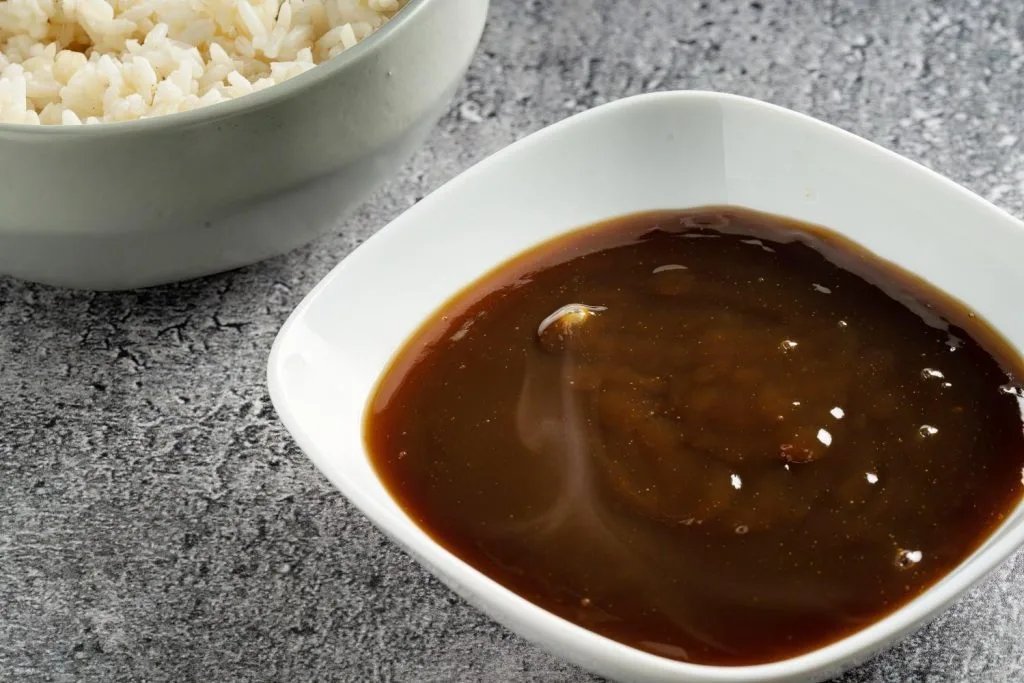
Brown sauce is an umbrella term for a group of Chinese soy-based sauces with a dark color, salty umami flavor and glossy consistency. It’s thickened with cornstarch, which creates the characteristic shiny coating that clings to every piece of meat or vegetable.
Its roots go deep into Chinese cooking – fermented soy-based seasonings have been used in China for well over two thousand years. The modern form, with oyster sauce and hoisin, comes from the Cantonese cooking of southern China and was popularized worldwide by Chinese-American restaurants.
Version 1: Basic Soy Brown Sauce
The classic version with a bold, savory flavor. It’s great for meat stir-fries, fried eggs and as a marinade. The larger amount of sugar makes it thicker and glossy.
Ingredients
- 1 tablespoon toasted sesame oil
- 2 tablespoons garlic, finely minced
- 1 tablespoon ginger, finely minced
- 1½ cups (360 ml) soy sauce
- 1¾ cups (350 g) white sugar
- ¼ cup (50 g) brown sugar
- ¾ teaspoon ground black pepper
- 4 tablespoons cornstarch
- 3 tablespoons water
- 1 teaspoon white sesame seeds (optional)
Method
- Heat the sesame oil in a pan over medium heat. Add the garlic and ginger and stir-fry briefly.
- Pour in the soy sauce and add both sugars and the pepper. Stir well and bring to a boil.
- Reduce the heat to very low and simmer for 15–20 minutes, stirring occasionally.
- In a small bowl, mix the cornstarch with the water until smooth. Pour it into the sauce while stirring constantly.
- Cook for another 5 minutes, until the sauce thickens and turns glossy. Stir in the sesame seeds.
- Let the sauce cool before transferring it to a container – it will thicken further as it cools.
Version 2: Cantonese Sauce with Hoisin
Milder, with a fruity note from the hoisin and a gentle tang from rice vinegar. Excellent with roast meat, as a dip for spring rolls or on fried noodles.
Ingredients
- 3 cloves garlic, finely minced
- 1-inch (3 cm) piece of ginger, very finely chopped
- 150 ml (⅔ cup) hoisin sauce
- 30 ml (2 tablespoons) rice vinegar
- 100 ml (scant ½ cup) soy sauce
- 1 tablespoon brown sugar
- ¾ teaspoon Chinese five-spice powder
Method
- Put the garlic and ginger in a small saucepan and add all the remaining ingredients.
- Stir and bring to a gentle simmer, stirring occasionally, until the sugar dissolves.
- Once the sauce bubbles, lower the heat and simmer for 2–3 minutes until slightly reduced.
- If needed, thicken with a little cornstarch mixed with water.
Stored in an airtight container in the fridge, it keeps for 1–2 weeks.
Version 3: Quick Make-Ahead Stir-Fry Sauce
Make this one once and always have it ready in the fridge. Mix the ingredients in a jar, store it in the fridge and just shake and pour before each stir-fry. The cornstarch in the sauce activates instantly when it hits the hot wok and creates a glossy glaze. You’ll find the full recipe in the card below.
Which Version to Use When
- Basic soy – meat stir-fries, fried rice, grilling marinades
- Cantonese with hoisin – roast meat, dip for spring rolls, fried noodles
- Make-ahead stir-fry – quick everyday cooking, when you don’t want to measure ingredients every time
Seasoning Tips
The basic brown sauce is deliberately neutral – adapt it to the dish you’re cooking. For a chicken stir-fry, add a little ginger and garlic; for beef, Sichuan pepper; for vegetables, sesame oil. Other popular variations:
- Sriracha or chili bean paste (doubanjiang) for heat
- Sweet chili sauce for a sweeter version
- Pineapple or orange juice instead of some of the water – for a fruity note
- Rice vinegar or Chinkiang black vinegar for a touch of acidity
- Fresh cilantro or Thai basil just before serving
Frequently Asked Questions
How long does Chinese brown sauce keep?
The basic soy version keeps in an airtight container in the fridge for 1–2 weeks. The make-ahead stir-fry sauce (version 3) lasts up to a month, because it contains no fresh garlic or ginger.
Can I freeze the sauce?
Yes, the sauce can be frozen for 2–3 months. After thawing it may be thinner – warm it briefly while stirring and the consistency will come back.
What can I use instead of oyster sauce?
Oyster sauce provides most of the umami, so it’s hard to replace. Vegans can use vegetarian mushroom “oyster” sauce, which gives a similar result.
Why doesn’t my sauce turn glossy?
Cornstarch needs heat to activate its thickening power. If you add the sauce to a cold or lukewarm pan, the starch won’t activate. The pan must be properly hot – ideally over medium-high heat.
Make-Ahead Chinese Brown Stir-Fry Sauce
Ingredients
- 125 ml light soy sauce ½ cup
- 125 ml oyster sauce ½ cup
- 60 ml Shaoxing rice wine ¼ cup, or dry sherry
- 30 g cornstarch about ¼ cup
- 1 tbsp sugar
- 2 tbsp toasted sesame oil
- 1 tsp ground white pepper optional
Instructions
- Put all the ingredients in a jar or container with a lid.
- Shake or stir thoroughly until the cornstarch has completely dissolved.
- Store in the fridge. Shake well before each use – the starch settles at the bottom.
- To use: heat a wok or pan over medium-high heat, stir-fry your meat and vegetables, then add 3–4 tablespoons of sauce and toss. The starch activates and forms a glossy coating within 30–60 seconds.