
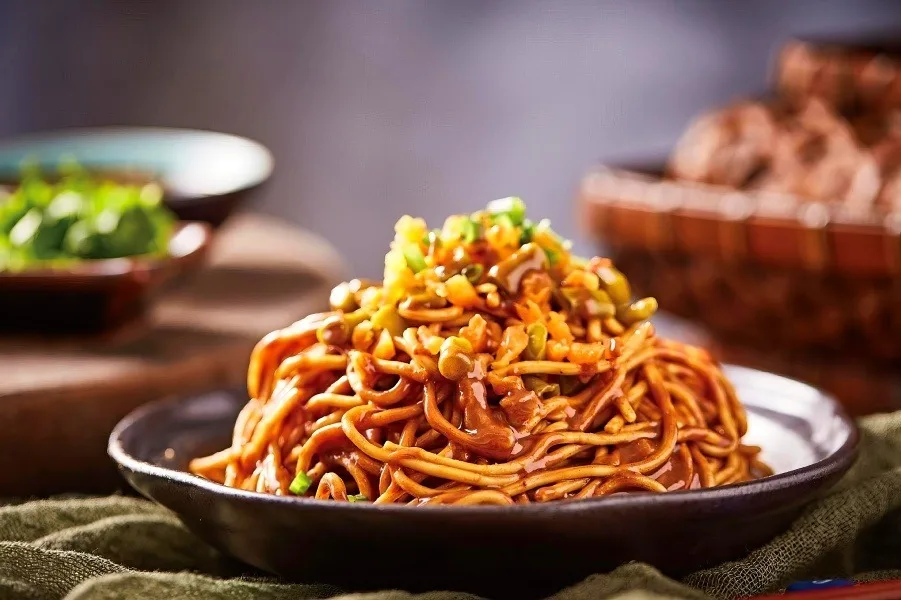
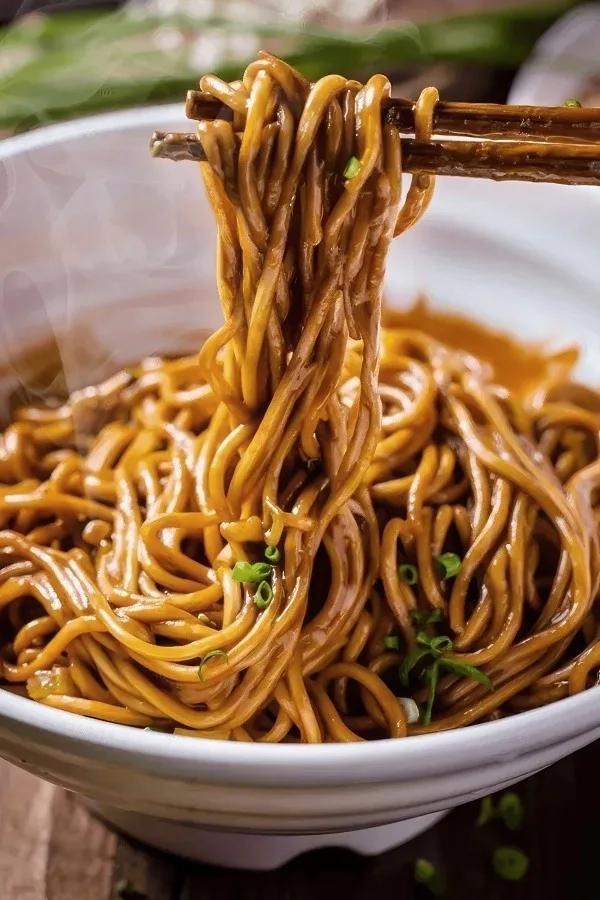
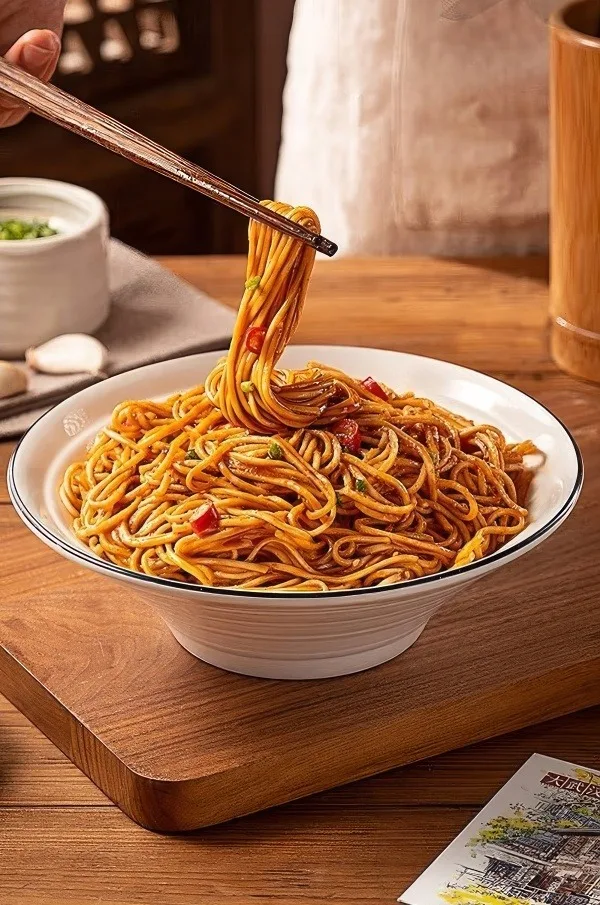
Picture noodles coated in a thick sesame sauce, tossed with pickled vegetables and seasoned with spicy condiments. Hot dry noodles (热干面) are to Wuhan what bagels are to New York or croissants to Paris. “Rè” (热) means hot, “Gān” (干) means dry and “Miàn” (面) means noodles. Hot dry noodles are a beloved breakfast in Hubei province. Here “rè” means physically hot, not spicy – which is what sets them apart from Chinese cold noodles (Liang Mian 凉面).
Contents:
The History of Hot Dry Noodles
This dish has an interesting history that goes back to the 1930s.
According to an old legend, it all started with a happy accident. One sweltering summer night, a noodle seller named Li Bao found himself in a bind. At the end of the day he had a large batch of fresh noodles left over that would spoil by morning. Wondering what to do with them, he decided to cook the noodles and spread them out to dry on a board.
Fate had other plans, though. While working, he accidentally knocked over a bottle of sesame oil, which spilled all over the noodles. Li Bao didn’t worry about it and decided to leave them as they were. The next morning he blanched the noodles and served them to customers with a variety of sauces.
To his great surprise, customers loved the new flavor. The “dry” noodles quickly became a hit and word spread throughout the city. And so an accident gave birth to a recipe that is now one of the treasures of Chinese cooking.
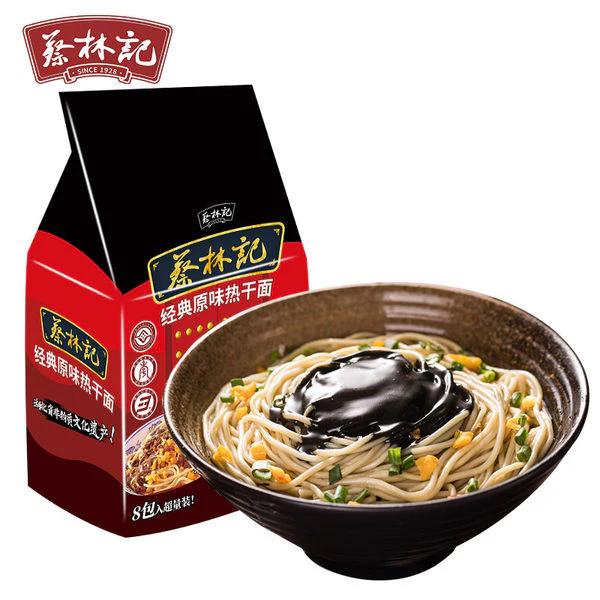
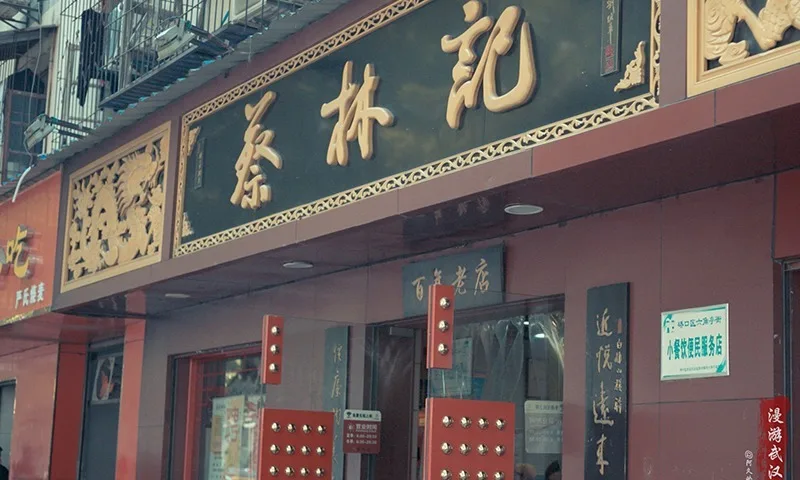
Cai Linji
Li Bao may have pioneered serving blanched noodles “dry” – that is, in a sauce rather than a soup. But he may not have been the one who came up with the sesame flavor that defines reganmian as we know it today. According to another version of the story, the noodles owe their origin to Cai Mingwei, owner of the noodle shop Cài Línjì (蔡林记). What’s documented is that by the 1940s Cai Mingwei and his wife were already running a business selling these noodles, and around 1950 he officially registered his sesame noodles under the name “reganmian.” Today Cai Linji (蔡林记) is a leading brand that also produces its own packaged reganmian, including for export.
Wuhan is famous as one of China’s “Three Furnaces” (三大火炉, sān dà huǒlú) – a nickname for big Chinese cities with extremely hot summers. Wuhan, Chongqing and Nanjing lie in the humid basin of the Yangtze River, surrounded by hills. In the mid-20th century these cities often had more than 70 days a year with highs above 30 °C (86 °F), and temperatures frequently climbed past 40 °C (104 °F). People describe it as “feeling like you’re in an oven” – hence the name.
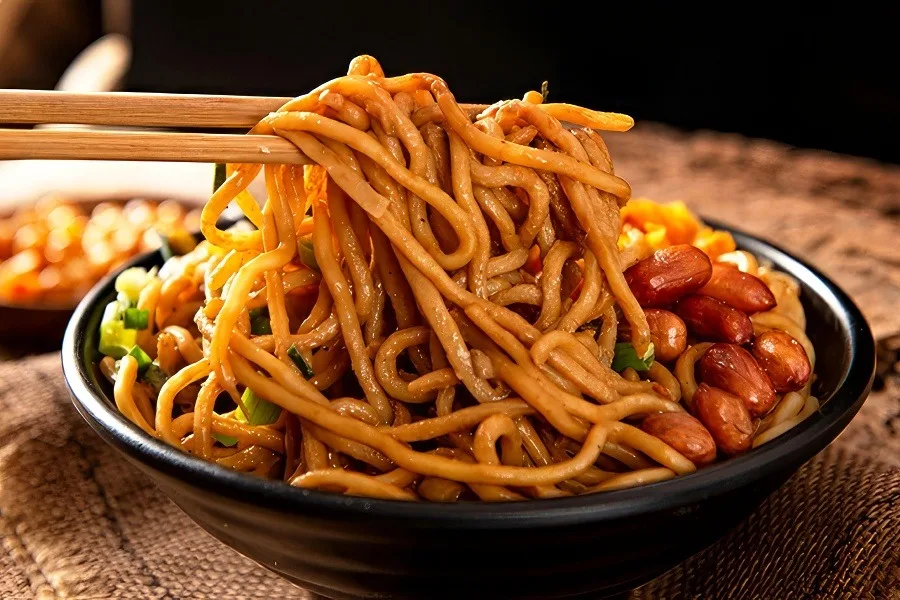
Tips
Alkaline noodles, 碱水面 (jiǎnshuǐ miàn), stay fresh longer in a hot climate, which is why they became so popular in this region. Look for “alkaline noodles,” “lye water noodles” or “Hong Kong-style noodles” at Asian grocery stores.
Don’t skip the par-cooking! You might be tempted to save time by using freshly cooked noodles, but you’ll lose the unique texture that makes this dish so loved.
Restaurants in China par-cook the noodles until al dente, toss them with sesame oil and cool and dry them with a fan, which makes them chewier. Just before serving, the noodles are dipped in boiling water for a few seconds – just long enough to heat them through.
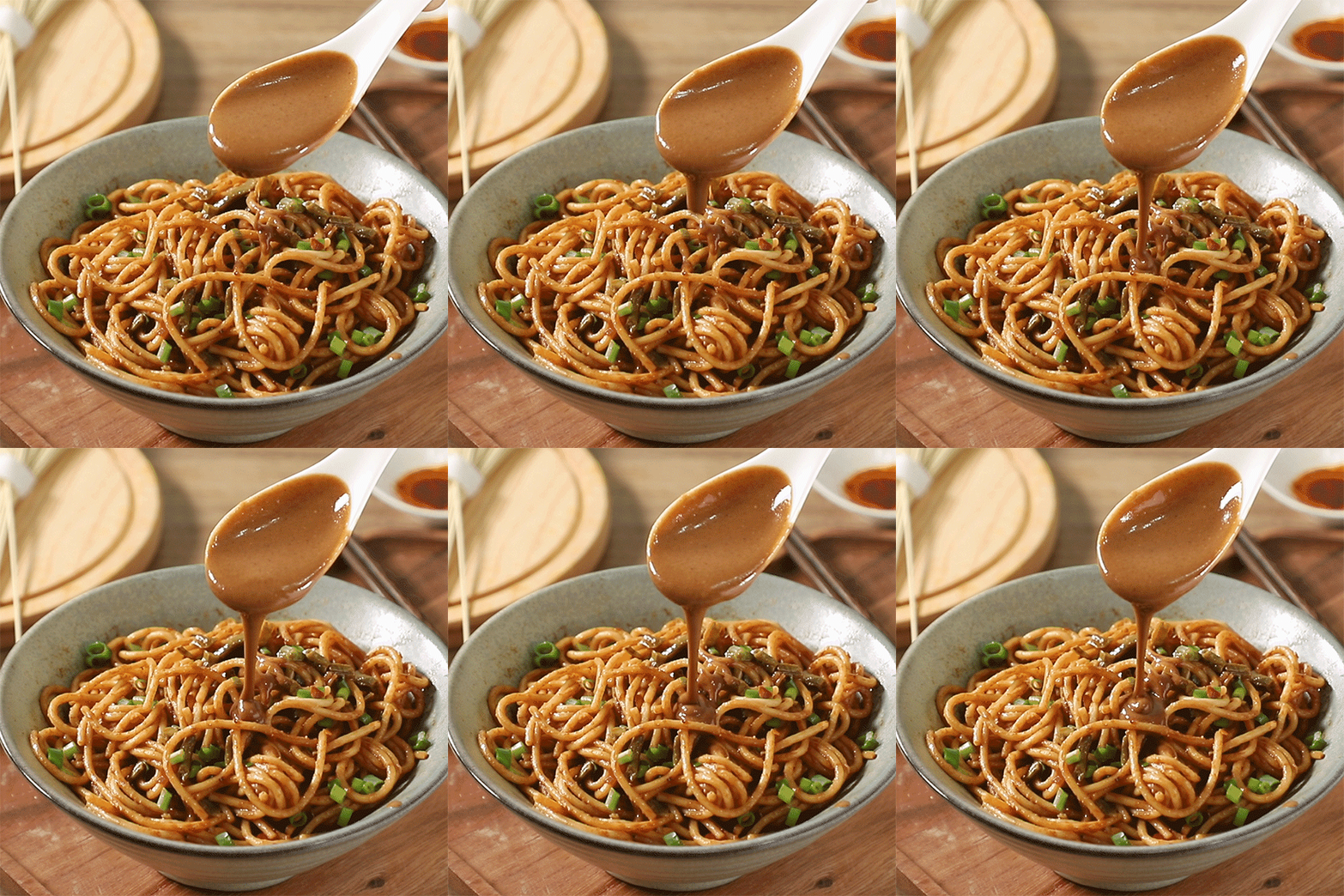
Chinese sesame paste (Zhīmá Jiàng 芝麻酱) is the essential seasoning for hot dry noodles. It’s made from toasted whole sesame seeds, unlike tahini, which is usually made from raw (sometimes lightly toasted) hulled seeds.
A good substitute for preserved spicy radish (辣萝卜干) is preserved mustard stem (zhàcài 榨菜), which is easier to find.
Wuhan Hot Dry Noodles (Rè Gān Miàn 热干面)
Ingredients
- 240 g fresh alkaline noodles about 8½ oz
Sauce
- 3 tbsp Chinese sesame paste
- 3 tbsp toasted sesame oil divided
- 4 tbsp light soy sauce
- ½ tsp sugar
Toppings
- ¼ cup preserved mustard stem (zha cai, 榨菜) chopped, or to taste
- ¼ cup pickled long beans (suan dou jiao, 酸豆角) chopped, or to taste
- 2 cloves garlic minced
- chili oil to taste
- ¼ cup cilantro chopped
- 2 scallions sliced
- 1 tsp Chinese black vinegar
Instructions
- Put the sesame paste in a bowl and gradually stir in 2 tablespoons of the sesame oil until the paste is smooth.
- Add the soy sauce and sugar and stir until well combined. If the sauce is still too thick, thin it with a few drops of warm water or a little more soy sauce. Season with salt to taste and set aside. You can make this sauce ahead of time.
- Cook the noodles according to the package directions, but shorten the time slightly so they stay chewy and al dente. Drain and transfer to a large bowl.
- Toss the noodles with the remaining tablespoon of sesame oil so they don’t stick. Add the zha cai, pickled long beans, garlic, chili oil, cilantro, scallions, vinegar and the sesame sauce. Toss quickly and serve hot.